Sales Training Ideas That Actually Change Behavior
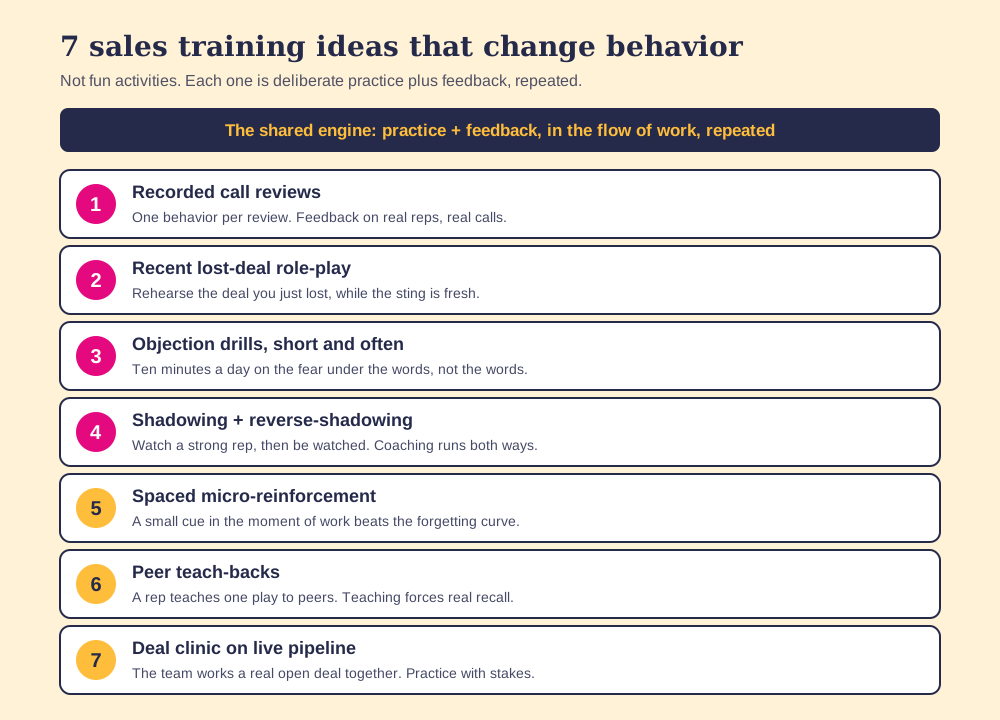
Most sales training ideas are fun activities that change nothing, because a one-off event fights the forgetting curve and loses. Here are seven that build skill instead, each one deliberate practice plus reinforcement, with the mechanism behind why it works and how to run it.
The sales training ideas that change behavior share one structure: a rep performs the real skill, gets feedback on it, and does it again, which is deliberate practice, not the fun-activity day that decays in weeks.
Search “sales training ideas” and you will get the same list back forty times: icebreaker games, a guest speaker, a trivia quiz, a field trip, a role-play afternoon with a prize for the winner. The lists are cheerful and well-meaning, and they share one flaw. None of them change what a rep does on the next call. They are activities, not training, and the difference is the entire subject. A rep can have a wonderful afternoon learning nothing that survives to Monday.
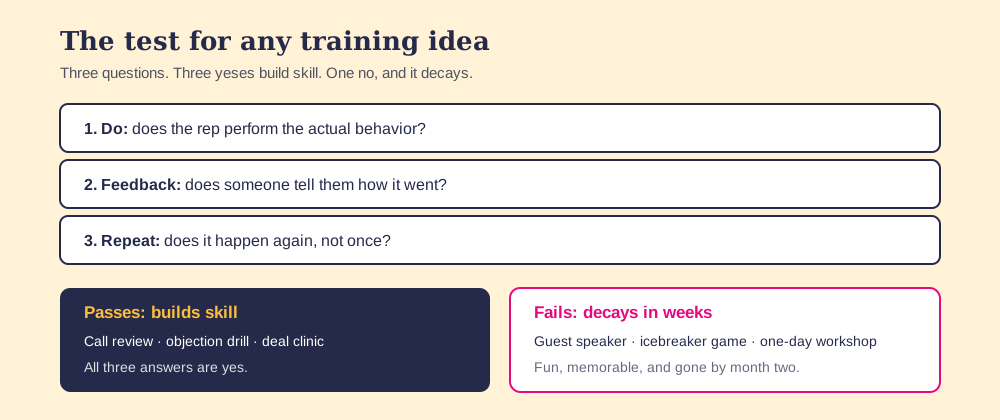
The sales training ideas that change behavior share one structure: a rep performs the real skill, gets feedback on it, and does it again, which is deliberate practice, not the fun-activity day that decays in weeks. That single test, do they do the thing, is there feedback, does it repeat, sorts the useful ideas from the rest, and it is the spine of the seven below.
Why do most sales training ideas change nothing?
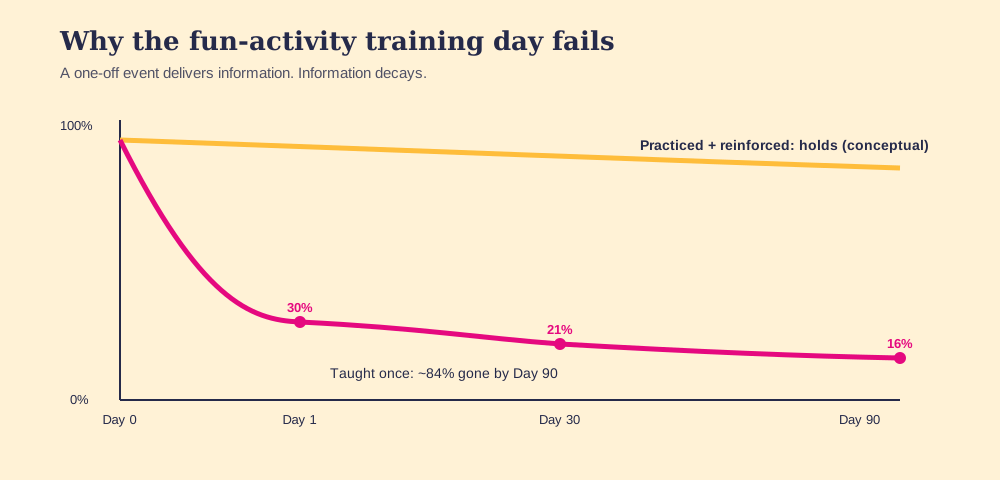
Because most of them are events, and an event is a delivery system for information, and information evaporates. Hermann Ebbinghaus mapped the forgetting curve in 1885, and the numbers in a sales setting are brutal: a rep loses about 70 percent of what they were taught within a day and roughly 84 percent within 90 days, a figure Sales Performance International found again studying sales programs specifically. The training day you ran in January is, by April, a folder nobody opens and a warm feeling that the company tried.
Frank Cespedes of Harvard Business School put the indictment plainly: most sales training is an event, disconnected from the actual selling context and rarely reinforced, so it fails on its own terms (Cespedes, “Your Sales Training Is Probably Lackluster,” HBR, 2017). He is right, and there is a deeper reason underneath his diagnosis. A skill is procedural knowledge, the thing you can do, not the thing you can name, and procedural knowledge is built one way only. Anders Ericsson’s study of violinists in Berlin established the finding that has held up across every field since: expert performance tracks accumulated deliberate practice, focused repetition with immediate feedback on a specific weakness, not hours of being told things (Ericsson, Krampe & Tesch-Römer, Psychological Review, 1993). A guest speaker has none of that. A rep’s actual week has all of it, and we waste it.
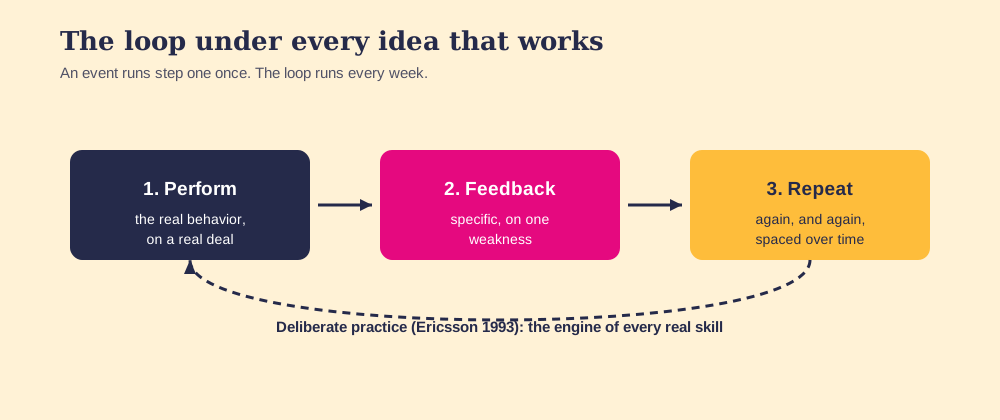
So before any idea earns a slot, run it through the test. Does the rep perform the actual behavior? Does someone give them feedback on it? Does it repeat? Three yeses and you have deliberate practice. One no and you have an afternoon.
Which sales training ideas pass the test?
1. Recorded call reviews with one-behavior feedback
Pull a recent call, sit two or three reps around it, and watch together. The rule that makes it work is a discipline most reviews drop: coach one behavior, not ten. Pick the discovery question that should have come and did not, or the moment the rep talked past the buyer’s hesitation, and spend the session on that one thing. A review that fires twenty notes at a rep produces nothing actionable; a review that fixes one behavior produces a rep who does that behavior next week.
Why it works is the feedback half of Ericsson’s loop. The rep performed the real skill, on a real buyer, and now gets immediate, specific feedback on a single weakness, which is the exact mechanism that builds expertise. How to run it well: keep it short, keep it to one behavior, and rotate whose call gets reviewed so it never becomes a tribunal aimed at the bottom of the team. The point is reps watching reps sell and naming what good looks like, not a manager grading.
2. Recent lost-deal role-play
Take the deal the team lost last week and run it again, out loud, with one rep playing the buyer who said no. The freshness is the active ingredient. A generic role-play is an actor reciting; a re-run of the deal that just stung is the rep reaching for what they wish they had said, while the memory of the loss is still sharp enough to teach.
This is where the Jolt Effect research bites. Matthew Dixon and Ted McKenna analyzed 2.5 million recorded sales calls and found that 40 to 60 percent of qualified deals are lost to no decision, and 56 percent of those die from customer indecision and fear, not from a competitor or a price. Most lost deals are not lost to a better pitch; they are lost to a buyer who got scared and stalled. Re-running the lost deal trains the one skill that addresses that: hearing the fear under the objection and answering it. For the mechanics of running this well, our piece on sales role-play that builds skill instead of anxiety is the deeper guide.
3. Objection drills, short and often
Ten minutes at the start of the day. One objection. The manager throws it, the rep answers, the room reacts, repeat with the next rep. No slides, no warm-up, no prize. This is one of the best sales meeting training ideas precisely because it is small: the format is closer to a musician’s scales than a workshop, and a short rep done daily compounds in a way a long session done quarterly never can.
The reason short-and-often wins is the spacing effect, the second pillar under the forgetting curve. Knowledge revisited at intervals holds far better than the same volume crammed into one sitting. An objection drilled for ten minutes across twenty mornings lands deeper than the same two hundred minutes spent in one afternoon, because each repetition reloads the skill the moment it begins to fade. Drill the objections that truly kill your deals, the fear-and-indecision ones the Jolt data points to, not a textbook list.
4. Shadowing and reverse-shadowing
Shadowing is old: a new rep listens in on a strong rep’s calls. The half teams forget is the reverse, where the strong rep, or the manager, then sits in on the new rep’s calls and the coaching runs the other way. One direction shows the rep what good looks like; the other gives them feedback on their own attempt. You need both, because watching alone is the declarative half (the rep sees the skill) and being watched is the procedural half (the rep performs it and gets corrected).
How to run it well: make reverse-shadowing routine, not a punishment reserved for the struggling. The best reps want to be watched, because that is how they get sharper. Tie it to a single behavior, the same one-thing discipline as the call review, so the feedback is usable.
5. Spaced micro-reinforcement in the flow of work
This is the one that does not look like training at all, and it is the most powerful idea on the list. Instead of teaching the play in a room and hoping the rep remembers it three weeks later, deliver a small, specific cue at the moment the rep is about to use it: the discovery checklist when they open the call, the qualification question when the deal is about to advance, the next best step when they are staring at a stalled opportunity.
The mechanism is the forgetting curve run in reverse. A cue at the point of action does not have to survive 90 days of decay, because it arrives the instant it is needed. This is the practical form of training on output, not input, the principle that classroom information-first programs are the weak lever and reinforcement in the moment is the strong one, which our State of Sales Enablement report lays out in full. It is also the cheapest way to make every other idea on this list stick, because it carries the standard from the training session into the actual deal.
6. Peer teach-backs
Ask a rep to teach one play to the rest of the team, in ten minutes, in their own words. The trick is that the teaching is the training, and it trains the teacher more than the audience. To explain a skill cleanly, a rep has to retrieve it, organize it, and defend it under questions, which is among the most demanding forms of practice there is. The protégé effect is real: people who learn in order to teach understand the material more deeply than people who learn for themselves.
A teach-back also surfaces the process your best reps already run and makes it the team’s standard, instead of importing a consultant’s template nobody believes in. How to run it well: rotate the teacher, keep it to one play, and let peers push back. A play that survives a room of skeptical reps is one the team will run.
7. A deal clinic on live pipeline
Once a week, the team takes one real open deal and works it together: where does the buyer truly stand, what is the fear stalling it, what is the next best move. It is role-play with the safety off, practice with real stakes, which is the closest a training format gets to the conditions Ericsson’s research says skill requires. A pretend deal lets reps perform; a live deal makes them think.
The discipline that keeps a deal clinic honest is reading the buyer’s real position, not the rep’s activity. It is tempting to let a deal feel advanced because the rep sent the follow-up and booked the next call. The clinic should ask the harder question: what does the buyer actually believe and want right now, and a deal does not move just because a box got checked. That habit, inspecting the buyer’s reality rather than the seller’s checklist, is the most valuable thing a clinic teaches, and it is the heart of what separates a ready rep from a certified one.
What sales training topics should you leave off?
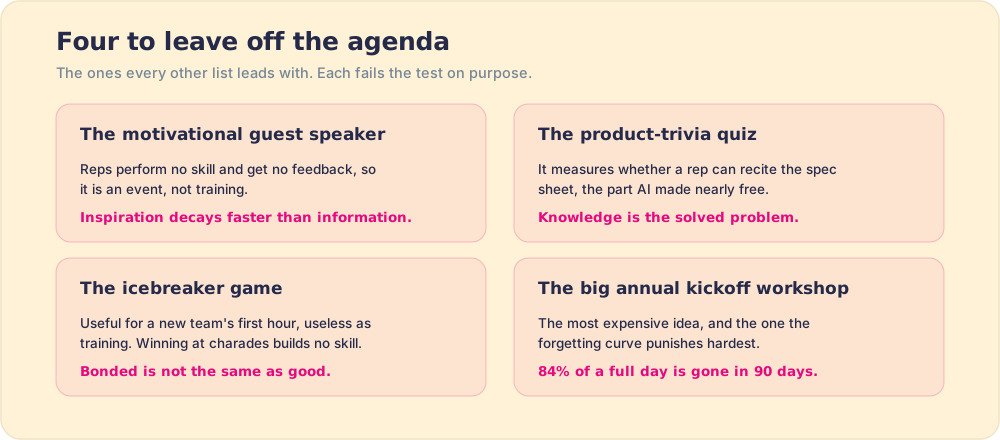
We could have padded this to ten. The four we cut are the ones every other list leads with, and they fail the test on purpose.
- The motivational guest speaker. A good talk is a good afternoon, and reps perform no skill and get no feedback, so by the test it is an event, not training. Inspiration decays faster than information.
- The trivia quiz on product facts. It measures whether a rep can recite the spec sheet, which is the part AI has already made nearly free. Knowledge is the solved problem; what a rep does with it is the unsolved one.
- The icebreaker game. Useful for a new team’s first hour and useless as training, because winning at charades builds no selling skill. Do not confuse a team that is bonded with a team that is good.
- The big annual kickoff workshop. The most expensive idea and the one the forgetting curve punishes hardest: a full day of content, 84 percent of it gone in 90 days. Spend the same budget on twelve weeks of ten-minute drills and you will get a different team.
This is the break from the standard list, and we will say it plainly: the popular sales training topics are mostly designed to be memorable, and memorable is not the same as learned. The lists are built for the afternoon. We build for the next call.
How should you put these sales training activities to work?
There are two honest ways to spend a training budget, and only one of them compounds. You can run events, the speakers and kickoffs and quizzes, and watch most of the spend leave the building by month two. Or you can turn the rep’s own week into the practice field: short call reviews, daily drills, shadowing both ways, peer teach-backs, live deal clinics, and a small cue delivered at the moment of work so the standard survives the gap between sessions.
We recommend the second, without hedging, because it is the only one the science of skill supports. The events fight the forgetting curve and lose; deliberate practice with feedback is how every real skill has ever been built, from the violin to the discovery call. Pick the three or four ideas above that fit your team, run them weekly and small, and reinforce them in the flow of work so the rep gets the prompt the instant the work demands it. That last part, the in-the-moment cue, is the job the Behavior Layer exists to do, and it is what makes the other six stick instead of fading by spring. For the wider system that ties practice, feedback, and reinforcement together, our sales coaching guide is the place to go next.
The cheerful lists are not wrong because games are bad. They are wrong because they confuse activity with practice. Run the ideas that pass the test, repeat them, and reinforce them where the work happens. That is how a rep gets better, and it is the only thing a training budget can truly buy.
Frequently asked questions
What are the best sales training ideas?+
What are good sales training topics for a sales meeting?+
Why does most sales training not work?+
How often should sales training happen?+
Your process, running itself.