Sales Role Play: The One Drill That Actually Works
Most sales training is a lecture, and lectures decay. Sales role play is the rare format where reps actually do the behavior and get feedback, which is why it builds skill when slides do not. Here is how to run it as deliberate practice, and what AI changes.
Sales role play is a practice drill in which a rep rehearses a real selling moment against a stand-in buyer and gets feedback on it, which makes it the rare training format that is procedural practice, the rep doing the behavior, rather than a lecture about the behavior.
Sit through enough sales training and a pattern emerges. The slides are good. The frameworks are sound. The room nods. And three months later the reps are selling exactly as they did before, because a person can no more absorb a skill from a slide than learn to swim from a poster on the pool wall. There is one format in the standard training kit that breaks this pattern, and most teams run it badly enough to waste it. It is the one where the rep stops listening and starts doing.
Sales role play is a practice drill in which a rep rehearses a real selling moment against a stand-in buyer and gets feedback on it, which makes it the rare training format that is procedural practice, the rep doing the behavior, rather than a lecture about the behavior. Get that distinction right and role play stops being the awkward thing everyone dreads at kickoff and becomes the most valuable hour on the calendar.
Why does sales role play work when training lectures don’t?
Because a sale is a skill, and skills are built by doing, not by being told. This is the most replicated finding in the science of expertise. Anders Ericsson’s 1993 study of violinists in Berlin established that expert performance tracks accumulated deliberate practice, focused repetition with immediate feedback on a specific weakness, far more than it tracks talent or hours spent reading about the craft (Ericsson, Krampe & Tesch-Römer, Psychological Review, 1993). The violinist does not improve by studying scores. They improve by playing the hard passage, hearing what went wrong, and playing it again.
A lecture has almost none of the ingredients deliberate practice requires. It is information moving from a deck into a head, and information leaks. Sales Performance International, studying sales programs specifically, found that reps forget about 84 percent of what they learned within 90 days, the same shape Hermann Ebbinghaus mapped on his forgetting curve in 1885. Frank Cespedes of Harvard Business School put the indictment plainly: most sales training is an event, disconnected from the actual selling context and rarely reinforced, so it fails on its own terms (Cespedes, “Your Sales Training Is Probably Lackluster,” HBR, 2017).
Role play is the exception hiding inside that broken kit. It is the one format where the rep performs the behavior, against resistance, and finds out in real time whether it worked. It has the repetition, the feedback, and the realistic conditions. Run well, it is deliberate practice wearing a sales-ops uniform. That is not a small thing. It means the format the team treats as the embarrassing filler between keynotes is the only part of the day built the way skill is acquired.
Why most sales role play fails anyway
Here is the honest catch. The format is right and most teams still get nothing from it, because they run role play as a performance. Picture the usual version: once a year at the sales kickoff, two reps are pulled to the front, handed a generic made-up buyer with no real backstory, and asked to perform one long scene while forty colleagues watch and a manager offers a verdict at the end that amounts to “nice job, maybe slow down.” The room is relieved when it ends. Nobody is better at selling on Monday.
Compare that to how the same hour could be spent, and the gap is the whole story.
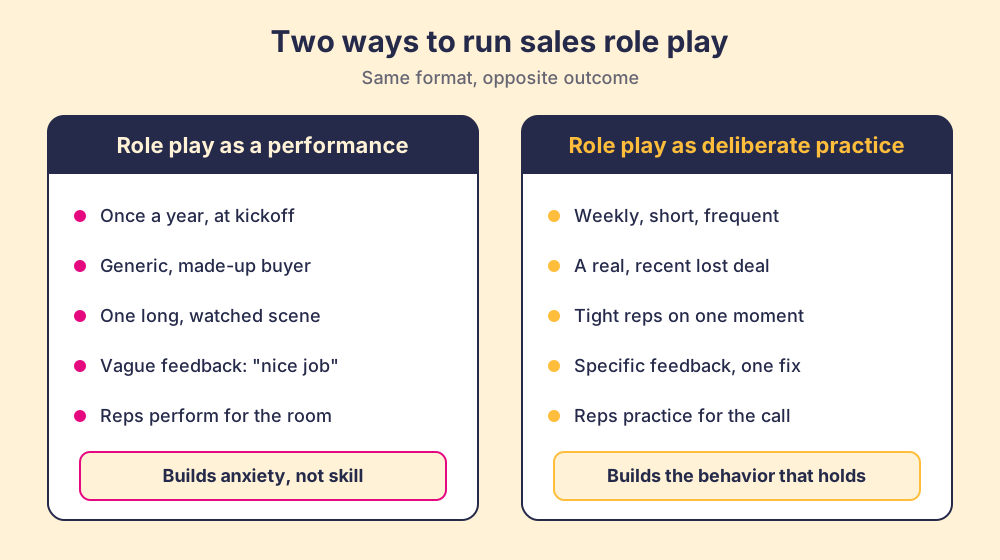
The performance version fails on every ingredient deliberate practice needs. The scenario is fake, so it does not rehearse a real moment. The session is annual, so there is no repetition. The audience makes it a performance for the room rather than a rehearsal for the call, which floods the rep with the wrong kind of pressure. And the feedback is vague, so the rep leaves with no specific behavior to fix. Staged that way, role play does more than fail to build skill; it teaches reps to dread the one drill that could help them. The drill is sound. The staging ruins it.
How do you run sales role play as deliberate practice?
Strip out the front-of-room performance and rebuild the hour around the four things Ericsson found that real practice requires. The structure is a loop, and it is the opposite of an annual event.
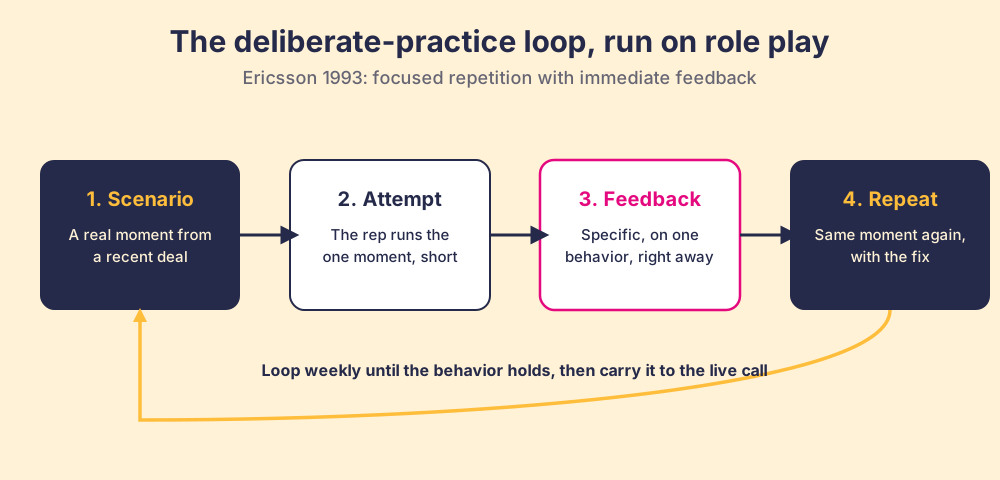
- Real scenarios over invented ones. Pull the situation from a deal that happened last week, the buyer who went silent after the demo, the procurement push on price. The best sales role play scenarios are the exact moments your team loses deals on, because rehearsing the real thing transfers and rehearsing a cartoon does not.
- Tight reps on one behavior. No long watched scene. Run the rep through a single moment, the first ninety seconds of discovery, the answer to one objection, three or four times. Repetition on a narrow target is what carves the groove.
- Specific feedback, then a redo. “Nice job” teaches nothing. “You answered the price objection by defending the price; name the fear behind it instead, then go again” teaches everything. Feedback has to name one behavior and be followed by another attempt, or it is only a review.
- High frequency, low ceremony. Fifteen minutes a week beats a full day a year, every time, because skill compounds with reps and decays without them. Make it routine and unwatched, a drill, not a recital.
One scenario earns a permanent slot in that rotation. The Jolt Effect analysis of 2.5 million recorded sales conversations by Matthew Dixon and Ted McKenna found that 40 to 60 percent of forecasted deals are lost to no-decision, and 56 percent of lost deals die specifically of customer indecision rather than a competitor or a price (Dixon & McKenna, The Jolt Effect). The most expensive moment in your pipeline is the buyer who wants to buy and cannot bring themselves to decide. If your reps are not practicing that exact conversation, they are not practicing the one that decides most of the number. Build the indecision scenario, run it weekly, and coach the specific move that gets a frozen buyer unstuck.
Does AI sales role play and sales simulation actually work?
For most of role play’s history, the format’s great weakness was supply. Deliberate practice needs frequency, frequency needs a partner, and a manager has time to role play with each rep maybe once a quarter. The drill that works best was the drill teams could afford least. That is the constraint AI sales simulation breaks. A rep can now run twenty reps of an objection against a bot in the time it would have taken to schedule one live session, and the bot never tires, never judges, and is available at eleven at night before a big call. On the supply side this is a genuine breakthrough: the thing deliberate practice always needed, cheap high-frequency repetition, is finally affordable.
The catch is that practice was never the goal. Changed behavior on real deals is the goal, and a sales simulation can drill the wrong skill as efficiently as the right one. Two governing questions decide whether AI role play earns its place. First, are the scenarios real, drawn from the moments your team loses deals on, or generic situations a vendor shipped in the box. Second, and this is the one that matters most, does the rep then handle that moment better with a real buyer. A bot that produces a rep who is fluent against the bot and frozen on the call has produced nothing but a high score. AI in selling has to be governed by its effect on what the rep does in the flow of real work, measured deal by deal, not by how busy the practice tool looks.
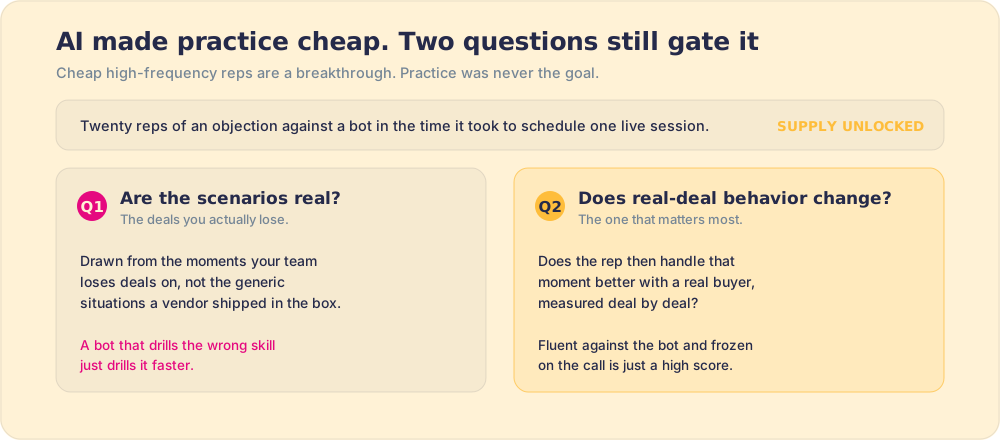
That is the test any serious role play training program now has to pass. Drill the behavior, then check whether the behavior shows up where it counts.
What this means for your training budget
There are three honest ways to spend on building sales skills, and they do not pay back equally. You can keep buying classroom training, the workshops and courses, and watch 84 percent of it leave the building inside 90 days. You can run role play as a front-of-room performance, the annual show, and get the anxiety without the skill. Or you can run role play as deliberate practice: real scenarios, tight reps, specific feedback, high frequency, now made affordable by AI sales simulation and governed by whether it changes real-deal behavior.
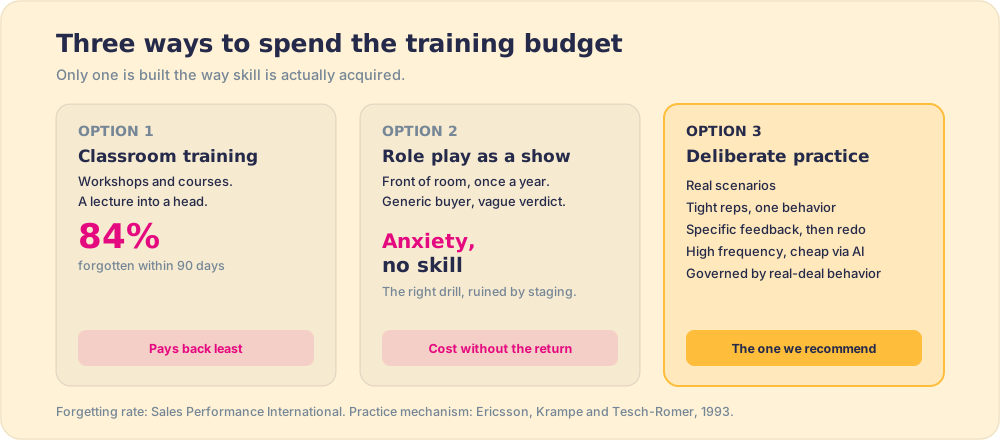
We recommend the third, without hedging, because it is the only one the science of expertise supports. Role play is not the embarrassing filler in the training kit. It is the one drill built the way skill is genuinely built, and the modern version, frequent AI-driven reps on the moments that decide your deals, is the cheapest skill-building lever a sales leader has had in a decade. The same logic runs through the sales skills that training fails to install, the structured sales coaching that turns practice into improvement, and the difference between a certified rep and a genuinely ready rep.
The final step is the one role play alone cannot reach. Practice on the range still has to show up on the course. The rep who drilled the objection on Tuesday needs the right prompt the instant a real buyer raises it on Thursday, while they are in the flow of the work, which is the job the sales training software category and tools like AI sales coaching are finally being judged on. Supered exists to be that layer, carrying the rehearsed standard into the live moment so the practice and the call stop being two separate worlds. Run the role play to build the behavior. Then make sure the behavior reaches the buyer.
Frequently asked questions
What is sales role play?+
How do you run an effective sales role play?+
What are good sales role play scenarios?+
Does AI sales role play and sales simulation actually work?+
Your process, running itself.