Sales Script: The Paradox Is That the Best Reps Sound Unscripted
A sales script read word-for-word kills the rapport it was meant to build. Used as scaffolding the rep internalizes and then adapts, it makes every rep consistent and human. The difference is everything.
A sales script is a prepared structure and set of key lines for a sales conversation, and it works when reps internalize it and adapt within its structure rather than reading it verbatim, because a word-for-word script sounds robotic and erodes trust.
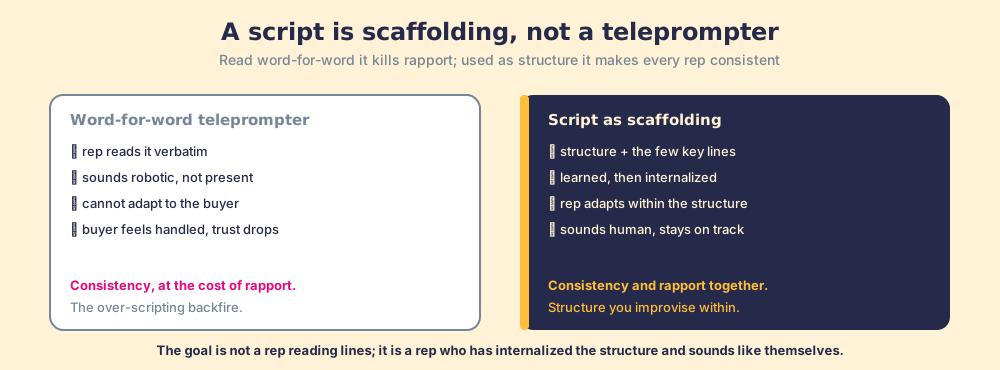
The sales script has a paradox at its center: the goal of a script is to make a rep sound like they are not using one. Teams reach for scripts to get consistency, every rep running a proven structure instead of improvising from nothing, and that instinct is sound. But the most common way to use a script, hand it over and have reps read it word for word, destroys the thing selling runs on. A rep reading lines sounds like a rep reading lines, cannot bend to what the buyer said a moment ago, and leaves the buyer feeling handled rather than heard, which drains the trust the whole conversation depends on. The script meant to lift the call sinks it. The resolution is not to abandon scripts but to use them the way a musician uses scales: as scaffolding the rep internalizes and then plays past, so they hit the proven moves while sounding entirely themselves.
A sales script is a prepared structure and set of key lines for a sales conversation, and it works when reps internalize it and adapt within its structure rather than reading it verbatim, because a word-for-word script sounds robotic and erodes trust. Use it as scaffolding, and you get consistency without the robot.
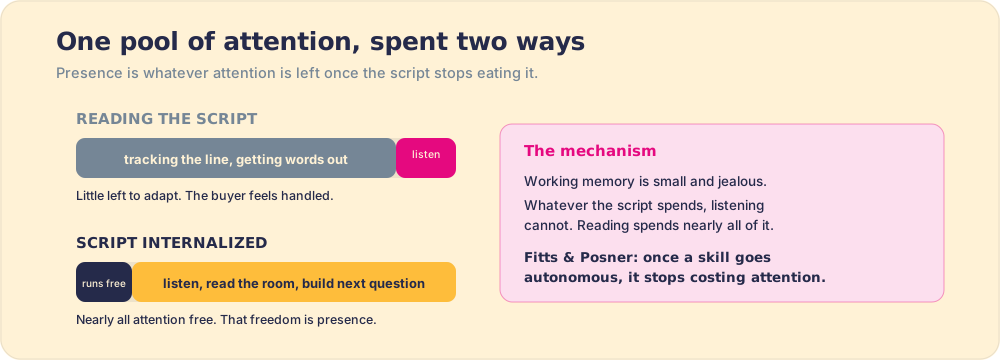
The reason the reading rep sounds dead is not a matter of talent or nerves; it is mechanical, and the mechanism is worth knowing. A person has only so much working memory in any moment, a small and jealous resource. A rep who is reading is spending that resource on the page, tracking the line, finding the next one, getting the words out in order, and there is little left over to listen, read the room, or build the next question from the buyer’s answer. The buyer can feel that the rep’s attention is elsewhere, because it is. Presence is not a personality trait here. It is what is left of attention once the script stops consuming it, and the only way to stop the script consuming it is to put it somewhere the rep no longer has to read.
Why do word-for-word sales scripts backfire?
Because a conversation is adaptive and a script read verbatim is rigid, so reading it breaks the rapport it was meant to support. When a rep reads lines, two things go wrong at once. They sound like they are reading, which signals to the buyer that they are being processed rather than listened to, and they cannot respond to what the buyer says, because a fixed script has no branch for the unexpected. Both erode trust, and trust is the currency the conversation runs on. So the over-scripted call optimizes for consistency and pays for it in rapport, ending up worse than an unscripted but present rep. The script did not fail because structure is bad; it failed because it was used as a teleprompter instead of a scaffold.
The way out is the way experts use any structure. A jazz musician does not improvise from nothing; they have practiced scales and chord changes until the structure runs without conscious thought, and only then is their attention free to listen to the rest of the band and answer it. The structure did not vanish. It went underground, into the fingers, where it no longer competes for attention. A strong rep internalizes a script’s structure the same way, until it runs on its own and frees them to be present, read the buyer, and still hit the proven moves. This is the move from reading to fluency, and it is the same internalization that turns a sales pitch from a recited speech into a natural conversation. The script becomes invisible because the rep has absorbed it, the way a fluent speaker no longer hears themselves choosing grammar.
How should a rep use a sales script?
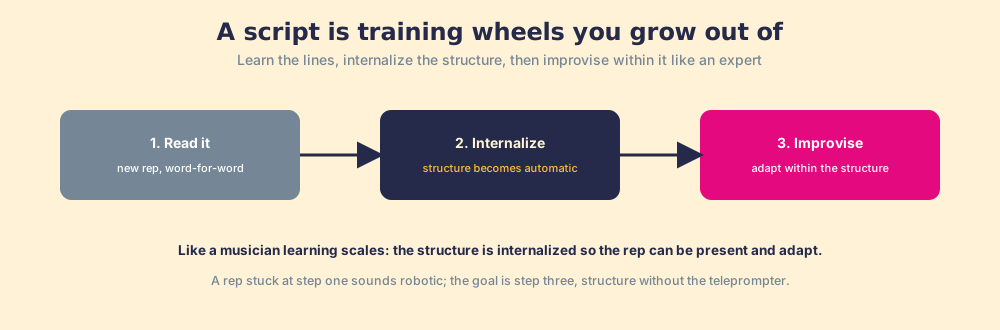
As training wheels to internalize and grow out of, not a crutch to read forever. The right use of a script runs in three stages, and they are not a metaphor; they are the classic Fitts and Posner model of how any skill is acquired, from the cognitive stage to the associative to the autonomous (Fitts and Posner, three-stage model of skill acquisition). In the cognitive stage a new rep has to think about every line, which is exactly the attention-hungry reading that makes a beginner sound stiff. In the associative stage the lines start to connect and the rep thinks less about each one. In the autonomous stage the structure runs without conscious effort, which is the whole prize: Fitts and Posner’s point is that once a skill goes autonomous, it no longer consumes attention, and the freed attention is what lets an expert adapt in real time. That is precisely the rep who sounds unscripted while reliably running the moves. A rep stuck in the cognitive stage sounds robotic, because they are still reading; a rep who reaches the autonomous stage is consistent and human at once, because the structure no longer costs them anything to run.
- Learn it. Start with the structure and key lines, closely. You cannot adapt a structure you have not absorbed.
- Internalize it. Practice until the structure is automatic, the way a musician internalizes scales. This is where reading becomes fluency.
- Improvise within it. Adapt to the buyer while hitting the proven moves. The script is now invisible, not gone.
- Coach toward unscripted. The goal is a rep who sounds like themselves and still runs the structure, not one who recites.
How do you build a sales script reps will internalize?
Make it short, structural, and drawn from your wins, then coach reps from reading to fluency. The question of how to write a sales script answers itself once you accept the goal is internalization, not recitation: a script reps can absorb is a structure plus a few load-bearing lines, the opening that earns the next minute, the key questions, the way you frame value, the responses to the objections you hear most, the parts that carry the call. Long, verbatim sales script examples are the wrong model precisely because nobody can internalize a monologue; a tight sales script template that fits on a card is the right one. Draw those from how your best reps run the conversation, the same bottom-up build as any sales playbook, so the script encodes proven moves rather than theory. Then treat adoption as a coaching arc, not a handoff: get reps to internalize the structure through practice and coach them toward sounding unscripted, which is the sales process adoption work that turns a document into a behavior. A script no one internalizes is read robotically or ignored; a script reps absorb becomes the consistent, human way your team sells.
What we recommend
Use a sales script for what it is good at, consistency, and use it in the only way that does not cost you rapport: as scaffolding reps internalize, not a teleprompter they read. A verbatim script makes a rep sound robotic and unable to adapt, which erodes the trust the conversation depends on, so the script meant to help ends up hurting. The fix is the way experts use any structure: learn it, internalize it until it is automatic, then improvise within it, so the rep hits the proven moves while sounding completely themselves. Build the script short and structural from your best reps’ real conversations, and coach reps from reading to fluency rather than handing them lines and hoping. The paradox is the lesson: the best-scripted reps are the ones who sound like they are not using a script at all, because they have absorbed the structure so well it disappeared into how they talk.
From here: the same internalization in sales pitch examples, the in-moment handling in objection handling, the playbook it belongs to in the sales playbook, and the adoption underneath in sales process adoption.
Frequently asked questions
What is a sales script?+
Do sales scripts work?+
Why do word-for-word sales scripts backfire?+
How do you use a sales script well?+
Your process, running itself.