Sales Proposal Template: Its Real Opponent Is 'Do Nothing'
Most sales proposal templates are about the vendor and never argue against the buyer's real alternative: doing nothing. A proposal that restates the buyer's decision and makes the cost of inaction concrete wins.
A sales proposal template is a reusable structure for a sales proposal, and the effective version restates the buyer's decision and argues against doing nothing rather than describing your company, because most deals are lost to the status quo, not to a competitor.
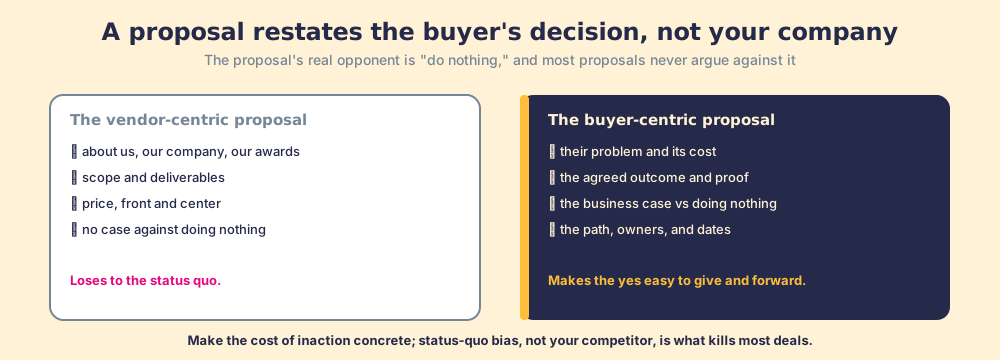
A sales proposal has a real opponent, and it is almost never the competitor the rep is tracking. It is “do nothing.” Most deals that die do not go to a rival; they go to no decision, the buyer choosing to stay with the status quo rather than approve a change. Yet the standard sales proposal template is built as if the only question were “which vendor,” leading with the company, the awards, the scope, and the price, and never once arguing against the buyer’s real alternative, which is to do nothing at all. A proposal that describes your firm gives a buyer no reason to overcome the inertia of staying put. The proposal that wins does the opposite: it restates the buyer’s own decision back to them, makes the cost of inaction concrete, and turns the easy “let’s wait” into an obvious “let’s go.”
A sales proposal template is a reusable structure for a sales proposal, and the effective version restates the buyer’s decision and argues against doing nothing rather than describing your company, because most deals are lost to the status quo, not to a competitor. Build the proposal to beat inaction, and it wins the deal that was always at risk.
Why do most sales proposals lose to the status quo?
Because changing anything is harder than staying put, and a vendor-centric proposal gives the buyer no reason to bear that difficulty. The economists William Samuelson and Richard Zeckhauser documented the status quo bias: people systematically prefer to keep things as they are, weighting the discomfort of change far more heavily than the benefit of it (Samuelson and Zeckhauser, on status quo bias). For a buyer, approving your proposal is a change, with effort, risk, and a budget line, while doing nothing is the comfortable default. A proposal that leads with your company and your price puts all the change on one side of the ledger and none of the cost of inaction on the other, so the rational buyer stays put. The proposal lost not to a competitor but to the gravity of the status quo, which it never tried to counter.
The fix is to make the cost of inaction concrete, so doing nothing stops looking free. A buyer-centric proposal restates the problem and its cost, what staying put costs them in money, risk, or missed outcome, so the status quo carries a visible price. Then it presents the change as the way to stop paying that price. This reframes the decision from “spend money or save it” to “keep bleeding or fix it,” which is the framing that beats inertia. The proposal that wins is the one that makes do-nothing the expensive option.
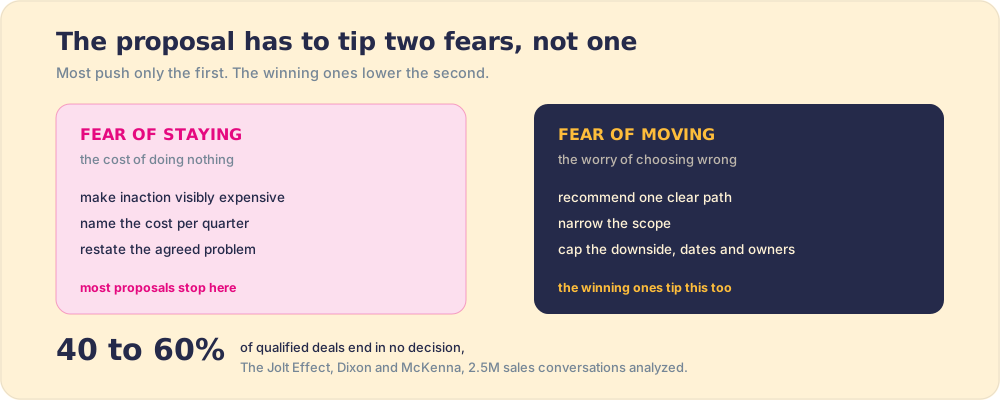
There is a wrinkle worth naming, because the obvious fix can backfire. Matthew Dixon and Ted McKenna studied more than two and a half million sales conversations for The Jolt Effect and found that the deals lost to “no decision” are not lost to apathy. They are lost to fear, the buyer’s worry about making the wrong choice, and the standard playbook of piling on more fear of inaction (FOMO) makes high-indecision buyers freeze harder (Dixon & McKenna, The Jolt Effect). Their data found that 40 to 60 percent of qualified deals now end in no decision, and that the reps who win them do not just amplify the pain of staying put. They reduce the buyer’s fear of moving: they recommend a clear path instead of offering endless options, they narrow scope, they cap the downside. So a proposal that beats the status quo does two things at once, and most do neither. It makes inaction visibly expensive, and it makes the change feel safe, by being specific about exactly what happens next, who owns it, and what the buyer is and is not committing to. Fear of staying versus fear of moving: the winning proposal tips both.
What should a sales proposal template include?
The buyer’s decision, restated, with the case against inaction front and center and your company in the background. A proposal that beats the status quo has a clear order. It opens with the buyer’s problem and its cost, so staying put has a visible price. It states the agreed outcome and the proof, in the buyer’s terms, so the payoff is concrete and credible. It makes the business case against doing nothing explicit, the comparison the buyer does not make on their own. It lays out the path, with owners and dates, so approval feels like continuing a plan rather than starting a risk, the same structure as a mutual action plan. And only then does it state scope and price, framed by all of the above rather than leading. The “about us” material, if it appears at all, goes last, because no buyer overcomes inertia to read your awards.
- The problem and its cost. Lead here. Make staying put visibly expensive, which is the only thing that beats inertia.
- The agreed outcome and proof. In the buyer’s terms, with evidence. The payoff has to be concrete and believed.
- The case against doing nothing. Explicit. This is the comparison that wins the deal, and the one most proposals omit.
- Scope and price, in context. Stated last, framed by the case above, not leading. Price without the case is only a number to reject.
What does a good sales proposal example look like?
The fastest way to see the difference is to hold a vendor-centric sales proposal format next to a buyer-centric one. The first reads like a brochure: cover page, “about us,” a logo wall, a list of deliverables, a price table, a thank-you. Nothing in it is false. Nothing in it argues. A buyer who already wanted to do nothing finishes it with the same instinct they started with, because the document never engaged the decision they are weighing.
A buyer-centric sales proposal example inverts the order. It opens on a single page the buyer’s CFO would recognize: here is the problem we agreed you have, here is what it is costing you per quarter, here is the outcome we agreed is worth reaching, here is the proof it is reachable. Then the path, with dates and owners, so approval reads as continuing a plan. Then, and only then, the scope and the price, framed by the case above. A generic business proposal template will not get you there, because most are organized around the seller’s information rather than the buyer’s decision, which is the exact inversion that loses. Take a template if you like the formatting, then gut the order and rebuild it around the buyer’s problem. The structure is the argument; the formatting is just the clothing it wears.
How do you make a sales proposal contain no surprises?
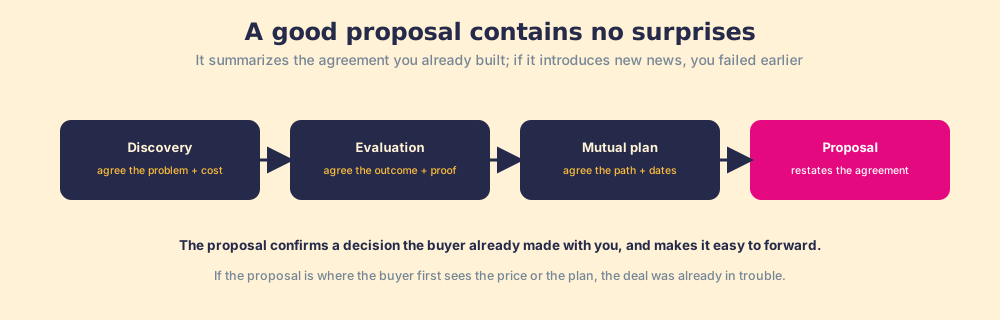
Build the agreement during the deal, so the proposal only summarizes it. The strongest proposals are anticlimactic: they restate a decision the buyer already made with you, the problem and cost agreed in discovery, the outcome and proof agreed in evaluation, the path agreed in a mutual plan. If the proposal is the first place the buyer encounters the price, the scope, or the plan, you are negotiating in the document, which is the worst place to do it, and a surprise in a proposal is a deal in trouble. So use the proposal as the summary close it should be, and build the substance earlier, in the flow of the deal. Making the buyer-centric structure a required play in your sales playbook, surfaced and coached rather than left to each rep’s template, is the sales process adoption move that keeps proposals from sliding back into the vendor-centric default. A proposal that surprises the buyer reveals a deal that was never truly agreed.
What we recommend
Build your sales proposal template to fight the opponent that truly beats you, which is “do nothing,” not the competitor you are tracking. Most deals are lost to the status quo, and a proposal that leads with your company, your scope, and your price gives the buyer no reason to overcome the inertia of staying put. So restate the buyer’s decision back to them: open with their problem and its cost so inaction has a visible price, state the agreed outcome and proof, make the business case against doing nothing explicit, lay out the path with owners and dates, and only then state scope and price in that context. Build that agreement during the deal so the proposal contains no surprises and confirms a decision the buyer already made with you, easy to approve and easy to forward. The proposal is not your introduction or your price list. It is the argument against inaction, and that is the argument that wins.
From here: the path it restates in the mutual action plan, the reasons it leads with in win themes, the document the champion forwards in the sales one-pager, and the adoption underneath in sales process adoption.
Frequently asked questions
What is a sales proposal template?+
What should a sales proposal include?+
Why do most sales proposals fail?+
Should a sales proposal contain surprises?+
Your process, running itself.