Sales Enablement Trends: One Shift Sits Under All of Them
A field guide to the 2026 sales enablement trends, and the single durable shift underneath the gadget parade: enablement is moving from a content library you store to a behavior you measure.
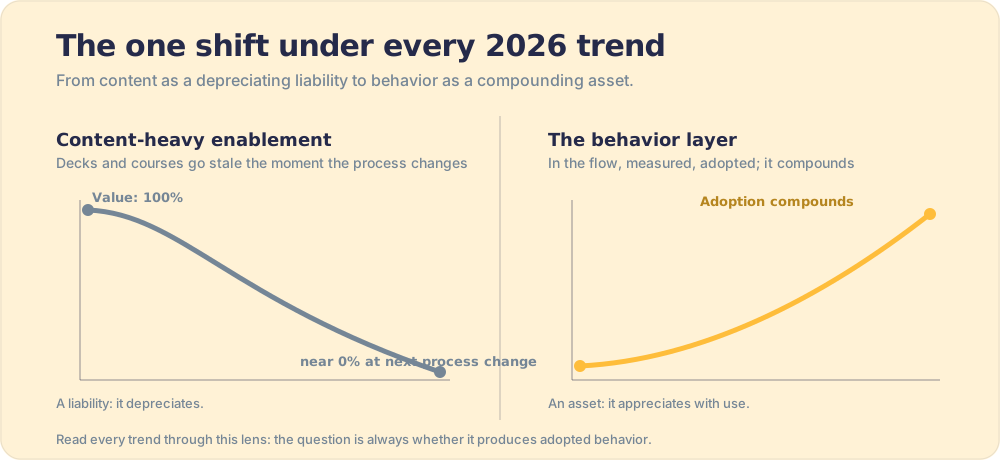
Sales enablement trends are the year's notable shifts in how teams equip and develop sellers; the durable one under the 2026 list is the move from content-heavy enablement to the behavior layer, guidance delivered in the flow of work and measured for adoption.
Every January a wave of sales enablement trends lists washes through the feed, and they tend to read the same way: more AI, more video, more tools, a new acronym, a chart that goes up and to the right. An enablement leader reads one over coffee, nods, and then walks into a Monday where her reps still ignore half the playbook she built last quarter. The trends were real. None of them touched the thing that was actually broken.
That gap is what this guide is about. The 2026 sales enablement trends are easy to list and easy to misread, because the visible ones are gadgets, and gadgets are not the story. Underneath the AI assistants and the platform mergers sits a single durable shift, the one that explains all the others: enablement is moving from a content library you store to a behavior you measure. Read every trend below through that lens and they stop being a parade and start being a direction.
So, plainly: sales enablement trends are the year’s notable shifts in how teams equip and develop sellers. The durable one under the 2026 list is the move from content-heavy enablement, a depreciating library that goes stale the moment the process changes, toward the behavior layer, guidance delivered in the flow of the work and measured for adoption. Hold that, and the rest of the year makes sense.
What is the one trend under all the others?
A document is a depreciating asset. The day you publish the new pitch, the new battlecard, the new onboarding module, it is worth 100% of what it will ever be worth, and from there it only falls, because the process it describes keeps moving. Six months later it is a confident set of instructions for a motion you no longer run. A content-heavy enablement function spends its budget refilling a bucket with a hole in the bottom, which is why a library can be large and impressive and still produce almost nothing on a live call.
The behavior layer runs the other way. It is not a stock of documents; it is the delivery of the right next action to the rep in the moment they need it, plus the measurement of whether they took it. Its value climbs as adoption compounds, because the thing it produces, a rep running the motion, is the thing money turns on. Knowledge is solved. In 2026 any rep can find the doc and any model can summarize it in seconds. What the rep does with three tabs open on a slipping deal is the unsolved problem, and it is the one the behavior layer exists to close.
Every trend below is a symptom of that migration. None of them makes sense if you still think enablement’s job is to produce and shelve content.
How is AI actually changing sales enablement?
AI is the loudest trend, and the most misread. Adoption is now mainstream rather than experimental: McKinsey’s State of AI found that 78% of organizations use AI in at least one business function, up sharply from a year earlier (McKinsey). In enablement the Sales Enablement Collective reports that the large majority of teams now reach for AI at least occasionally, and the wider set of sales enablement statistics for 2026 shows how thin that adoption still runs. The capability is here and cheap.
What AI changes is where the bottleneck sits. When drafting an email, summarizing a call, or researching a buyer costs seconds, the constraint stops being knowledge and becomes behavior, the same fault line the whole field is crossing. And AI obeys a hard rule that the hype skips: it amplifies the process you already have. Point a capable assistant at a team that runs a consistent, adopted motion and it compounds the results. Point the same assistant at a team with no agreed motion and it produces faster, more confident chaos. The multiplier does not care which way it points.
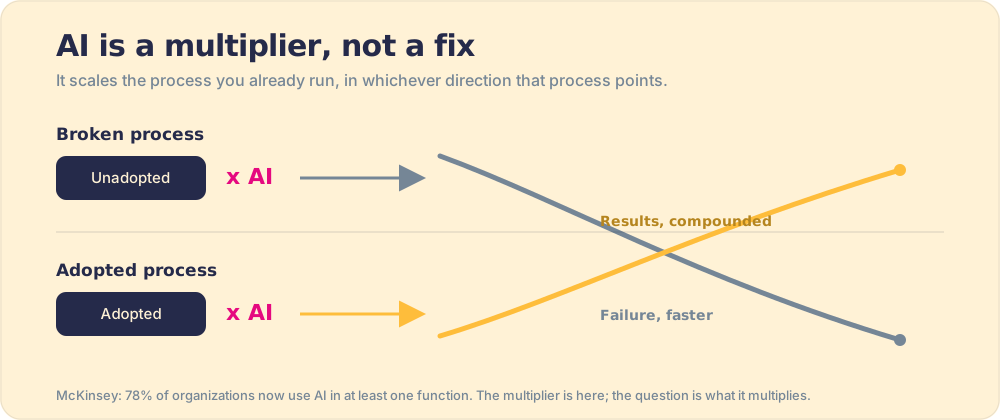
The 2026 move, then, is governance, not adoption for its own sake. Treat AI as something to be inspected at the level of the individual buyer interaction, are we giving buyers the experience we intend, and sequence it behind a process reps actually run. The teams getting a return are not the ones with the most AI. They are the ones who fixed the behavior first and let AI compound it. The fuller version of that argument lives in AI sales enablement and the practical use cases in sales enablement automation.
Why is the enablement software market consolidating?
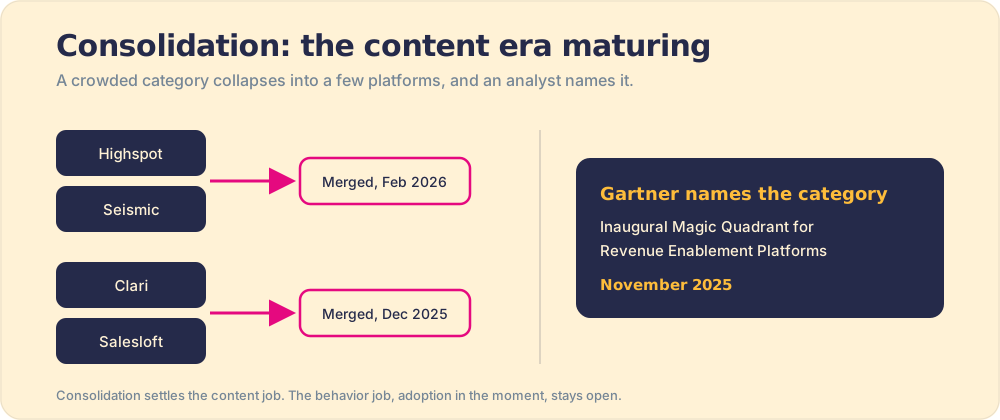
Because the content era is maturing, and mature categories collapse into a few large platforms. Three events inside twelve months tell the story. Highspot and Seismic, the two giants of sales content management, announced their merger in February 2026 and completed it on August 18, 2026. Clari and Salesloft completed their merger in December 2025, fusing forecasting with engagement. And in November 2025 Gartner published its first Magic Quadrant for Revenue Enablement Platforms, the analyst world’s signal that a sprawl of point tools has become one recognized category.
Read through our lens, consolidation is not a tools story; it is the content era growing up and reaching its ceiling. When the differentiator was the size and polish of your content library, every vendor built one, the libraries reached parity, and the only moves left were to merge or to change what the category is for. The platforms that matter next are the ones that stop competing on how much they store and start competing on whether what they hold reaches the rep and changes the motion.
The relabeling from sales enablement to revenue enablement is the same trend wearing a title. The function is widening past the sales team to own the full motion from first touch to renewal, which is exactly why Gartner named the category for revenue rather than sales. The name matters less than the reason: leaders want one accountable owner for whether the defined motion gets run across the journey.
Which metric is replacing training completion?
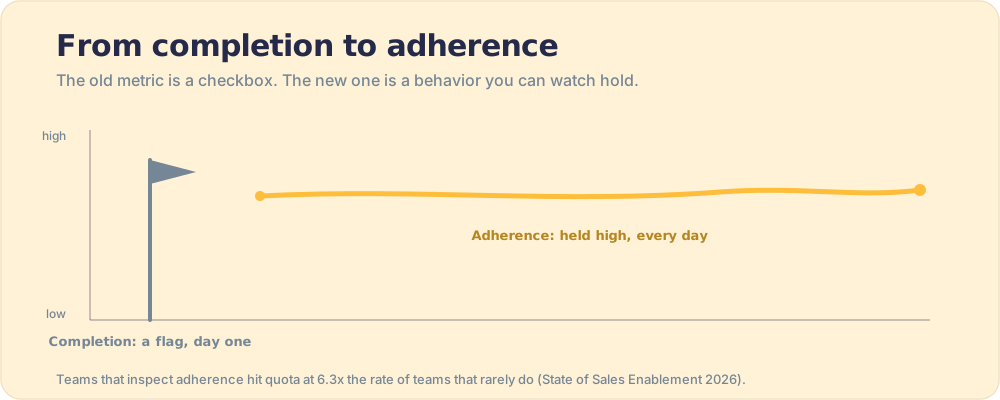
Adherence is steadily retiring completion, and it is the most important trend on the list because it changes what enablement is held to. Completion rates, certifications finished, courses passed, are a flag planted on day one. They tell you attendance happened. They predict almost nothing about what a rep does in March, because knowing better is not the same as doing better.
Adherence asks the harder question, did the rep run the process in the work, and it is a line that has to stay high every day rather than a box ticked once. The reason it is winning is that it predicts. In the State of Sales Enablement 2026, teams that consistently inspect deals against a defined process hit quota at 6.3 times the rate of teams that rarely do, the single largest effect in the study, and teams whose guidance reaches reps in the flow of the work hit quota at 49% against 15% for teams whose guidance sits in docs and an LMS (State of Sales Enablement 2026). Those are not completion numbers. They are behavior numbers.
Teams that consistently inspect deals against a defined process hit quota at 6.3 times the rate of teams that rarely do. It is the largest single effect we measured, and it is a measure of behavior, not attendance.
The catch that has held adherence back is that inspecting by hand is tedious, so managers default to the metric that is easy to pull. The 2026 unlock is automating the inspection so the number is live and the manager’s time goes to coaching instead of chasing. Measurement is the engine of the whole shift, which is why sales enablement KPIs are being rebuilt around leading signals rather than lagging completion.
How do the sales enablement trends of 2026 connect?
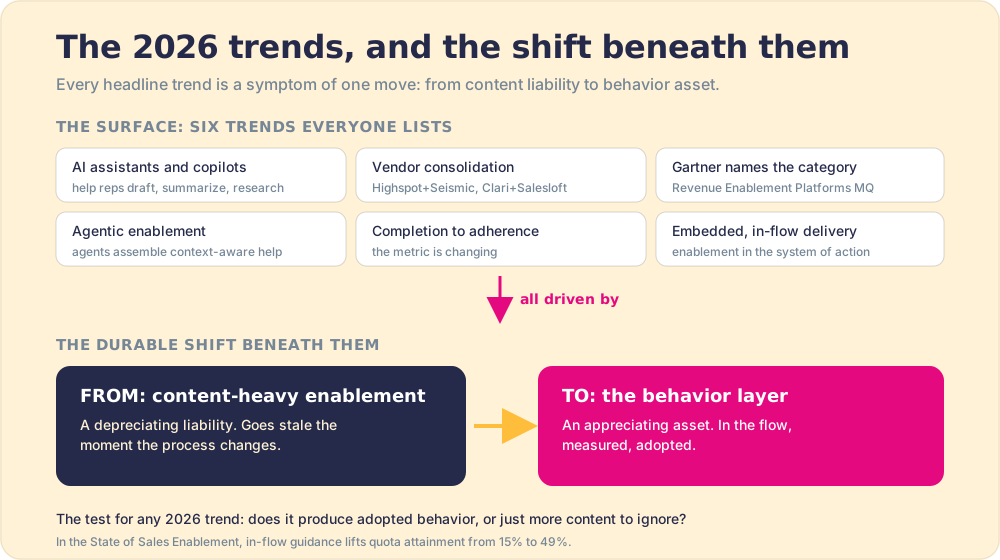
Line the surface trends up and the through-line is unmistakable. This is the honest read of the sales enablement trends 2026 lists: six costumes, one shift. Each one is the same migration, from a thing you store to a behavior you measure, wearing a different costume.
- AI assistants and agents in the workflow. The capability is mainstream at 78% organizational adoption. The value is governed by whether it compounds an adopted process or scales an unadopted one.
- Platform consolidation. Highspot and Seismic, Clari and Salesloft, and Gartner’s new Revenue Enablement Platforms Magic Quadrant mark the content era maturing into a few suites.
- Sales enablement becoming revenue enablement. One accountable owner for the full-funnel motion, first touch to renewal, not a content team and a coaching team in separate lanes.
- Completion giving way to adherence. The metric moves from training finished to process run, because adherence is the signal that predicts quota.
- In-flow delivery over the content portal. Guidance that meets the rep inside the CRM and the tools they already use, because anything that asks them to go somewhere else does not get used.
- Buyer experience as the scoreboard. Consistency is felt by the buyer, so the payoff of a run process is a clearer buying experience, not just an internal control.
What this means for your 2026 plan
Do not buy the trend. Buy the direction underneath it. Chasing each gadget in turn, an AI tool here, a shinier portal there, refills the leaky bucket faster without patching the hole. The teams that pull ahead this year are the ones that read every trend as the same instruction: get the motion adopted, deliver it where the work happens, and measure whether reps run it.
That is the future of sales enablement, and it is less a prediction than a migration already underway: away from producing and storing content, toward delivering the right action in the moment and inspecting whether it lands. If you want the foundation under it, start with the sales enablement software guide; if you want to see how the tools should reach the rep rather than sit in a portal, read the sales tech stack; and if you want the data behind the adherence shift, the State of Sales Enablement is where these numbers come from.
Frequently asked questions
What are the biggest sales enablement trends in 2026?+
How is AI changing sales enablement?+
Is sales enablement becoming revenue enablement?+
What metric should sales enablement track in 2026?+
What is the future of sales enablement?+
Your process, running itself.