Sales Enablement Examples: The Ones Worth Copying Changed Behavior
Most sales enablement examples lists are a parade of assets: a battlecard here, an onboarding deck there, a tidy LMS.
Here is the test that separates the examples worth copying from the ones that just made a deliverable.
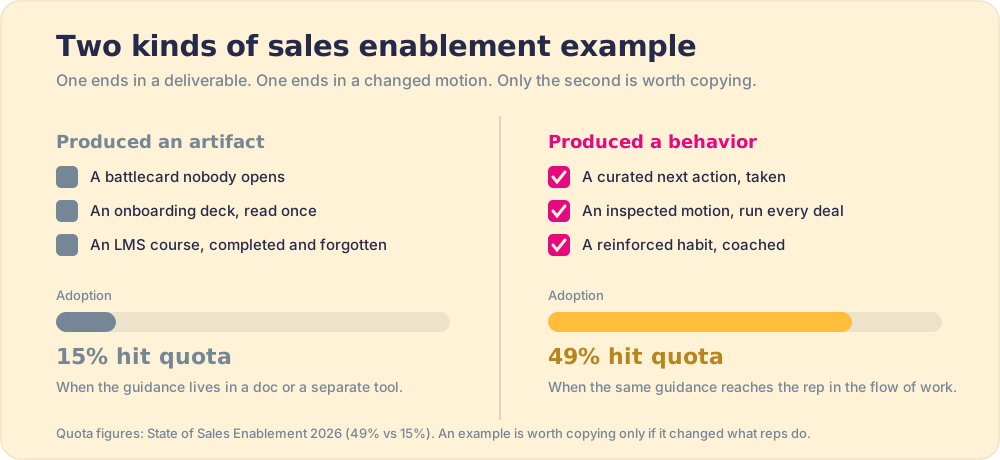
Sales enablement examples are the programs and assets teams use to help reps sell, from battlecards and onboarding to coaching and in-the-moment guidance; the ones worth copying changed what a rep did, not the ones that only made a deliverable.
A new RevOps lead inherits a “best in class” enablement function and asks to see it. What she gets is a tour of artifacts: a battlecard library of nine hundred approved assets, an onboarding academy built on a forty-slide deck and a certification quiz, an LMS with ninety-one percent course completion, and a content platform, freshly renewed. It is impressive, the way a well-stocked garage is impressive. Then she watches a rep on a live call get a pricing question they have not seen, and the rep alt-tabs, guesses, and promises to follow up. The function has everything. The rep, in the only moment that counted, had nothing.
Most “sales enablement examples” lists are a parade of assets: a battlecard here, an onboarding deck there, a nice LMS, each one held up as a thing to copy. But an artifact is not a result. An example is only worth copying if it changed what reps do, and many of the items on those lists never did. So we sort examples by one test: whether they produced a behavior (an adopted motion that shows up on a deal) or only produced an artifact (a deliverable the reps never used).
Sales enablement examples are the programs and assets teams use to help reps sell, from battlecards and onboarding to coaching and in-the-moment guidance; the ones worth copying changed what a rep did, not the ones that only made a deliverable. Knowing is not the same as doing, and the gap between them is where the typical list goes wrong.
What counts as a sales enablement example?
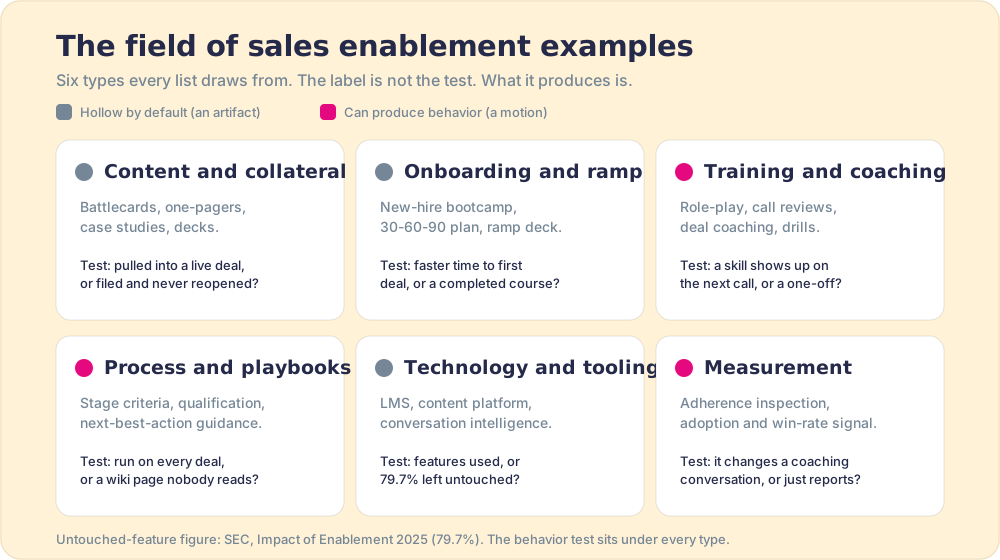
Almost everything a team does to help reps sell gets filed under enablement, which is exactly why the category is so easy to fill and so hard to judge. Six types cover the field, and nearly every list you will read is some arrangement of them.
- Content and collateral. Battlecards, case studies, one-pagers, pitch decks, email templates. The asset layer, and the one that dominates most examples lists because it is the most visible. The test: was the asset pulled into a live deal at the moment it mattered, or filed and never reopened?
- Onboarding and ramp. New-hire bootcamps, 30-60-90 plans, certification paths, the first-week firehose. We pulled this one apart in sales onboarding. The test: did time to first closed deal drop, or did a rep merely complete a course?
- Training and coaching. Role-play, call reviews, deal coaching, objection drills, manager 1:1s. The test: did a named skill show up on the next call, or was it a workshop the team applauded and forgot within the week?
- Process and playbooks. Stage criteria, qualification frameworks like MEDDIC, next-best-action guidance, the documented motion itself. The test: is it run on every deal in a segment, or is it a wiki page reps skip under pressure?
- Technology and tooling. An LMS, a content platform, conversation intelligence, the whole sales tech stack. The test: are the features used, or do they sit in the 79.7% of capability that goes untouched?
- Measurement and inspection. Adherence checks, adoption dashboards, win-rate analysis tied to the process. The test: does the number change a coaching conversation, or only decorate a slide?
None of the six tests asks whether the asset was produced. Each asks whether a rep behaved differently because of it. The typical list never makes that move, and it decides everything.
Why do most sales enablement examples not work?
Because producing an artifact feels like progress, and it usually is not. A deck gets made, a course gets built, a platform gets bought, and a box gets checked. The work is real and visible, and the team that did it has every reason to count it as a win. The trouble is that none of it has touched a rep’s behavior yet, and behavior is the only thing that moves a number.
The evidence is blunt. The Sales Enablement Collective’s 2025 Impact of Enablement report found that 79.7% of enablement leaders say their reps leave at least 40% of a stand-alone tool’s features untouched (SEC). Four in five enablement leaders are paying for capability their reps leave untouched. It is the artifact in its purest form: produced, delivered, renewed, and inert. The capability arrived. The behavior never did.
The reason is not laziness, and it is not a training problem you can lecture away. It is a structural one. Knowledge is solved: any rep can find the doc, and an AI can summarize it in seconds. What a rep does with three tabs open on a slipping deal is the unsolved problem. A battlecard that lives in a folder the rep does not open mid-call has not failed because the rep is undisciplined. It has failed because the right action was not where the work was, at the instant the question arose. When reps do not follow the process, that is a system failure, a problem of friction and timing, not a people failure.
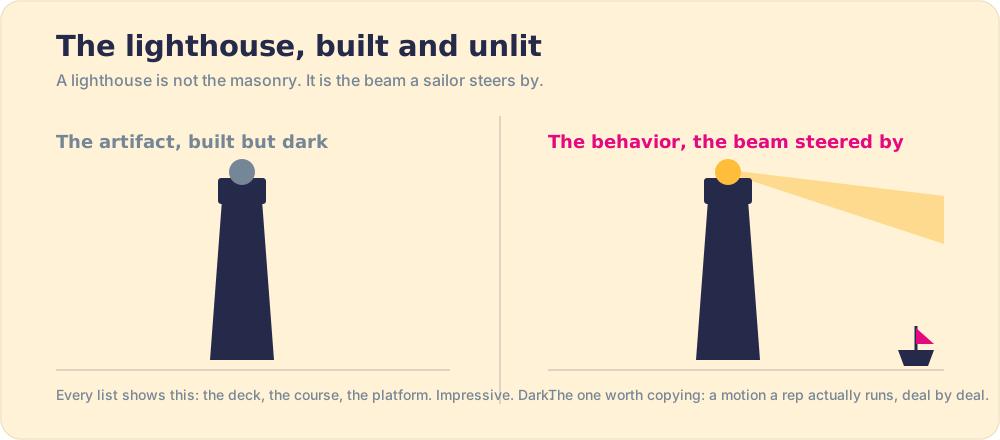
Think of a lighthouse. We are tempted to call a lighthouse the tower, the lamp room, the masonry that took two years to build. But a lighthouse is none of that. A lighthouse is the beam a sailor steers by on a black night. Build the most beautiful tower on the coast, leave the lamp dark, and you have built a monument, not a lighthouse. Most enablement examples are towers. Impressive, expensive, and unlit. The example worth copying is the one where the light reaches the ship.
What is the behavior test, and how do you apply it?
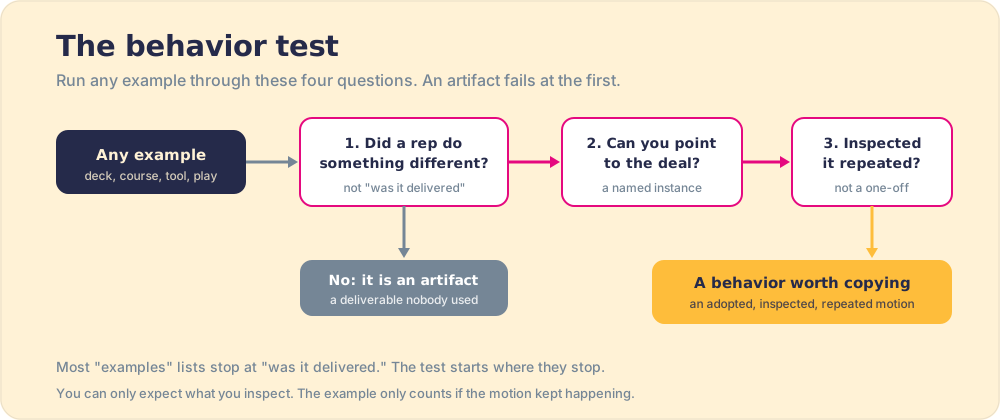
The test is deliberately simple. Run any example through four steps.
- Did a rep do something differently? Not “was it delivered,” not “was the course completed,” not “did engagement go up.” Did an actual rep take an actual action they would not have taken otherwise? If you cannot say yes, you produced an artifact, full stop.
- Can you point to the deal? A real behavior leaves a fingerprint on a specific deal: this rep, this account, this call, where the play was run. If the change is true in the aggregate but you cannot name a single deal where it happened, you are looking at a survey result, not a behavior.
- Did you inspect that it kept happening? A motion run once is a demo, not a behavior. You can only expect what you inspect, and a process exists only to the degree adherence to it is checked. If the manager stopped checking after week one, the behavior almost certainly faded, because behaviors without inspection regress to the old habit.
- Is the motion repeatable across the team? The example is worth copying only if it can spread from one rep to many. The best motion usually already lives in your strongest reps; the job is to make their motion the standard the whole team runs, not to invent a new one from a template.
An artifact fails at the first step. The typical examples list fails there too: the items it celebrates would wash out at question one, because the list never asked it.
The distinction pays off because the same item can be either an artifact or a behavior, depending on how it is run. Onboarding is the clearest case. A 30-60-90 plan handed to a new rep as a PDF is an artifact: it was delivered, it was read once, and by week three it is a tab the rep closed long ago. The same 30-60-90 plan, broken into the next right action that surfaces in the rep’s actual workflow as each milestone comes due, inspected by the manager so a missed step gets caught and coached, is a behavior. Same example. The difference is not the content. It is whether the motion reached the rep in the moment and whether anyone checked that it stuck.
Strong versus hollow: sales enablement program examples, paired
The cleanest way to see the test work is to put the hollow version and the strong version of the same program side by side. These are real, recognizable sales enablement program examples, the kind that show up on most lists, paired so the difference is unmissable.
- The battlecard library versus the in-flow battlecard. Hollow: nine hundred approved competitive cards in a content platform, searchable, untouched on a live call because no rep opens a search bar under pressure. Strong: the one relevant card surfaced automatically when a competitor’s name appears in the deal, so the rep reads it in the moment and changes the next sentence they say. Same content; one is a shelf, one is a behavior.
- The certification course versus the inspected ramp. Hollow: a new-hire academy with a 91% completion rate and a passing quiz, after which time to first deal is exactly what it was before. Strong: a ramp where each milestone is a motion the rep performs on a real account, inspected weekly, so a rep stuck on discovery gets caught in week two and coached, not at quarter close. The course measures completion. The ramp measures the rep doing the job.
- The all-hands training day versus the coached call review. Hollow: a charismatic workshop on objection handling, applauded, gone within the week. Strong: a standing rhythm where a manager reviews real call recordings against a named framework and coaches one specific behavior per rep per week. CSO Insights, the research arm now inside Korn Ferry, found teams running dynamic, data-backed coaching post win rates roughly 28% higher (cited via SEC). The lift does not come from holding a training. It comes from the coaching happening, reliably, against real deals.
- The playbook wiki versus the inspected motion. Hollow: a beautifully documented sales process on a Confluence page that reps last read during onboarding. Strong: the process delivered as the next best action in the flow of the work, with adherence inspected deal by deal so you can finally answer “is this being followed?” before asking “should we change it?” The wiki is documentation. The inspected motion is a process, because a process exists only to the degree it is inspected.
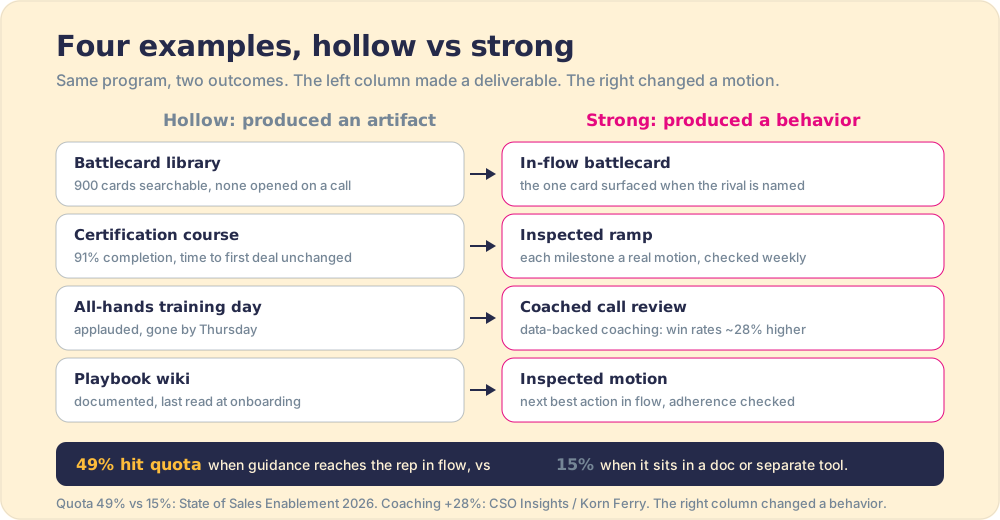
The pattern across all four is the same, and it is the heart of the matter. The hollow version produces a deliverable and stops. The strong version delivers the next right action where the work already happens, then inspects that it kept happening. Knowing better was never the lever. Doing better is, and doing better only follows when the right move is the easy move in the moment.
Teams whose guidance is embedded in the flow of work hit quota at 49 percent. Teams whose guidance lives in docs, wikis, and a separate tool hit quota at 15 percent. Same content. The moment of delivery is the lever.
That contrast, from the State of Sales Enablement 2026, puts the argument in two numbers. The same guidance, embedded in the flow of work versus parked in a separate tool, more than triples the share of reps hitting quota, 49% against 15%. The variable is not which example you picked off the list. It is whether the example delivered the next step where the work was already happening, and whether anyone inspected that reps ran it.
What the best examples of sales enablement have in common
Run enough programs through the test and a single shape emerges. The best examples of sales enablement are not the ones with the most assets or the slickest platform. They are the ones built as a closed loop rather than a one-way handoff: set a clear expectation for what a rep should do, equip the rep with that next action in the flow of the work, measure whether they did it deal by deal, and reinforce it through coaching. Expect, equip, measure, reinforce. Each strong pairing above is a version of that loop; each hollow one stops after “equip” and calls it done.
Two things make the loop work that the artifact version skips entirely. The first is measurement at the center, not bolted on at the end. You cannot ask “which example should we cut?” until you can answer “is this changing what reps do?” Inspection is the hidden lever, and it is the prerequisite to every other answer. The catch, and the reason it gets skipped, is that manual inspection eats the hours managers should spend coaching, so the real win is automating the inspection burden so the human hours go to coaching instead of chasing.
The second is that the loop pays off with the buyer as well as inside the team. Gartner has found that 77% of B2B buyers describe their most recent purchase as complex or difficult (Gartner). An enablement program that delivers a consistent next step to every rep produces a consistent experience for every buyer, which is what closes deals in a market where buying already feels hard. The example that changed a rep’s behavior changed the buyer’s experience too, and it is the one worth copying.
We recommend one habit. When you next read a list of sales enablement examples, or audit your own, do not count the artifacts. Take each one and run it through the four-step test: did a rep do something differently, can you point to the deal, did you inspect that it kept happening, can it spread. Copy only the examples that clear all four, and rebuild the rest as a loop that reaches the rep in the moment and gets inspected. The polished deck, the completed course, the renewed platform are easy to admire and safe to ignore. The motion a rep runs, deal by deal, is the only example that ever moved a number.
If you want the foundations under all of this, what sales enablement is lays out the discipline; the sales enablement content breakdown shows why most collateral stays a shelf; the best sales enablement tools ranks the technology layer by the job it does; and if you want the system that turns these examples into adopted, inspected behavior, start with the sales enablement software guide and the data behind it in the State of Sales Enablement.
Frequently asked questions
What are some examples of sales enablement?+
What is a good example of a sales enablement program?+
What is the difference between a sales enablement artifact and a behavior?+
How do you measure whether a sales enablement example worked?+
What makes a sales enablement example worth copying?+
Your process, running itself.