Sales Enablement Automation: Automate the Inspection First
Most sales enablement automation guides sell you a content factory: draft faster, format faster, reclaim hours. That is the shallow prize. Here is the one that actually changes the number.
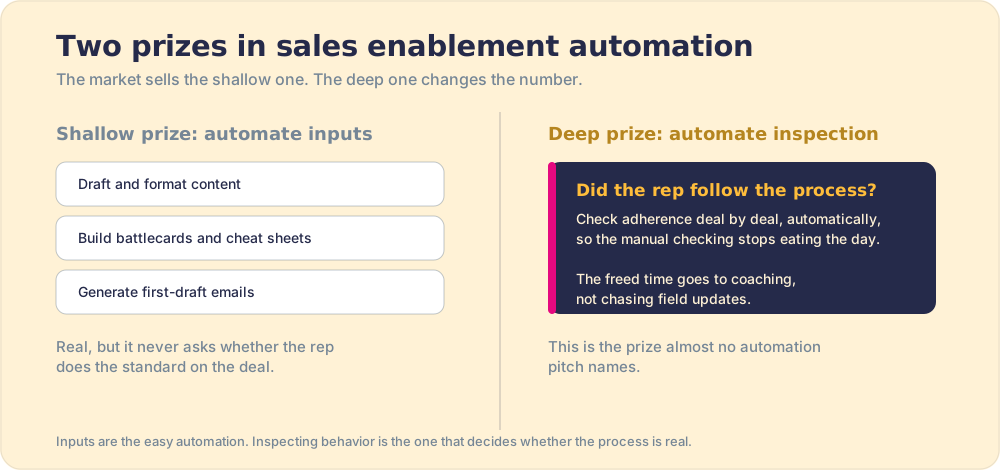
Sales enablement automation is the use of AI and software to handle the repetitive work of training, equipping, and inspecting sellers, so the right content, guidance, and adherence checks happen without a person doing them by hand.
A sales enablement leader opens her week the way she opens every week: by checking. She pulls up forty open deals and reads down the stage fields, the notes, the self-reported next steps, trying to work out which reps actually ran discovery and which ones logged a call and skipped it. Three hours later she has a rough picture and a headache, and the deals she flagged are already a week old. The coaching she meant to do, the part of the job she is good at and the reps need, gets pushed to the end of the week again. It always gets pushed.
That scene is the subject of sales enablement automation, and the standard pitch leaves it out. The market sells automation as a content factory: feed a model your messaging, let it draft the battlecard, format the one-pager, spin up the email, and reclaim your hours. That is real, and it is the shallow prize. The deeper prize, the one that changes the number, is automating the inspection burden, the manual checking our leader spent three hours on, so managers stop chasing and start coaching. Sales enablement automation is the use of AI and software to handle the repetitive work of training, equipping, and inspecting sellers, so the right content, guidance, and adherence checks happen without a person doing them by hand. Read it that way and the whole exercise reorders.
Three convictions hold this argument up, and they sit underneath everything below. AI must be governed by its effect on behavior, and inspected at the level of the individual buyer interaction, not waved through because it is clever. Inspection itself is mandatory, because a process exists only to the degree adherence to it is checked, but the win is automating its drudgery so the human time goes to coaching. And AI amplifies the process you already have, which means you sequence it behind an adopted process or it scales your failures with great efficiency.
What is sales enablement automation, exactly?
Strip the brochures away and there are two jobs hiding under one word. The first is automating inputs: the content reps sell with, the data that tells them which lead to call, the prompt that surfaces the right asset mid-conversation. The second is automating the work of behavior: onboarding a rep faster, coaching at a scale no human can match, and inspecting whether the rep ran the motion you decided mattered. Both get called automation. Only one of them touches what a rep does on a live opportunity.
The size of the opportunity is real, and it sits mostly in the first job. The McKinsey Global Institute estimates that more than 30% of sales activities can be automated with technology that already exists (McKinsey). That is a large prize, and worth taking: Salesforce’s State of Sales survey found reps spend only 28% of the week selling, the rest lost to deal management and data entry (Salesforce). The catch is that most automatable activities are administrative inputs, the formatting and the asset hunt, not the behavior that decides the deal. Automate the 30% and you free the rep’s time. What they do with the freed time is still the open question.
The distinction matters because the two readings lead to different purchases and different outcomes. Read automation as input production and every gap looks like a content problem: not enough battlecards, draft more; reps cannot find the case study, build a recommender. Read it as behavior work and the question becomes whether the rep does the standard when a buyer is on the other end. A library of AI-generated assets that reps skip under pressure is a faster way to fill a shelf. The shelf was never the problem.
The Sales Enablement Collective puts the definition of the broader idea plainly. AI for sales enablement, in their words, is “the use of artificial intelligence to train, coach, and equip sellers throughout the sales cycle,” blending machine learning, natural language processing, predictive analytics, and generative AI with the older enablement discipline (SEC). That is a fair definition, and we would add one word to it: inspect. To train, coach, equip, and inspect. The first three deliver things to the rep. The fourth is the one that tells you whether any of it landed.
This is not a small edit. Jonathan Kvarfordt, who runs the GTM AI Academy, names the gap automation is supposed to close: “You hear from enablement all the time that they don’t have the data. AI gives you the data to make good decisions.” The data he means is behavioral: whether the rep used the assets, ran the discovery, hit the qualification bar. An asset count cannot tell you any of that. Automating inputs gives you more stuff. Automating inspection gives you the data Kvarfordt is talking about.
What can you automate in sales enablement?
The cleanest field map comes from the SEC’s own list of seven AI use cases, and sorting it shows where the money is. Five of the seven automate inputs. Two of them touch behavior. The split is the lesson.
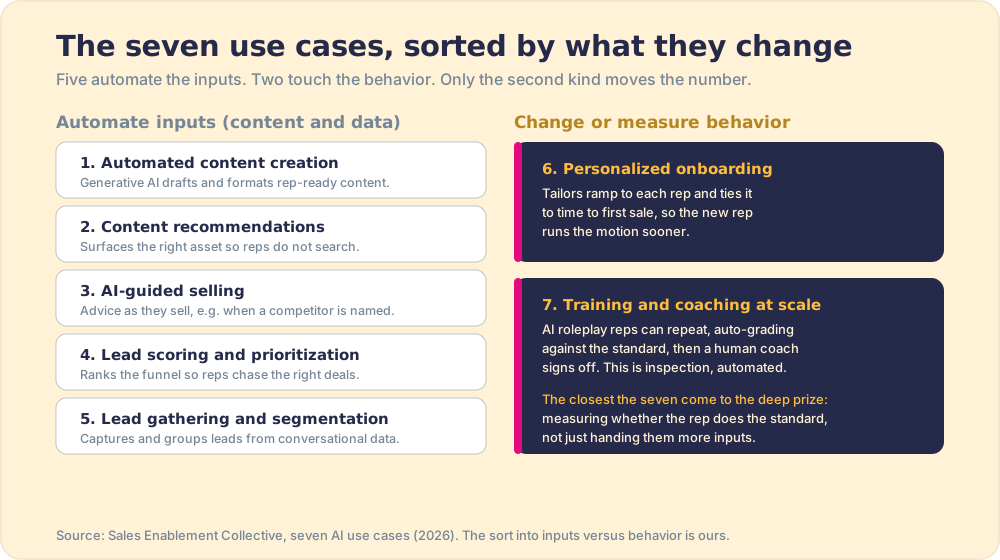
The five input use cases are useful on their own terms:
- Automated content creation. Generative AI drafts and formats rep-ready content, from one-pagers to competitive cheat sheets, far faster than typing the first draft by hand. It is the use case the content-factory pitch leads with.
- Content recommendations. Rather than a rep scrambling through a folder when the stakes are high, an AI copilot reads the conversation and surfaces the right asset. As Kvarfordt frames it, “Most people need help at the moment they need it, which means ‘just in time’ enablement. And AI is perfect for that.” That instinct, help in the moment, is exactly right, and it is the bridge to the behavior work.
- AI-guided selling. Focused advice as the rep sells, the prompt that fires when a prospect names a competitor. The adoption is real now: the SEC’s 2025 Salary and Landscape Report found 81% of enablement or sales teams use AI at least occasionally, and 25% use it regularly (SEC).
- Lead scoring and prioritization. AI tracks and ranks leads as they move through the funnel, using sentiment, touch count, and content consumed, so reps spend their hours on deals that can close instead of ones that cannot.
- Lead gathering and segmentation. Capturing and grouping more, better-qualified leads from conversational data, so the rep starts from a stronger position.
These reclaim time, and the time is not trivial. Teams using AI-powered knowledge management reclaim an average of 4.8 hours every week, the SEC reports (SEC, AI and Sales: A Winning Combination). Worth having. Yet all five do the same job: they hand the rep a better input. None of them checks whether the rep then does the right thing with it. The last two do that work.
The two behavior use cases are where the lever sits. Personalized onboarding tailors ramp to each new rep and ties it to time to first sale, the metric that matters because, as the SEC puts it bluntly, until reps start making the org money they are costing it money. And training and coaching at scale is the one that comes closest to the deep prize. AI roleplay lets a rep practice a scenario as many times as they like, auto-grades the attempt against the standard, then hands off to a human coach for final sign-off. Kvarfordt describes the bandwidth problem it solves: “As an enabler, I don’t have the bandwidth to go to every sales rep, have them practice with me, give them feedback, then go and review their calls, then go back to them again. Even with a small team of 10, I don’t have time for that.”
The SEC list stops one step short of what that quote implies. A team of ten cannot get coached properly because grading and checking each rep by hand is brutally slow. Automate the grading, the checking, the measurement, and the human gets their time back for the part that needs a human. Content is not the bottleneck here. Inspection is, and automating it is the most valuable item on the list.
What should you automate first in sales enablement?
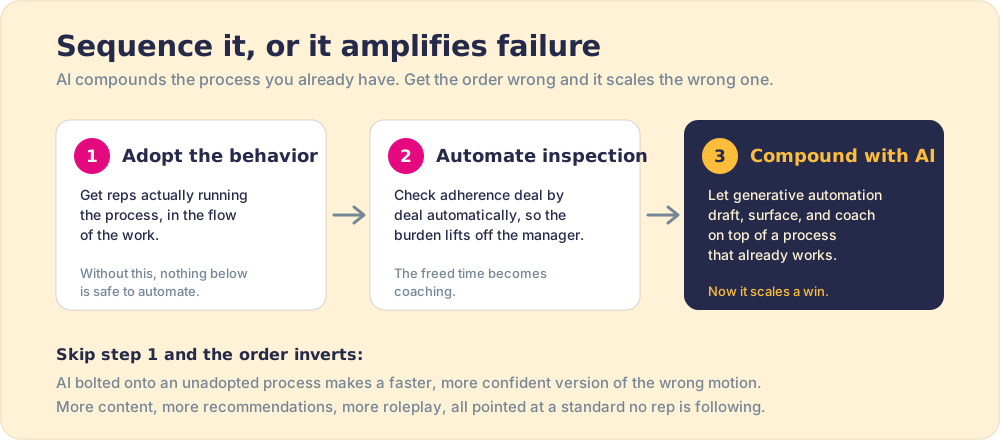
Get the behavior adopted, then automate the inspection of it, then let generative automation compound. That order is not a preference. It follows directly from the fact that AI amplifies whatever process it sits on top of, and amplifying a process the floor does not follow produces a faster, more confident version of the wrong motion.
Take the failure case. A team buys an automation suite, points it at a sales process that lives in a slide deck the reps stopped opening, and switches it on. Now the content engine drafts assets for stages reps skip. The recommender surfaces battlecards into conversations that never happen the documented way. The roleplay tool drills a motion the floor abandoned months ago. The org has spent real money to do the wrong thing at scale, and the dashboards look busy the entire time.
Automation did exactly what it promised. It amplified the process it was given.
The fix is the sequence, and each step earns the next:
- Adopt the behavior. Get reps running the process in the flow of the work, deal by deal, before you automate anything on top of it. A motion the team does not run is not a candidate for amplification.
- Automate the inspection. Check adherence automatically, so the manual reading-of-self-reports stops eating the manager’s week and inspection happens without a person grinding through it. The input-automation pitch skips this step entirely.
- Compound with AI. Now turn on the generative engine, the drafting, the recommendations, the roleplay, because it is finally sitting on a process that works, so it scales a win instead of a mistake.
The evidence for putting adoption and inspection ahead of content is not soft. In the State of Sales Enablement 2026, teams that consistently inspect deals against a defined process hit quota at 6.3 times the rate of teams that rarely do, the single largest effect in the study (State of Sales Enablement 2026). That multiplier does not come from owning more content. It comes from someone, or something, checking whether the process ran. Automating content while skipping inspection optimizes the variable that barely moves and ignores the one that moves most.
Where does sales enablement automation go wrong?
It aims at the comfortable target. Drafting content is visible, easy to automate, and easy to celebrate, you can count the assets, count the hours saved, and put a number in the deck. Inspecting behavior is harder and less glamorous, and it is what changes outcomes, so it gets deferred. The result is a team that automates its way to more inputs and wonders why the execution gap has not budged.
The deferral has a cost the input view never sees, and the SEC names it. Their 2025 Impact of Enablement report found that 79.7% of enablement leaders say their reps leave at least 40% of a stand-alone tool’s features untouched (SEC). Four in five enablement leaders are paying for capability their reps leave on the shelf. Automating more content into that same untouched pile does not help. It is a fuller shelf in a room the reps have stopped entering. The SEC’s own conclusion from that number is the right one: surfacing guidance directly within the rep’s workflow drives far higher adoption than parking it in a separate tool.
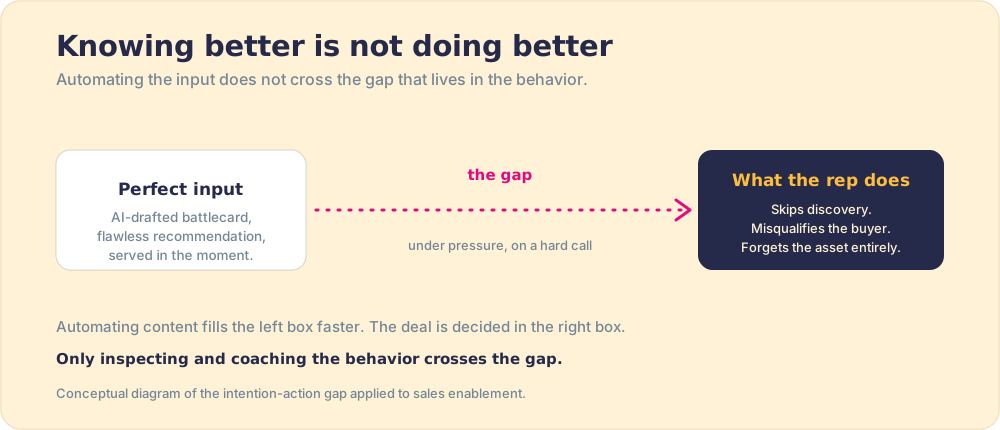
Input-only automation underdelivers for a deeper reason, and the reason is a mechanism. Knowing better is not doing better. You can hand a rep the perfect AI-drafted battlecard and a flawless recommendation engine, and on a hard call under pressure they can still skip discovery, misqualify the buyer, and forget the asset entirely. The gap between the input a rep was given and the behavior they produce is where deals are won and lost, and no amount of automating the input closes a gap that lives in the behavior. So the two SEC use cases that touch behavior, onboarding and coaching at scale, are worth more than the five that touch content. They are the only ones operating on the variable that decides the number.
The second failure mode looks like success. Automate sales enablement as pure content production and you can show a chart that climbs: assets up, drafting time down, recommendations served. The reps are no better. The buyer’s experience is no different. The team has automated the part of enablement that was never the bottleneck and left the bottleneck exactly where it was.
How does automating inspection actually change a manager’s job?
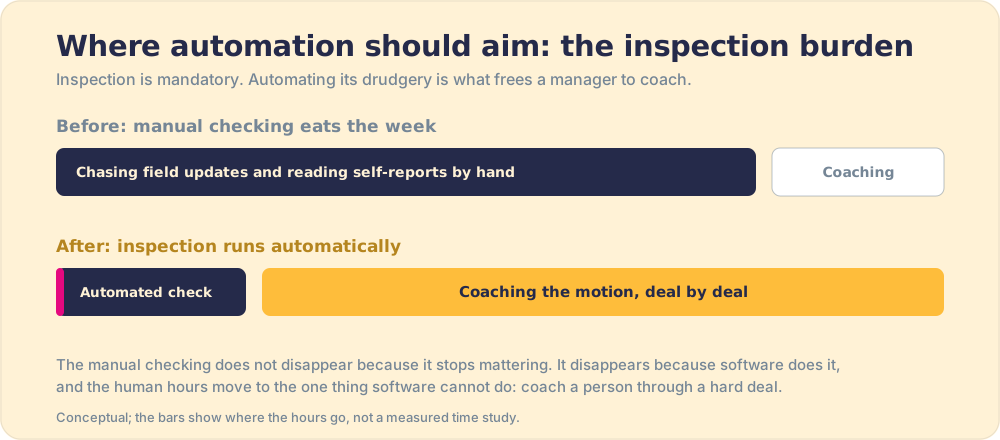
It moves the human to the work that needs a human. Inspection has to happen, that is not optional, because a process you never check is a wish, not a standard. The problem has always been that checking is tedious by hand, so it either gets skipped or it devours the time a manager should spend coaching. Our leader from the opening spent three hours reading deals and had nothing left for the reps. Automate the checking and those three hours come back, pointed at the one thing software cannot do.
Stated operationally, the change is a move from input-based enablement to output-based enablement. The old model gave reps knowledge and assumed behavior would follow; it failed because knowing is not doing. The output model sets a checkable expectation, then measures whether the rep meets it on real deals. Automation is what makes the measuring affordable at scale. Without it, output-based enablement is a nice idea a stretched team cannot run. With it, a small enablement function can inspect every deal and still have its evenings.
There is a buyer-facing payoff here too, and it is the reason any of this matters past the org chart. A rep who runs a consistent motion gives the buyer a consistent, helpful experience, and consistency is felt across the table as well as on the manager’s dashboard. When inspection is automated and coaching is constant, the process holds on every deal, and the buyer gets the clearer experience that closes business in a market where buying already feels hard. The internal control and the buyer’s experience are the same lever seen from two sides.
A behavior layer belongs at exactly this point. Supered surfaces your process and content in the flow of the work inside HubSpot, Salesforce, Salesloft, Gong, and Gmail, then automates the inspection of whether reps follow it, deal by deal, so the manual checking lifts off the manager and the human hours go to coaching instead of chasing. It is one concrete instance of the principle: automate the inspection and the behavior along with the inputs.
What we recommend
Two paths sit under the phrase sales enablement automation, and they are not equal. You can automate the inputs, draft the content, surface the assets, score the leads, and bank the hours, which is worth doing and will reclaim something close to the 4.8 hours a week the SEC measured. Or you can use those tools the way they pay off most: get the behavior adopted first, automate the inspection of it, and let the generative engine compound on a process that already works.
The evidence points to the second path. The execution gap lives in behavior, and no amount of automating inputs closes a gap in the doing rather than the knowing. The SEC’s own 79.7% says reps already ignore most of the features they have, so more content into that pile is wasted motion. Their two highest-value use cases, onboarding and coaching at scale, are exactly the ones that automate behavior work, and their own cited expert, Kvarfordt, locates the bottleneck in the bandwidth to inspect and coach every rep, not in the supply of content. And our own data puts a number on it: inspection consistently applied is worth a 6.3x quota difference, the largest lever there is. The order that follows is not a matter of taste. Adopt, inspect, compound.
So when you next scope an automation project, do not start by counting the assets it will produce. Start by asking whether it will tell you, automatically, whether a rep ran the process on a real deal, and whether it gives your managers their coaching time back. That question sorts the sales enablement automation tools that change the number from the ones that fill the shelf faster. If you want the broader case for AI governed by behavior, start with AI for sales enablement; if you want to see where the generative half delivers and where it overpromises, read generative AI for sales; if you want the inspection layer that reads the call itself, conversation intelligence maps it; and if you are choosing the system that ties process, inspection, and content together, the sales enablement software guide is where to go next.
Frequently asked questions
What is sales enablement automation?+
What can you automate in sales enablement?+
What should you automate first in sales enablement?+
Where does sales enablement automation go wrong?+
Do sales enablement automation tools replace managers?+
Your process, running itself.