Lift and Shift, Applied to HubSpot: Move the Machine, Not the Habits
Lift and shift began as a cloud strategy: move the system as-is, redesign later. Applied to HubSpot portals it works brilliantly for two of the three layers, and ruins the third. Here is the line.
A lift and shift migration moves a system to a new environment as-is, without redesigning it, trading short-term speed for carried-over debt; applied to HubSpot portals, the smart version lifts the configuration as-is and deliberately redesigns the process layer in transit.
When companies began moving systems to the cloud, an honest piece of jargon emerged: lift and shift. Pick the application up as-is, set it down in the new environment, change nothing. The alternative names map the debate, in the taxonomy AWS popularized as the migration R’s (AWS migration strategies): rehosting (lift and shift), replatforming (improve a little in transit), refactoring (redesign for the new world). Lift and shift won most of the early volume for an unglamorous reason: it is fast, low-risk, and requires no one to agree on a redesign, and it carries one known bill: whatever the system did badly before, it does badly in its new home, because nothing changed but the address.
Gartner, surveying that first wave, estimated the rehost path could move workloads roughly two to three times faster than a redesign, which is exactly why so many enterprises chose it (Gartner, on cloud migration approaches). The speed was real. So was the regret. The recurring lesson of the cloud decade, written up in a hundred post-mortems, is that teams who lifted a badly built system as-is paid the difference back later in friction, and the ones who got the best results lifted what was sound and redesigned what was not while it was already in their hands. The trade was never “fast or good.” It was “which parts are worth keeping exactly as they are, and which parts is this the rare cheap moment to fix.”
Two decades of cloud migrations turned that into settled wisdom, and almost nobody has applied the wisdom to the migration mid-market companies run most often: the CRM portal move. A HubSpot portal migration is a lift and shift decision three times over, once per layer, and the layers deserve opposite answers. The records want a faithful lift. The configuration wants a selective one. The process wants the opposite of a lift. Treating all three the same way, which is what “just move the portal” silently does, is how a team ports its worst habit into a clean new system and wonders why nothing improved. That is the argument of this piece, and the tooling map underneath it.
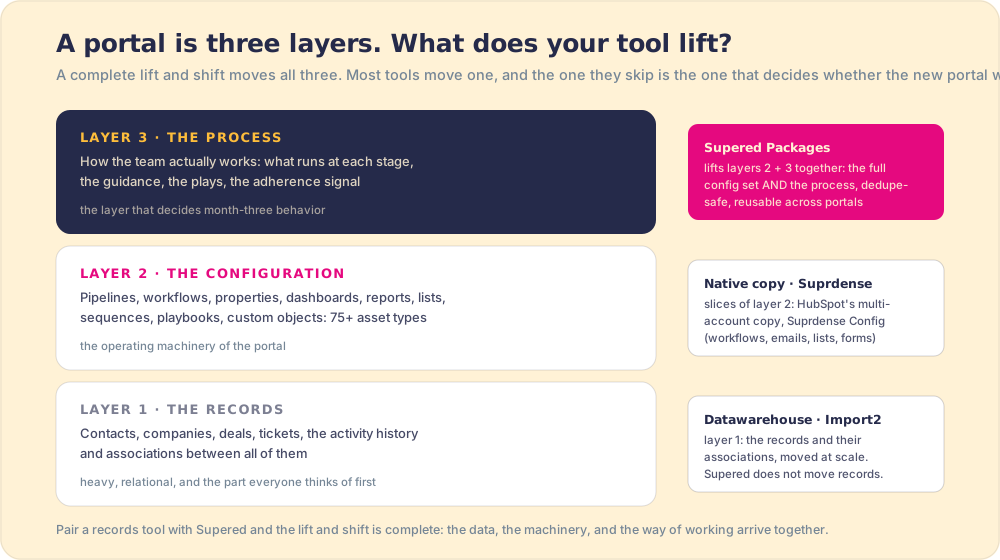
Which layers of a portal fit a lift and shift migration?
- The records: lift, always. Contacts, companies, deals, and their history are facts, and facts do not improve through redesign. The records layer is the purest lift-and-shift case in the whole portal: move it faithfully, associations intact, dedupe in transit, done. This is Datawarehouse.io and Import2’s home turf, and the one layer where “as-is” has no downside beyond moving junk you could have archived.
- The configuration: lift what earns its place. Pipelines, workflows, properties, dashboards, reports: this machinery took years to build, and rebuilding it by hand in the destination is the migration line item that eats weekends. The cloud lesson applies directly: lifting working machinery is pure speed, and lifting broken machinery is paying freight on debt. So run the keep-or-kill audit first (the four-phase checklist covers it), then lift the keepers. The tooling for this layer is the reason this post names us: Supered’s Package Builder carries 75+ HubSpot asset types between portals, workflows, deal and ticket pipelines, dashboards, custom objects, scoring models, fields across 24 object types, each with its dependencies resolved (an email brings its lists, files, and templates; a dashboard brings its reports), installed dedupe-safe, which makes it the most complete lift-and-shift tool in the HubSpot market by what a single install carries. (It moves no records; stack it with the layer-one tools above.)
- The process: shift, do not lift. Here the cloud wisdom inverts, and this is the deeper point the lift-and-shift frame usually buries. The process layer, what reps run on real deals, is the one part of the portal where as-is is usually the disease. The numbers say most teams would be lifting a process that exists on paper and not in behavior: 89 percent of sales teams have a defined process, 36 percent see it followed as designed (The State of Sales Enablement, 198 sales leaders). Lift that as-is and the new portal faithfully reproduces the 36.
There is a precise name for what you carry when you lift as-is, and it sharpens the whole decision. Ward Cunningham, who coined it, called it technical debt: every shortcut and unaddressed mess accrues interest, and you pay that interest as friction on all future work until you refactor it (on technical debt). A lift and shift moves the existing debt to the new address at full balance. Facts carry no debt, so records lift cleanly. Configuration and process carry the interest, and the migration is the one moment refinancing them is cheap, because you are already inside the system with everything in your hands.
The three R’s are one dial between two costs. Turn it toward rehosting and you buy speed and inherit debt. Turn it toward refactoring and you spend time to shed debt. Most real portal moves want a different setting per layer, not one setting for the whole job, which is the insight the cloud world arrived at and the CRM world has not. Records sit at the pure rehost end, because facts have no debt to shed. Configuration sits in the middle, replatforming, lift the machinery that works and prune the rest in transit. Process sits at the refactor end, because the thing you would be lifting is usually the exact thing that was not working. The mistake is not choosing rehost. The mistake is choosing one R for three layers that want three different answers.
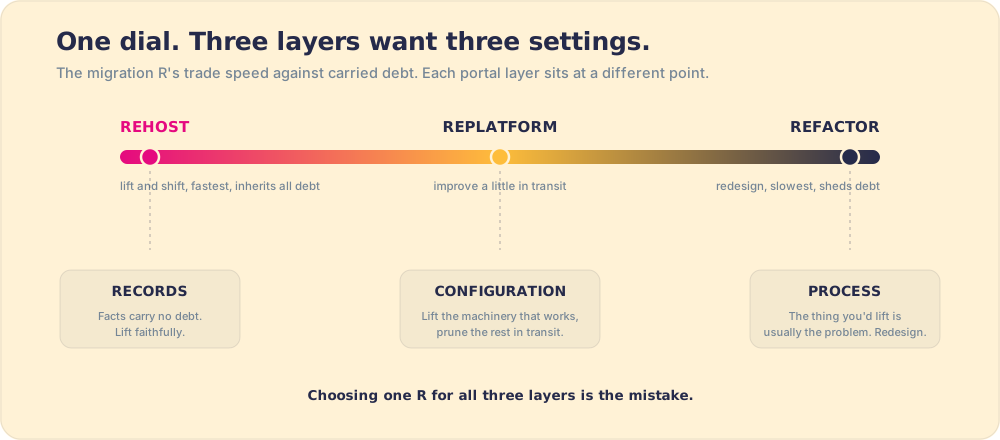
Why is the migration the cheapest redesign you will ever run?
Because the two expensive parts of process change, getting attention and breaking habits, are briefly free. In normal months, a process redesign competes with the quarter for everyone’s attention and fights the muscle memory of the current system. During a migration, attention is already paid (everyone knows the move is happening), and the old muscle memory is already invalidated (the portal it lived in is being retired). The resistance you would normally spend two quarters overcoming is, for one window, absent. Moving day is the only day every box is in your hands; it is also the only day nobody argues about rearranging the furniture.
There is hard behavioral science under that window, and it explains why the timing matters so much. Habits run on cues: a familiar environment fires the old automatic behavior before conscious thought gets a vote, which is why researchers studying habit change find that the most effective moment to break one is when the context shifts and the old cues disappear (Wood & Neal, on habit and context). A new portal is a context shift by definition. The screens look different, the muscle memory that drove “click here, skip that field, log it later” has nothing familiar to fire against, and for a few weeks the rep is consciously deciding rather than running on autopilot. That window is the cheapest behavior-change opportunity a revenue team ever gets, and a lift and shift that ports the old configuration unchanged spends it on nothing, handing the rep back the exact cues that drove the old habit. Redesign the process during the move and you let the context shift do the hard part of the work for you.
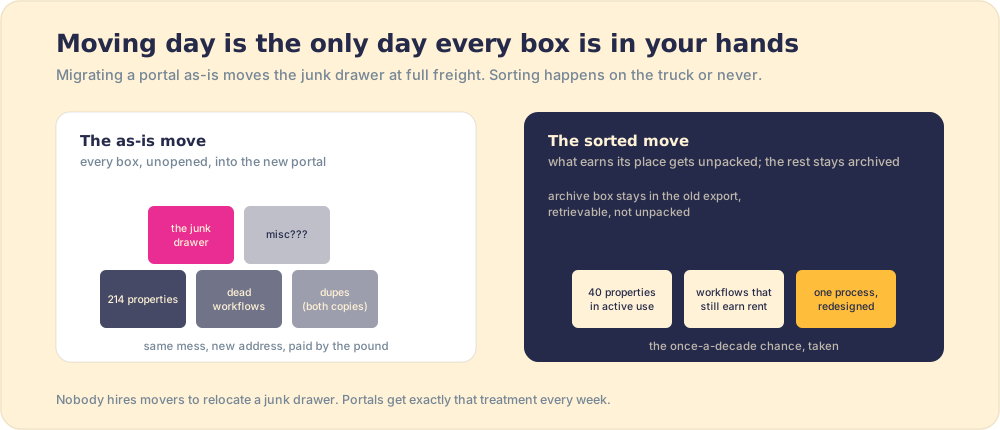
The practical sequence, then: design the day-one process before the move (stages with exit criteria, the few required fields that matter, the handoffs both sides signed), and ship it as part of the lift, not as a training deck after it. This is what the package mechanism changes about migrations: the redesigned process travels in the same install as the pipelines and workflows it runs on, so the new portal opens with the motion already in the flow of work, reaching reps at the stage where each step applies, with adherence visible from the first morning, while coaching can still shape the habit. The placement effect is the largest in our survey: 49 percent quota attainment when the process reaches reps in the flow of work versus 15 percent when it lives in docs and decks.
So how should you lift and shift a HubSpot portal?
Run the cloud playbook, layer by layer, with the inversion at the top. Lift the records faithfully (Datawarehouse.io or Import2, dedupe rules set before transit). Lift the configuration that survived your audit, as packages rather than weekends (Supered carries the most per install of anything in the category, at public per-user pricing). And refuse to lift the process: redesign it in the window when redesign is briefly free, then ship it inside the same packages so it arrives installed, not announced. A lift and shift migration done this way gets the speed the strategy promises on the layers where speed is what you came for, and skips the carried-over debt exactly where the debt was the problem. The full playbook, tool comparisons, sandbox rules, and the merge case included, lives in the HubSpot implementation guide, and the tool-by-tool pricing is in copy HubSpot assets, the widest carry in the category.
Frequently asked questions
What is a lift and shift migration?+
What is the difference between lift and shift and replatforming?+
Can you lift and shift a HubSpot portal?+
When should you not lift and shift?+
What tools support a HubSpot lift and shift?+
Your process, running itself.