The Mutual Action Plan: a Buyer's Signature, Not a Seller's Checklist
A mutual action plan only works when the buyer co-signs it. Here is what to include, why a co-authored plan beats a seller's checklist, and how it surfaces a dead deal before it wastes your quarter.
A mutual action plan is a shared, written plan to a buyer's decision, with the steps, dates, and owners on both sides, and the version that works is co-authored and co-signed by the buyer, which turns it from a seller's checklist into a real commitment.
A mutual action plan is one of the few sales artifacts that tells you the truth, and only if you let it. Done right, it is a shared map from where the deal is now to the buyer’s signature and go-live, with dates and owners on both sides, built and agreed with the buyer. Done the way most teams do it, it is a tidy document the rep writes alone, emails over, and calls “mutual” because they used the word in the title. The difference between those two is the difference between a commitment and a wish, and it is the reason the tool exists. (You will also see it called a mutual success plan or a close plan; the principle is the same.)
So if you are asking what is a mutual action plan beyond the template, here is what it should include, why a buyer’s co-signature is the feature that matters, and how the plan does a second job nobody asks of it: telling you which deals are real. The throughline, and our point of view: a plan the buyer will co-author is a commitment; a plan the buyer ignores is a diagnosis. The people who built the modern close plan already saw the danger. The fix they all reach for, and the one we will spend most of this piece on, is the buyer’s own hand on the page.
What should a mutual action plan include?
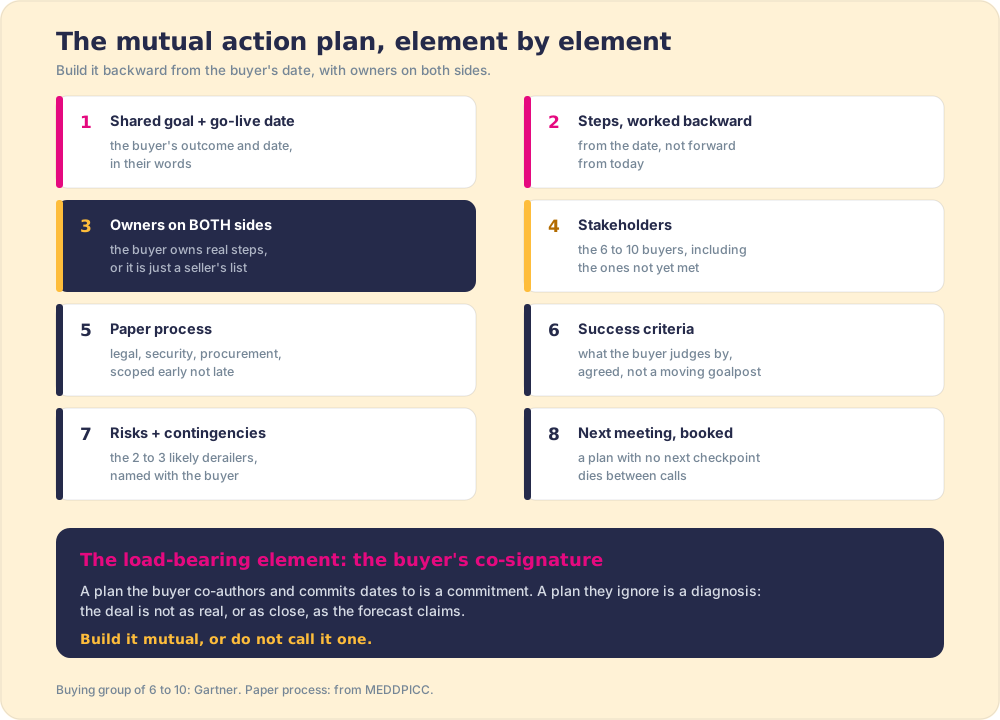
Eight elements, and the order matters because a good plan is built backward from the buyer’s date, not forward from today.
- A shared goal and go-live date. Start with the buyer’s desired outcome and the date they want to be live, in their words. The whole plan hangs from this; without a real date owned by the buyer, the rest is fiction.
- The steps, worked backward. From the go-live date, work backward through every step that must happen: evaluation, business case, approvals, contracting, onboarding. Backward planning surfaces how little time there is.
- Owners on both sides. Each step has a named owner, and the buyer owns real ones. A plan where every owner is the rep is a to-do list, not a mutual plan.
- The stakeholders. Who must be involved, including the people not yet met. Gartner finds the buying group runs to six to ten people (Gartner), so a plan that names only your champion is already incomplete.
- The paper process. Legal, security, procurement: the reviews that ambush late-stage deals nobody scoped. This is the Paper process from MEDDPICC, written into the timeline instead of discovered in week nine.
- Success criteria. What the buyer will judge by, so the evaluation has a finish line both sides agreed to rather than a goalpost that keeps moving.
- Risks and contingencies. The two or three things most likely to derail this, named with the buyer, so they are watched instead of feared.
- The next meeting, scheduled. A plan with no next checkpoint on the calendar is a plan that dies between calls. Book it before you leave.
Why do most mutual action plans fail?
Because they are not mutual, and the word does all the lying. A rep builds the plan, shares it, feels organized, and the buyer treats it as the vendor’s paperwork. Nothing on the buyer’s side is genuinely owned, no buyer-side dates are committed, and the “mutual action plan” becomes a slightly fancier seller’s checklist.
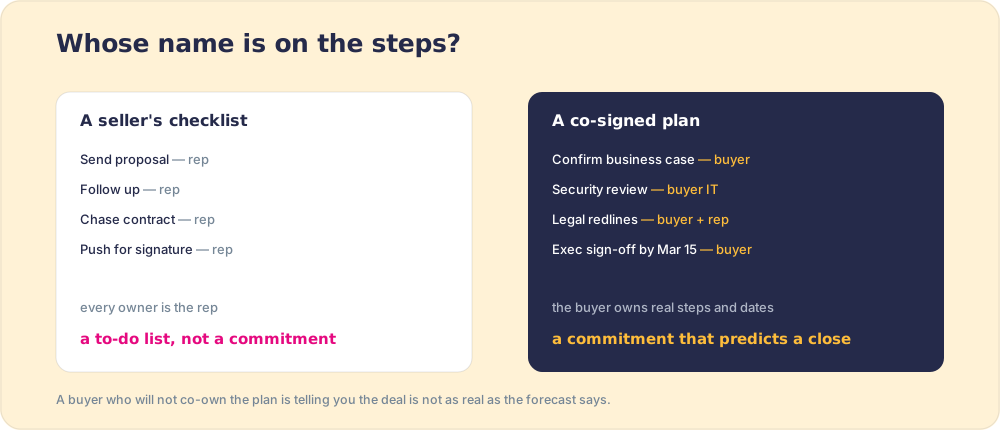
Here is the part worth sitting with: a buyer who will not co-author the plan or commit to dates is not giving you a weak plan. They are giving you information. The deal is not as real, or as close, as the forecast claims. The mutual action plan that “fails” usually did its most important job, it revealed an unqualified deal, and the team ignored the result. This is why the plan is a qualification instrument as much as a project one, and why its refusal is a finding, not a setback.
What do Winning by Design, MEDDPICC, and the Jolt Effect say about close plans?
The mutual action plan has a lineage worth knowing. Three of the most-read names in modern selling have each built their version, and each one, in their own words, points at the same central element: the buyer has to be in it. Read them fairly, because they are right about a great deal, and then watch where we think the common version still breaks.
Start with Winning by Design, the firm Jacco van der Kooij built and the home of the SPICED framework most revenue teams know. Their Joint Impact Plan blueprint, published May 9, 2022, describes a plan that “replaces vague success definitions with a concrete, customer-facing roadmap tied to business impact and milestones.” Their first key takeaway is plainer still: “Customers achieve better outcomes when success is planned jointly, not assumed.” (Winning by Design) Jointly, not assumed. The argument sits in those four words, and we agree with it without reservation. A plan the seller assumes on the buyer’s behalf is a guess wearing a project manager’s clothes.
Andy Whyte, who wrote the book on MEDDICC and gave the framework its second hard “P” for Paper process, is blunter about how the common version fails. On the MEDDICC go-live plan resource, updated June 23, 2025, he writes: “A large majority of time, ‘Close Plans’ that are shared with customers are either totally Seller sided or biased towards the Seller’s priorities. And while your priorities are important, they aren’t the only ones that matter.” (MEDDICC) That is the diagnosis we opened with, from the person who codified the Paper process the plan is supposed to scope. Whyte’s own move is to anchor the plan on the buyer’s go-live date rather than the seller’s signature date, so the buyer sees when value arrives, which the close date alone never shows them. We think that reframe is correct, and we wrote it into the backward-planning section above.
Then there is the evidence for why all of this matters more than it looks. Matthew Dixon and Ted McKenna studied more than two and a half million sales conversations for The Jolt Effect and found that the deal you lose is rarely lost to a competitor. It is lost to the buyer’s own paralysis. Their core finding, in their words, is that once purchase intent is established, customers stop caring about succeeding and start caring about “not failing” (The Jolt Effect). Their prescription for that fear is the part that should change how you read a mutual action plan: high performers do not retreat and wait. They take risk off the table, the “T” in their JOLT method, by guiding the buyer through the decision step by step instead of leaving them to face the cliff alone. A mutual action plan, built with the buyer and walked with them, is exactly that guidance made visible. It is the seller standing next to the buyer at the edge, pointing at each foothold, rather than emailing a map and hoping.
So here is where we land, and where we push past the common version of all three. Winning by Design says plan jointly. Whyte says stop being seller-sided. Dixon and McKenna say take the risk off the table. Each is right. But a plan that is co-authored once, at a kickoff, and then saved as a PDF is none of those things by the second week. It was joint for an afternoon. The buyer’s world moves, a stakeholder changes, a security review appears, and the document sits in an inbox aging like milk. A mutual action plan is not a deliverable you produce and file. It is a living thing you inspect, the way you would inspect anything you depend on. You can only expect what you inspect, and a plan nobody looks at again is a plan nobody is running.
Picture two people about to take the same trip. The seller writes the whole itinerary, prints it, and hands the buyer a copy. The seller holds the tickets, the seller knows the gate times, the seller will do the worrying. The buyer holds a piece of paper. Now picture the other version: the buyer has their own ticket in their own pocket, their name printed on it, a seat they chose, a bag they packed. Only the second buyer is going on the trip. The first one is being told about a trip. A mutual action plan with no buyer-side dates and no buyer-side owners is the first itinerary, and the close date it implies is a departure the buyer never booked.
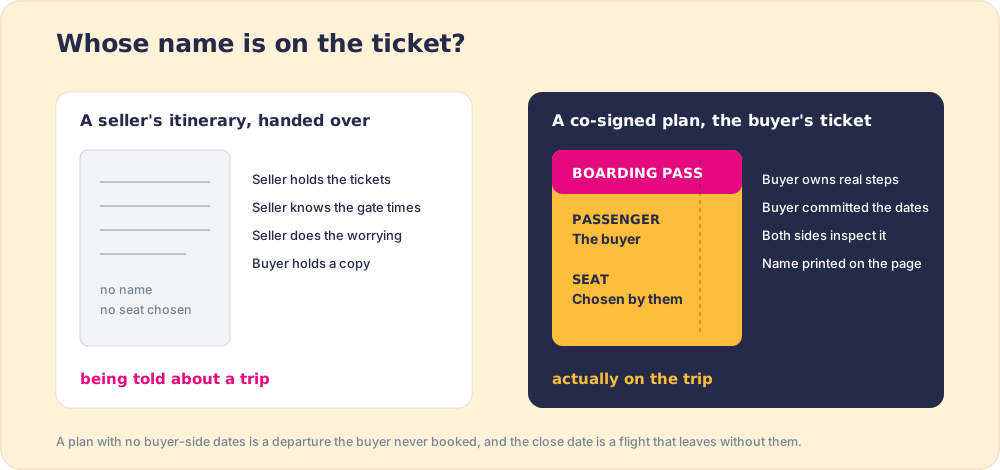
That is the thread connecting all three sources and our own point of view. The buyer’s hand on the page is what turns a plan from a description of a deal into a commitment inside one. The mutual action plan is the buyer’s commitments made explicit: their dates, their owners, their criteria, written down where both sides can see them and check them as the deal moves.
How does a mutual action plan help you forecast?
It swaps the rep’s optimism for the buyer’s commitments, which is the only honest basis for a forecast. A close date the rep picked is a hope; a close date backed by a plan the buyer co-owns, with buyer-side steps and dates, is evidence. This is the buyer-commitment principle in its most concrete form: do not advance a deal on seller activity alone; advance it on the buyer’s real position.
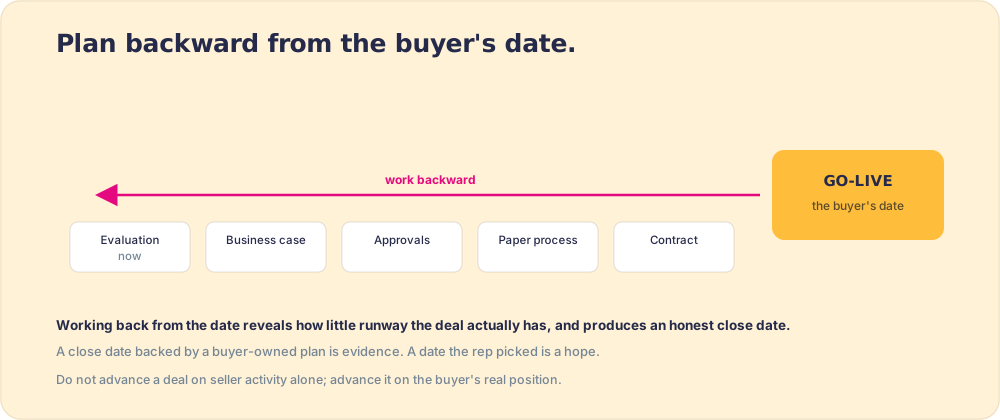
This is exactly why thin qualification wrecks the forecast and why deals that feel healthy slip at quarter end: the close date had no buyer commitment underneath it. A mutual action plan, genuinely co-signed, is one of the most reliable forecasting signals you can get, and it shortens the sales cycle by surfacing the paper process and the missing stakeholders early instead of late.
What we recommend
Two ways to use a mutual action plan. You can treat it as a seller’s project tracker, write it alone, keep it tidy, and feel in control while the buyer ignores it. Or you can treat it as a mutual commitment, build it with the buyer, put real dates and owners on their side, and read their willingness to engage as a qualification signal.
We recommend the second, and the logic is the same one that runs through everything we publish: seller activity is necessary but not sufficient, and the pipeline should reflect the buyer’s real position, not the rep’s checklist. Winning by Design, Andy Whyte, and the Jolt Effect research all point the same way, plan jointly, drop the seller bias, take the buyer’s risk off the table. We add one rule they leave implicit: a co-authored plan only stays mutual if it is inspected. Co-sign it once and shelve it and you are back to a seller’s document by the second week. A plan you revisit on every call, with the buyer’s owners and dates checked against reality, forecasts honestly, shortens the cycle, and catches dead deals early. A plan the buyer will not sign has told you what you needed to know. Build it mutual, keep it living, or do not call it one.
Start with the qualification it depends on in MEDDPICC, why a clean plan makes the forecast trustworthy in sales forecasting, and the system that makes reps run it in sales process adoption.
Frequently asked questions
What is a mutual action plan?+
What should a mutual action plan include?+
Why do mutual action plans fail?+
How does a mutual action plan improve forecasting?+
Your process, running itself.