Sales Enablement Platform: A Content Library Is Not a Behavior Change
The sales enablement platform category was built around content management, helping reps find and share material. But findability was never the constraint. The platform that matters changes behavior in the flow of work.
A sales enablement platform is software meant to make reps more effective, and the category split into two kinds: a content library that helps reps find and share material, and a behavior layer that surfaces and measures the right actions in the flow of work.
The sales enablement platform category was built to solve a content problem: reps could not find the right deck, the latest one-pager, the approved pitch, so a generation of platforms made content searchable, shareable, and trackable. It worked, and it revealed something uncomfortable. Solving findability did not move the number much, because findability was never the real constraint. Reps mostly knew what to do and which content to use; they did not do the right things consistently on their deals. A platform that perfects content access has perfected the wrong thing, which is why the most important question about a sales enablement platform is not how much content it holds, but whether it changes what reps do.
A sales enablement platform is software meant to make reps more effective, and the category split into two kinds: a content library that helps reps find and share material, and a behavior layer that surfaces and measures the right actions in the flow of work. Knowing which kind you are buying is the whole decision.
How did the sales enablement platform category get here?
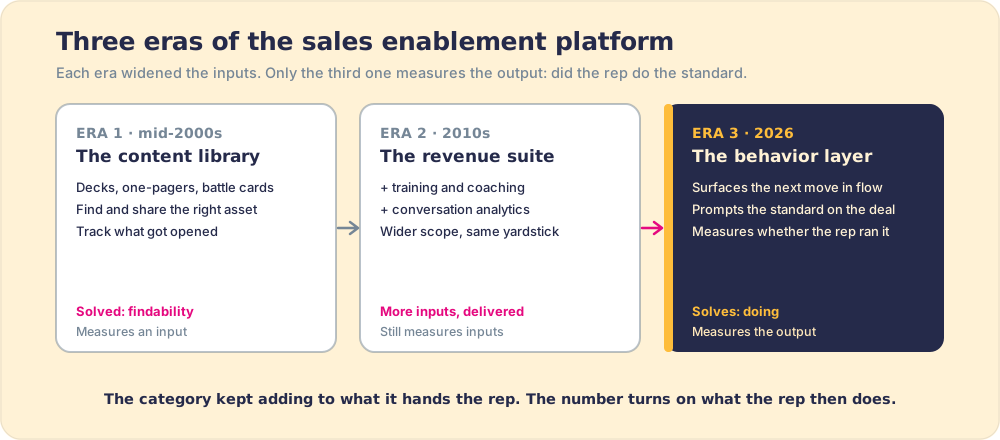
The category did not arrive fully formed; it grew in three eras, and each one widened what the platform hands the rep without changing what it measures. The first era, in the mid-2000s, was the content library proper: organize the decks, version the battle cards, make the right asset findable. That solved a genuine problem, because reps really were walking into meetings with stale material. The second era, through the 2010s, bolted on training, coaching workflows, and conversation analytics, and the language shifted toward “revenue enablement” to claim a wider remit across the whole go-to-market team. More inputs, more scope, a bigger platform. But the yardstick never moved. A 2015-era suite and a 2005-era library both reported the same kind of number: content delivered, training completed, assets opened. The unit of measure stayed on the input side through both eras.
The third era is the one that breaks the pattern, because it changes the yardstick rather than the contents. A behavior-layer platform does not ask how much it holds or how fast reps can find a deck. It asks whether the rep ran the standard move while working the deal in front of them, the instant the question arose, and it measures that directly. That is a different axis, and it is the axis the first two eras left untouched.
Why is a content library not enough?
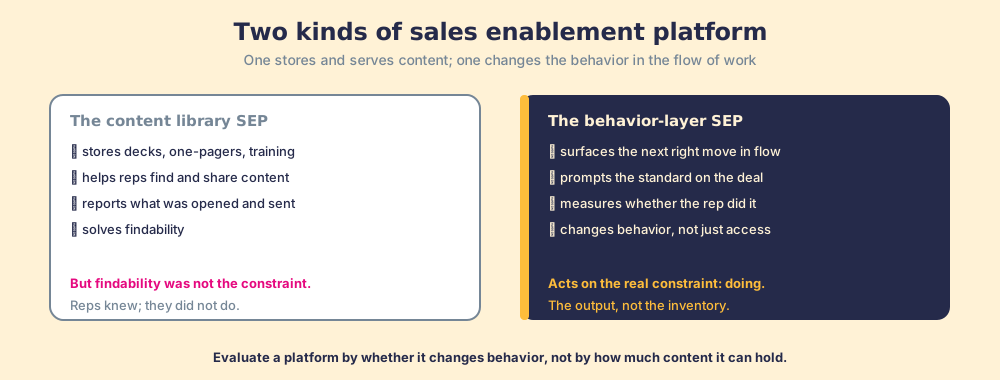
Because content findability was rarely the binding constraint, and solving a non-constraint produces little gain. The content-library platform is genuinely useful at what it does: it stores material, helps reps find and send it, and reports what was opened. But every one of those is a delivery metric, a measure of access, not of behavior. A rep can find the perfect deck and still run a weak discovery, mis-qualify the deal, and forget the play. The platform improved the rep’s access to content and left the rep’s behavior untouched, which is the knowing-doing gap that Pfeffer and Sutton documented (Pfeffer and Sutton, The Knowing-Doing Gap), restated as a software category: the platform addressed knowing (here is the content) and never touched doing.
The market is now signaling this directly. In 2026, the two largest enablement platforms, Highspot and Seismic, merged, a consolidation we examined in the Highspot-Seismic merger. When the two leaders of a category combine, it usually means the problem they were built to solve, content management and findability, has commoditized and stopped being a source of differentiation. The content-library model is mature, which is another way of saying its core problem is solved. The frontier moved to the part the library never addressed: changing what reps do.
What should a sales enablement platform do?
Surface the right behavior in the flow of work and measure whether the rep performs it. If the constraint is doing rather than knowing, the platform that matters is the one that acts on doing: it prompts the standard move at the moment the rep is working a deal, inside the CRM where the work happens, and then measures whether the behavior occurred. This is the behavior-layer model, and it is judged on a different axis than the library. The library asks “can reps find and share content”; the behavior layer asks “did reps do the right thing,” which is the sales enablement output that correlates with results.
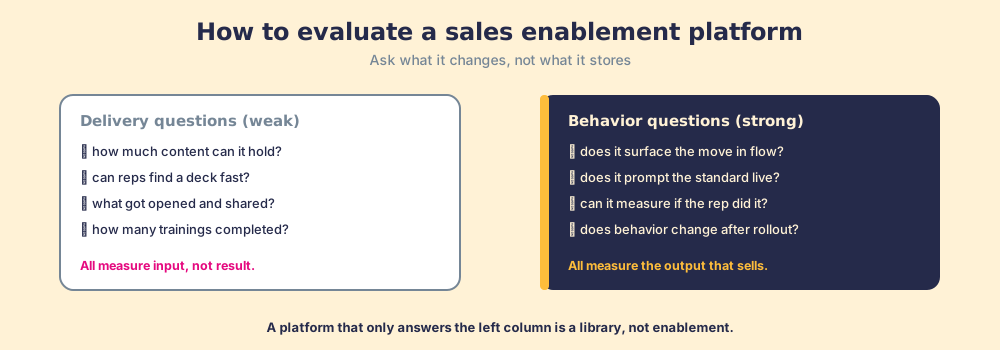
The distinction shows up sharply in how you evaluate a platform. Delivery questions and behavior questions sort the two kinds.
- Delivery questions are weak. How much content can it hold, how fast can reps find a deck, what got opened, how many trainings completed. All measure input.
- Behavior questions are strong. Does it surface the move in flow, prompt the standard live, measure whether the rep did it, change behavior after rollout. All measure the output that sells.
- The test is post-rollout behavior. A platform earns its keep if reps do the right thing more consistently after it, not if the content portal is tidier.
This is also why a feature checklist misleads buyers. Run a typical sales enablement platform comparison and the rows are almost all library rows: storage, search, version control, content analytics, CMS integrations, a quoted “engagement” score. Two products can match feature-for-feature down the page and still solve different problems, because the rows that decide the number, does it prompt the standard in flow, does it measure whether the rep ran it, are usually missing from the grid entirely. The result is that the best sales enablement platform on paper, the one with the longest list of sales enablement platform features, can be the worst fit for a team whose actual constraint is doing rather than finding. The grid rewards the era-one job. Your number lives in the era-three one.
The analysts have started to name this shift. Gartner retired its old Sales Engagement framing and now publishes a Revenue Enablement Platforms Magic Quadrant (Gartner), language that concedes the category outgrew content management. When the people who define the category stop calling it a content tool, the buyer should notice. The frontier they are pointing at is the same one the merger pointed at: not better delivery of inputs, but a measurable change in what reps do.
How should you choose a sales enablement platform?
Decide which problem you have, then buy for it. If your reps genuinely cannot find content, a content-library platform solves that, and it is a solved, commoditized problem you can buy cheaply and reliably. But if your reps can find content and still do not run the standard, which is the far more common situation, a better library will not help, and you need a platform that changes behavior in the flow of work: one that surfaces the right move during the deal and measures whether reps run it. Evaluate every candidate on the behavior questions, not the delivery questions, and watch what happens to rep behavior after a pilot, not what happens to your content portal. The platform that matters is the one that moves the output, doing, not the one that perfects the input, access.
What we recommend
Choose a sales enablement platform by the problem it solves, and be honest about which problem you have. The category was built around content management, and it solved findability so well that the leaders merged, which tells you findability is no longer where the value is. The harder, unsolved problem is behavior: getting reps to do the right thing consistently on their deals, which a content library does not touch. So if your constraint is access, buy a library and move on. If your constraint is doing, which it usually is, buy the platform that surfaces the standard behavior in the flow of work and measures whether reps run it, and evaluate it on whether behavior changes after rollout, not on how much content it holds. A content library is a fine filing cabinet. It is not, on its own, sales enablement, because enablement is a behavior change and a filing cabinet changes no one’s behavior.
From here: the definition that frames it in what is sales enablement, the consolidation evidence in Highspot vs Seismic, the broader category in sales enablement software, and the adherence it must produce in sales process adoption.
Frequently asked questions
What is a sales enablement platform?+
What should a sales enablement platform do?+
How do you evaluate a sales enablement platform?+
Why are sales enablement platforms consolidating?+
Your process, running itself.