Institutional Knowledge: What Walks Out When People Leave
Institutional knowledge is the hard-won memory of how your company really works. Capturing it is half the job; the win is delivering it back at the moment of the work.
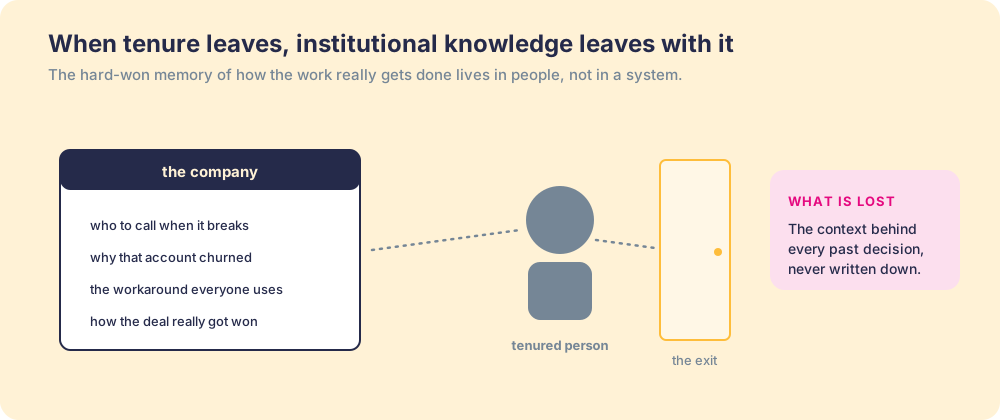
Institutional knowledge is the accumulated, hard-won expertise of how a company really works, who to call and why past decisions were made, that lives in tenured people and walks out the door when they leave.
The person the whole team goes to has been here eleven years. Ask them how the renewal works, or why the biggest account almost left after that long outage, and the answer comes back complete, with the context no document carries. Without anyone deciding it, they became the building’s memory.
Then they hand in their notice, and a low panic moves through the team. Not about the headcount. About everything in their head that no one else can see.
That memory has a name. Institutional knowledge is the accumulated, hard-won expertise of how a company runs in practice, who to call and why past decisions were made, that lives in tenured people and walks out the door when they leave. Panopto’s research put a size on it: 42% of institutional knowledge is unique to the individual employee who holds it (Panopto, 2018). The usual response is to get it written down before they go. That is half the job, and the easier half. Institutional knowledge pays off only when it reaches the next person at the moment of the work.
What is institutional knowledge?
Institutional knowledge is the collective memory of how an organization works: the relationships, decision history, workarounds, and unwritten rules that people build up over years and rarely write down. Its closest synonym is institutional memory (Wikipedia, Institutional memory), and you will also see organizational knowledge or corporate memory.
It is the part of the map that was never printed. A new hire gets the printed half on day one: the org chart, the pricing sheet, the process doc. What they do not get is the worn footpath the veterans walk, the shortcut around the swamp, the bridge that looks solid and is not. That second map keeps people out of trouble, and it is handed over only by working shoulder to shoulder.
It comes in three layers:
- Explicit knowledge. Written and findable: the contract template, the price book, the onboarding deck. This layer survives a resignation.
- Implicit knowledge. Could be written down but never was: the approval path for a non-standard discount, which report the CFO reads first.
- Tacit knowledge. Judgment the holder cannot fully put into words. The philosopher Michael Polanyi gave it its sharpest line in 1966: “we can know more than we can tell” (Polanyi, The Tacit Dimension).
Institutional knowledge differs from tribal knowledge in scale. Tribal knowledge is usually the unwritten motion of one strong performer or one team. Institutional knowledge is the whole building’s memory, spread across many people and many years, which is why a single departure can take a piece of five different processes with it.
What are examples of institutional knowledge?
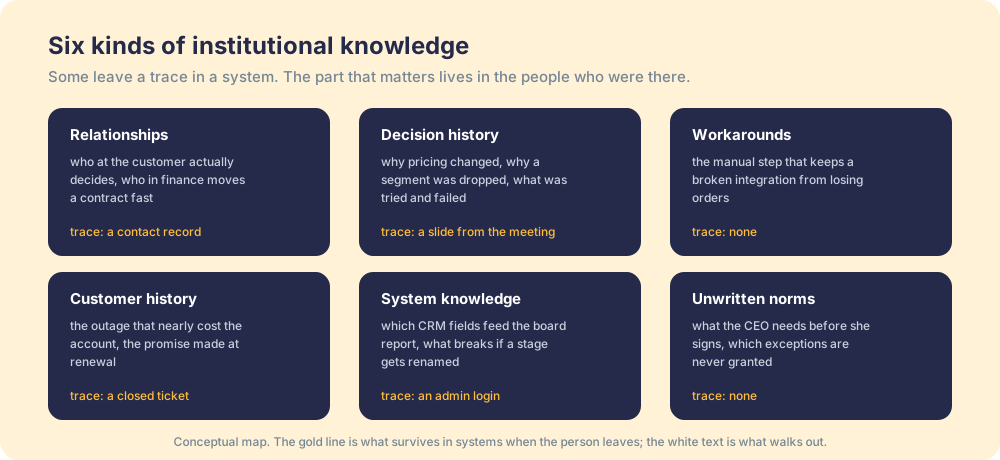
Examples of institutional knowledge are the answers that only someone who was there can give. In a mid-market revenue team, six kinds come up again and again:
| Kind | Example | What survives in a system |
|---|---|---|
| Relationships | Who at a key customer makes the call; who in your finance team moves a contract in a day | A contact record, without the context |
| Decision history | Why pricing changed, why a segment was dropped, what was tried and failed | A slide from the meeting, if that |
| Workarounds | The manual step that keeps a broken integration from dropping orders | Nothing |
| Customer history | The outage that nearly cost an account, the promise made at renewal | A closed support ticket |
| System knowledge | Which CRM fields feed the board report, what breaks if a stage gets renamed | An admin login |
| Unwritten norms | What the CEO needs before she signs, which exceptions are never granted | Nothing |
Look down the last column. Where a trace survives, it is the fact without the reason. The contact record says who; it does not say why that person matters or how to approach them. The reason is the institutional knowledge, and it lives in the person.
The cost of losing it is measurable. Panopto estimated inefficient knowledge sharing costs the average large US business $47 million a year in lost productivity, with employees losing about 5.3 hours a week waiting on a colleague’s knowledge or rebuilding expertise that already existed (Panopto, 2018). Gallup puts the cost of replacing one employee at one-half to two times their annual salary (Gallup), and a large share of that is the time a successor spends rebuilding what walked out. The drain runs whether or not anyone resigns. A departure makes the leak visible all at once.
Why does capturing institutional knowledge fail to fix anything?
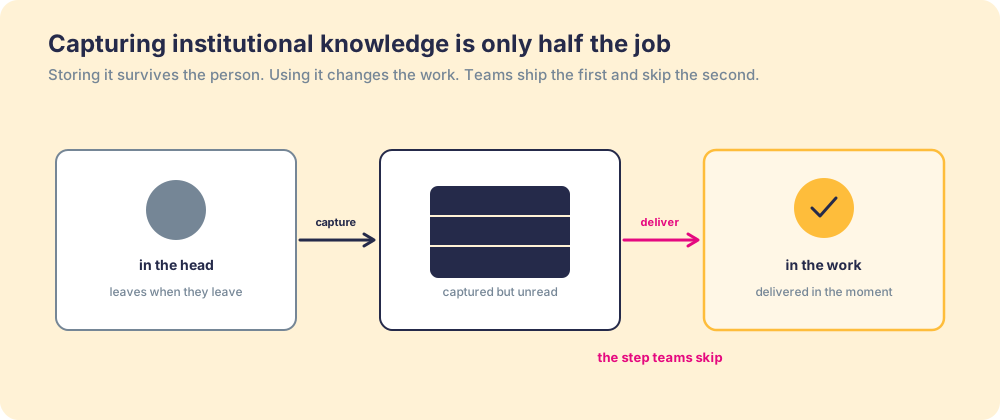
Because writing it down moves the memory one step, and teams mistake that step for the end. The knowledge goes from a person’s head into a document, which feels like rescue, and in one sense it is: the answer now survives the person. But a document is not a behavior. The captured memory sits in a folder, the rest of the team goes on working the way they always have, and nothing reaches them while the work is in front of them.
An internal knowledge base runs into the same wall. Think of an attic packed with everything the family ever owned, boxed and labeled. Nothing is lost. Nothing is reachable either, not in the moment you need it, because reaching it means climbing the ladder mid-task. A captured answer in a folder is an attic box. It survived. It is not in your hands.
Our own data shows the size of the gap between written and used. The State of Sales Enablement found that 89 percent of teams have a defined sales process and only 36 percent see reps follow it (The State of Sales Enablement). A 53-point spread between what the company has written down and what people do is the same gap a captured archive leaves open. Forgetting widens it: a person who reads the captured answer once sheds most of it within days. Knowledge retention is not telling someone once. It is the right answer returning when they need it.
When the answer goes unused, the cause is the system, not the people. The archive never reached them where the work happens. As we argue in knowledge sharing, the fix is to deliver the answer into the flow of the work, not to scold the team about discipline.
How do you capture institutional knowledge before someone leaves?
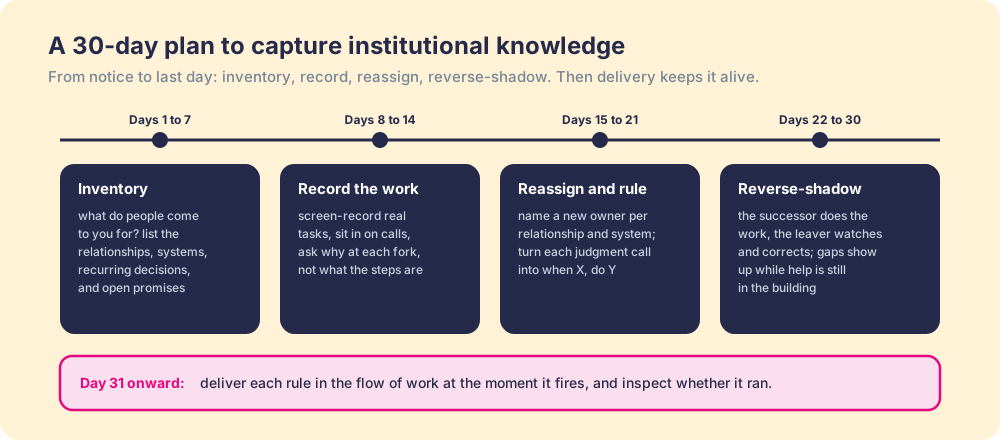
You capture institutional knowledge before someone leaves by running a structured handover over their notice period: inventory what they hold, record the work as it happens, reassign every relationship and system, and have the successor do the work while the leaver is still there to correct it. Thirty days is enough if you start on the day of notice:
- Days 1 to 7, the inventory. Ask one question: what do people come to you for? Then list the relationships they own, the systems only they administer, the recurring decisions they make, and every open promise to a customer or partner.
- Days 8 to 14, the recording. Screen-record live tasks with a tool like Loom, sit in on their calls, and at each fork ask why they chose that path rather than what the steps are. The why is the part that walks out.
- Days 15 to 21, the reassignment. Name a new owner for each relationship and system, and make the introductions while the leaver can vouch for the successor. Turn each judgment call into a rule with a trigger: when a renewal account opens a support ticket marked urgent, the account owner calls within a day.
- Days 22 to 30, the reverse-shadow. The successor does the work; the leaver watches and corrects. Gaps surface while the person who can fill them is still in the building.
The rule format in week three matters more than it looks. “Keep an eye on the big renewals” depends on memory and leaves with the person who remembered. “When a renewal account opens an urgent ticket, the owner calls within a day” can be surfaced in the CRM at the moment the ticket opens and checked afterward. One is a note. The other is a process the company owns.
How do you keep institutional knowledge in the building?
Stop treating capture as an exit task. A company that only captures institutional knowledge when someone resigns is running the handover above under the worst conditions, on a deadline, with a person who has already left mentally. Retention works as a standing system. Think of the retiring ship’s captain. You do not keep what is in his head by handing the next captain a transcript of his career. You keep it by making sure that when the fog rolls in over the same reef, the warning is already on the chart in front of the new hands.
- Continuous capture. Record decisions and their reasons when they are made: a two-line decision log in the account record or the process change note, written by the person deciding.
- Named owners. Give each relationship, system, and process a second person who knows it, so no single resignation takes the only copy.
- Delivery in the flow of work. Surface the rule inside HubSpot, Salesforce, or the inbox at the moment it applies, so acting on the company’s memory costs no detour to a separate destination.
- Inspection of use. Measure whether the rule ran and coach the misses. You cannot spread a standard you never inspect.
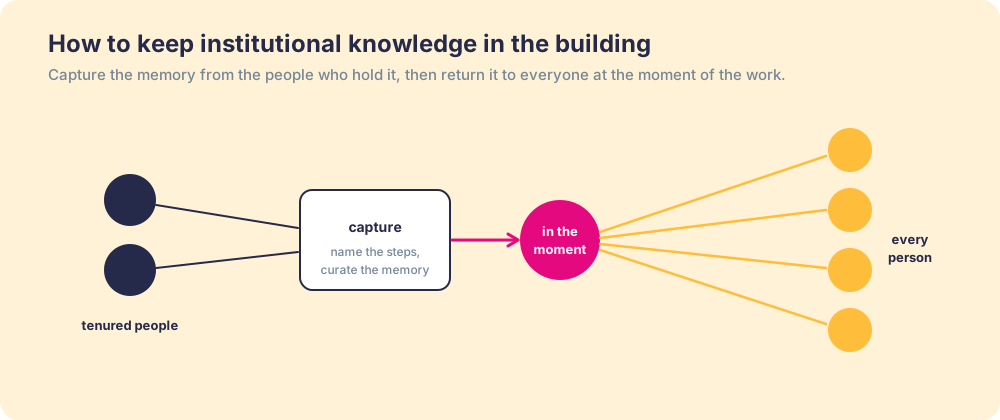
A memo posted to a wiki and never inspected changes nothing; an answer delivered in the moment and measured for adherence becomes how the team works. The difference is not the quality of the document. It is whether anyone built the path from the archive back into the work.
What we recommend
Leaving institutional knowledge tacit means paying for it twice: once in the 5.3 hours a week people spend rebuilding what a colleague knew, and again, all at once, when that colleague leaves. Capturing it in a folder at exit time stops the second bill only partway, because a folder does not change what the next person does.
Run capture as a standing habit, use the 30-day handover when someone gives notice, write the judgment calls as rules with triggers, and deliver those rules in the flow of work where someone can inspect them. With 42% of institutional knowledge held by a single person and a 53-point gap between the process teams write down and the one reps run, the archive alone cannot close the distance. Delivery and inspection can.
Start with where that captured knowledge should live in the internal knowledge base, how one strong performer’s motion gets captured in tribal knowledge, and how the walls between teams form in knowledge silos.
Frequently asked questions
What is institutional knowledge?+
Why does institutional knowledge leave when people do?+
How do you capture institutional knowledge before someone leaves?+
What are examples of institutional knowledge?+
What is another word for institutional knowledge?+
What is the difference between institutional knowledge and tribal knowledge?+
Why is knowledge retention more than storing documents?+
Your process, running itself.