Knowledge Retention: Why Storing It Does Not Keep It
Knowledge retention is usually framed as storage: keep it before people leave. The deeper loss is the forgetting curve, and the fix is delivery, not a bigger vault.
Knowledge retention is keeping hard-won expertise usable over time, which depends less on storing it before people leave and more on returning the right answer to a person at the moment the work calls for it.
A bucket with a slow leak is a strange thing to own. You fill it, you set it down, and it looks full. Come back in an hour and the water is on the floor, and the bucket, which has done nothing wrong, sits there looking as capable as before. The problem was never the size of the bucket. You could buy a bigger one and lose more water, slower.
Retention programs treat knowledge the way we treat that bucket. They worry about how much it holds and when it might tip over (a key person resigning, a skill set walking out the door), and they pour energy into a bigger vessel. The leak goes unmentioned. Yet the leak is where the water goes.
Retention budgets go to the tipping. The leak gets almost nothing. We picture the dramatic loss, the veteran who leaves and takes ten years of judgment with them, and we are right to. But there is a second loss, smaller each day and far larger in total, and it happens to people who never go anywhere.
What is knowledge retention?
Knowledge retention is keeping hard-won expertise usable over time, which depends less on storing it before people leave and more on returning the right answer to a person at the moment the work calls for it. The phrase suggests a storage question, and storage is part of it. The deeper question is whether the knowledge is still doing any work a month after someone learned it.
Hold the two losses side by side. They are not the same shape.
- The attrition loss. A tenured rep resigns and the playbook in their head leaves with them. It is rare, sudden, and visible, which is why it gets the attention and the offboarding checklist.
- The forgetting loss. A person learns something in a training session, uses it once, and by the following week most of it is gone. It is constant, invisible, and it happens to the people who stay.
The first loss is the one we name. The second is the one that drains the bucket.
Why do people forget most of what they learn?
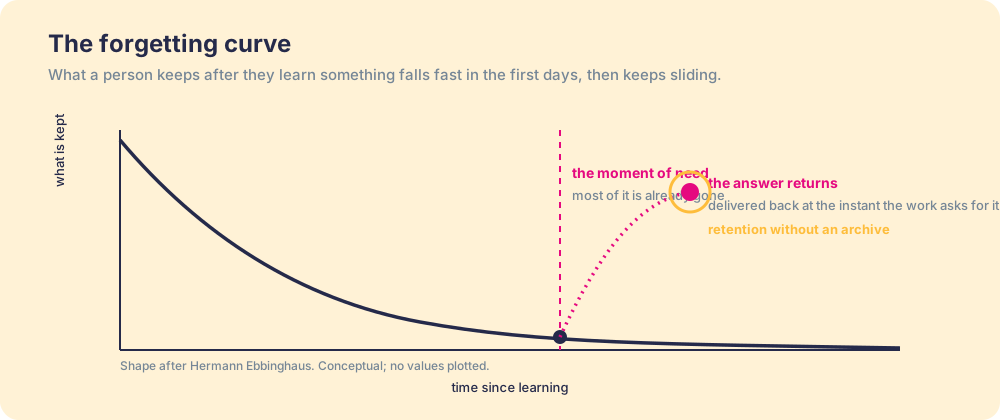
Because memory was built to let go. In the 1880s a German psychologist named Hermann Ebbinghaus sat alone and memorized lists of nonsense syllables, then tested himself at intervals to see how much survived. What he found has held up for more than a century: forgetting is steepest right after learning, and a thing learned once and never revisited fades along a curve that drops fast, then flattens (Hermann Ebbinghaus, the forgetting curve). The direction is the point, not any single percentage. Learn something today, leave it untouched, and most of it is gone before you would expect.
So the classroom is a leaky vessel. You can run a brilliant training session, and the reps can nod along and mean it, and the curve will still take most of it back inside a week. The session was poured into a bucket with an unpatched leak.
The everyday cost is steeper than it looks. Panopto’s study of workplace knowledge found that employees lose around 5.3 hours every week waiting on knowledge a colleague holds or rebuilding expertise that existed somewhere already (Panopto, Valuing Workplace Knowledge). Close to three working days a month, spent fetching what someone already knew, or once knew and forgot. The knowledge was retained, in the strict sense. It existed. It was not in the hands that needed it.
The knowledge rarely vanishes from the company. Often it sits in a document, findable, two clicks away. The person doing the work does not have it in the moment, and going to get it means stopping. An internal knowledge base hits the same wall: the answer sits right there, and the busy person drives past it.
Does storing knowledge keep it retained?
Storing solves exactly one of the two losses, and it is the rarer one. Capture a veteran’s judgment in a document before they resign, and you have protected against attrition. The knowledge now survives the person. That is real, and worth doing.
But a stored answer is not a retained one. The document sits in the archive, and the forgetting curve goes on its work undisturbed, because a thing you filed is not a thing you remember. Consider two warehouses. In the first, every crate is labeled and shelved and the doors are locked, and the floor goes unwalked for months. In the second, the crates the team needs this week are wheeled out to the workbench the moment a hand reaches for one. The first holds more. The second keeps the work moving. Knowledge retention is the second warehouse, and the usual retention program builds the first.
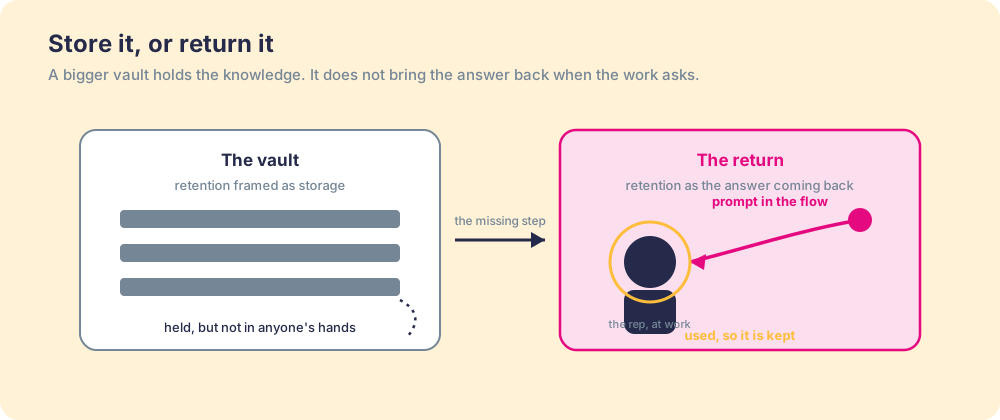
Then the storage frame turns on you. A team that has captured its institutional knowledge, every process and playbook documented, will swear the retention problem is solved. The crates are labeled. Then a new hire ramps slowly, a veteran forgets the discounting rule they learned in onboarding, and the work limps along on half-remembered versions of things that are written down in full in a folder the team never opens. The archive is complete and the behavior is unchanged. That gap, between what is documented and what people do, is the sales execution gap in its plainest form, and a fuller vault does not close it.
You might object that a good search bar fixes this. If the answer sits two clicks away and instantly findable, surely the modern worker looks it up. Grant the point its full force: search is far better than it was, and AI has made finding nearly free. That is true, and it changes nothing about the leak. The cost was never the seconds of searching. It is that searching means stopping the work, deciding you need help, and going to get it, and a person mid-task, with the buyer waiting, does not stop. Found is not the same as delivered.
How do you keep knowledge retained over time?
You patch the leak instead of buying a bigger bucket. Two moves, run together, because each one covers a loss the other misses.
- Capture for the leavers. Get the expertise out of one head and into a place it can outlast the person who holds it. It is the storage half, and it answers attrition. It does nothing for forgetting.
- Return for the forgetters. Build a path that puts the right next step back in front of the person at the moment of the work, inside the tools they already use. Returning the answer both prompts the action and refreshes the memory, which is the only thing the forgetting curve respects.
The second move is the one that turns a stored answer into a retained one, because it is the only one that touches the daily loss. A document captured and never returned to anyone changes the archive and not the work. A document whose contents come back to a person the instant they need them changes both. Knowledge transfer that lasts is the right step arriving when the work asks for it, again and again, until the arriving is what keeps it alive. Telling someone once and hoping the curve is kind does not count.
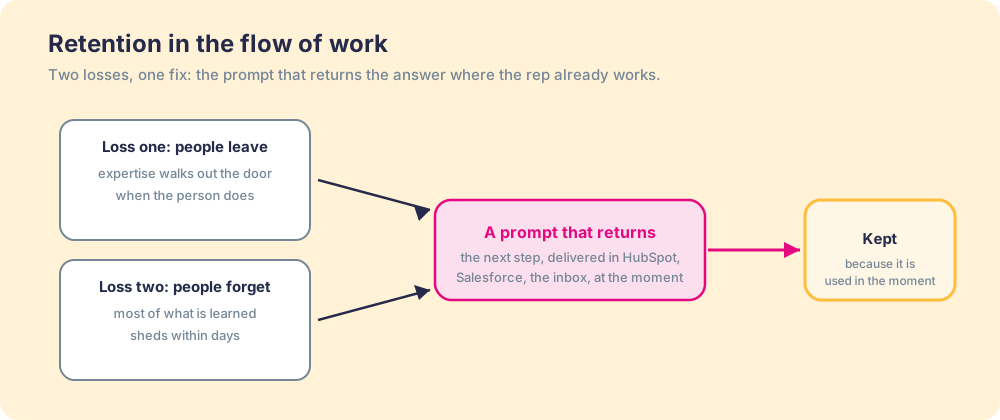
The storage tools stop here, and a different layer begins. Storing and finding are solved problems. What stays unsolved is use, the answer reaching the person in the flow of the work, and non-use is a system failure, not a failure of the person. A rep who does not recall the onboarding rule is not careless. The rule was learned once, weeks ago, and nothing brought it back. Fix the delivery and you fix the recall.
The evidence that delivery is the deciding variable is not subtle. Our State of Sales Enablement found that 49 percent of reps hit 76 to 100 percent of quota when guidance reached them in the flow of work, against 15 percent when it sat in docs or wikis (The State of Sales Enablement). What separated the two groups was whether the knowledge came back to the person while they were working. When a century of memory science and our own field data point the same way, the leak and the patch are not in question.
What we recommend
There are two ways to spend a knowledge retention budget. You can pour it into the vault, capturing more and building a tidier archive against the day someone resigns. Or you can capture the expertise that counts and then build the path that returns it to people in the flow of the work, so the knowledge survives both the leaver and the forgetter.
Spend it on the path. Storage answers the rare loss and leaves the daily one untouched, while delivery in the moment answers both, refreshing the memory by using it and more than tripling the share of reps near quota compared with knowledge parked in docs. Ebbinghaus showed the leak. Panopto priced it at 5.3 hours per person, every week. The fix was never a bigger bucket.
So capture the expertise so it outlasts the people who hold it, then return it to the team at the instant the work asks. Start with where that captured knowledge should live in the sales knowledge base, the daily discipline of moving it between people in knowledge sharing, and the pattern underneath it all in tribal knowledge.
Frequently asked questions
What is knowledge retention?+
Why do people forget most of what they learn?+
How is knowledge retention different from a knowledge base?+
How do you retain institutional knowledge over time?+
Does training improve knowledge retention?+
Your process, running itself.