Discovery Call Script: The Second Question Is Where Discovery Happens
A discovery call script read as a questionnaire is an interrogation that learns nothing. The script gives you the first question; the follow-up, built from the buyer's answer, is where discovery actually happens.
A discovery call script is a structured guide of areas and questions for a discovery call, and it works when the rep uses it to listen and follow up rather than read it as a questionnaire, because discovery happens in the follow-up built from the answer, not the list.
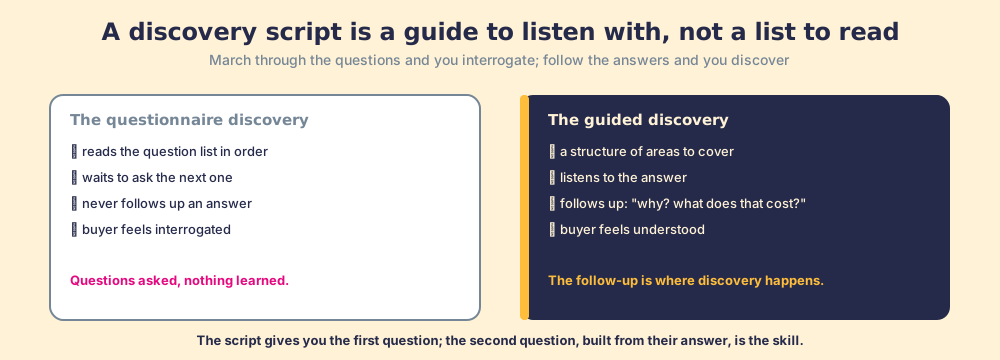
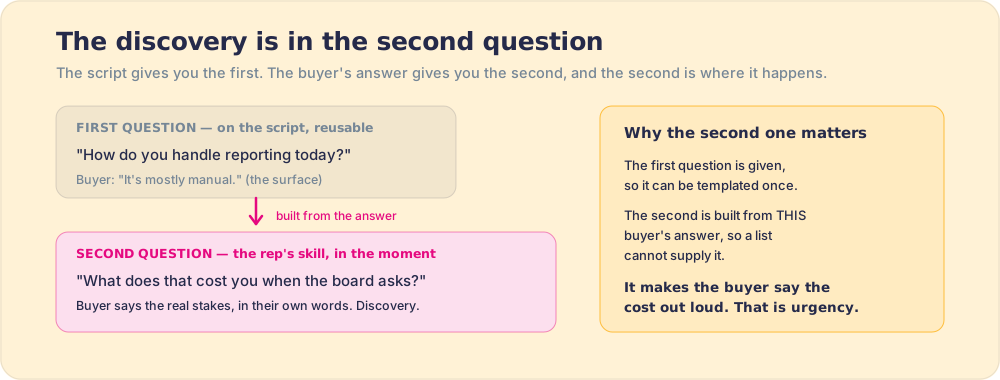
Hand a new rep a discovery call script and watch what happens. They read it. Question one, wait for the answer, question two, on down the page, regardless of what the buyer said a moment ago. It feels diligent. It is, in fact, an interrogation, and an interrogation learns almost nothing, because the first answer a buyer gives to any question is the surface answer, the safe and tidy one, and the understanding you came for sits one question below it. The questions on the script are not the discovery. They are the doorways to it. The discovery happens in the follow-up, the second question the rep builds, on the spot, from the answer the buyer in fact gave. A rep who marches the list goes home with a filled-in form and a buyer who feels processed. A rep who answers “we struggle with reporting” with “what does that cost you when the board asks?” goes home knowing what the deal turns on. The script gives you the first question. The second question is the whole skill, and it is the one thing the page can never contain.
A discovery call script is a structured guide of areas and questions for a discovery call, and it works when the rep uses it to listen and follow up rather than reading it as a questionnaire, because discovery happens in the follow-up built from the buyer’s answer, not in the list. Use it to listen, and discovery happens.
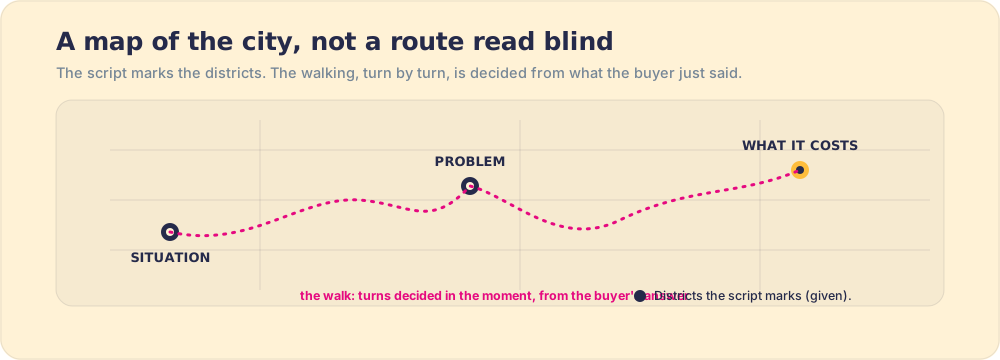
It helps to hold a picture. A discovery script is a map of a city. The map tells you the districts worth visiting, situation, problem, what the problem costs, but the walking, the turn you take because of what you see on this street, is yours to make in the moment. A rep who reads the map aloud with their eyes shut hits every district on paper and sees none of the city. The buyer always notices which way the rep’s attention is pointed: at them, or at the next line on the page.
Why does a questionnaire-style discovery call fail?
Because the value is in the follow-up, and a rep reading a list never follows up. When a rep treats the script as a checklist, their attention sits on the next question rather than the last answer, so the instant the buyer stops speaking the rep advances the list instead of going deeper. That costs two things at once. The buyer feels interrogated, a chain of unrelated questions with no listening between them, and an interrogated buyer protects information rather than volunteering it. And the rep stays on the surface, banking the first shallow answer to each question and never reaching the understanding underneath. The questionnaire produces a complete form and no insight, which is precisely the opposite of what discovery is for.
The most rigorous look at this is also the oldest and largest. Neil Rackham and his team at Huthwaite studied more than 35,000 sales calls across twelve years, the empirical foundation of SPIN selling, and the headline finding ran against the folklore: the highest-performing reps did not ask more questions or talk more. They asked a particular kind of question, and they asked it in sequence, building from situation to problem to implication, the question about what the problem really costs (Rackham, SPIN Selling). The implication question is the one that moves a deal, and here is the part that matters for any script: it is almost never the first question. It cannot be. An implication question has to be built from the specific problem the buyer named seconds earlier, so it lives in the follow-up by definition. Which means the single most valuable move in discovery is the exact move a questionnaire structurally cannot make, because it exists only as a response to an answer the script could not have predicted.
There is a reason the implication question works, and it is worth understanding rather than copying blind. A buyer who states a problem out loud has admitted a fact. A buyer who answers “what does that cost you?” has done something harder: they have built the case for change in their own words, to themselves. People are persuaded far more by what they conclude than by what they are told, so when the rep’s follow-up leads the buyer to say the cost aloud, the urgency becomes the buyer’s, not the rep’s. A list of questions read in order never gives the buyer that moment, because it never pauses on a single answer long enough to ask what it means.
How should a rep use a discovery call script?
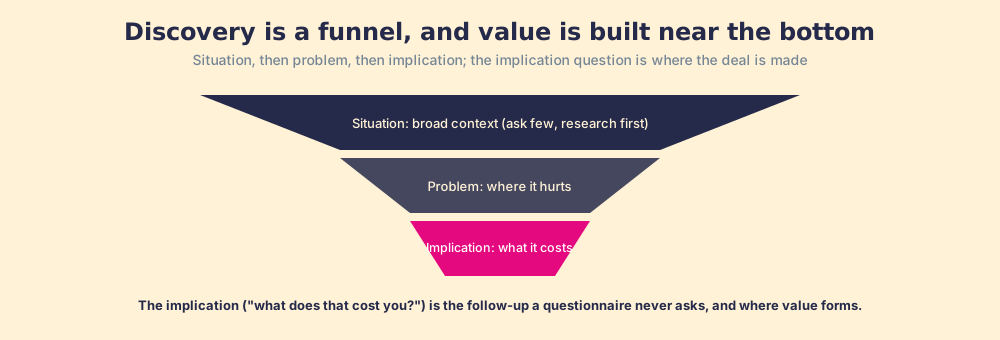
As a funnel of areas to cover, with the real work in the follow-up question at each level. A good discovery call script is structured as a funnel: broad situation questions first, narrowing to the specific problem, then to its implication, the cost of the problem. The script gives the rep the opening question at each level, but the descent through the funnel happens in the follow-ups. A situation answer is followed by a problem question built from it; a problem answer is followed by an implication question built from that, what does this cost you, how often does it happen, who else does it affect. Each follow-up is constructed from the buyer’s specific answer, which is why it cannot be scripted verbatim and has to be the rep’s skill. The script sets the direction; the rep navigates it by listening.
- A funnel, not a flat list. Situation, then problem, then implication. The script orders the areas; the depth is the follow-up.
- The first question is given. The script supplies a strong opener for each area. That part is reusable.
- The second question is the skill. Built from the buyer’s answer, especially the implication question. This is where discovery happens.
- Listen, do not march. Attention on the last answer, not the next question. A rep watching the list cannot follow the buyer.
How do you build a discovery call script reps run well?
Build it as a guide with strong openers, draw the questions from your best reps, and coach the follow-up, because the follow-up is the part a script cannot supply. The temptation is to write a polished discovery call script template, hand it out, and call discovery solved. That ships the easy half. Provide the structure, the funnel of areas and a strong opening question for each, drawn from the discovery your top reps already run, the bottom-up build of any sales playbook, and a set of discovery call questions worth opening with. A good sales discovery script is a discovery call framework the team can lean on, not a monologue to recite.
But the decisive skill, the follow-up question, is not on the page, and no template will put it there, so the build has to include coaching reps to listen and ask the second question instead of reading the list. There is a behavioral reason the coaching has to happen in the flow of real calls rather than in a classroom: a follow-up question is a skill that fires under live pressure, and skills practiced away from the moment of use rarely transfer to it. So the reps internalize the structure, then a manager reviewing real calls coaches the one move that matters, did you stay on that answer, or did you jump to the next line. That reinforcement loop is the sales process adoption work that turns a discovery script from a questionnaire into a conversation. A script reps read interrogates; a script reps use to listen discovers.
What we recommend
Treat your discovery call script as a guide to listen with, not a list to read, because discovery happens in the follow-up question, not in the questions on the page. A rep who marches through the script interrogates the buyer and collects surface answers; a rep who follows each answer with a deeper question, especially the implication question about what the problem costs, has a conversation and learns what truly drives the deal. So build the script as a funnel from situation to problem to implication, give reps a strong opener for each area, and then coach the part the script cannot contain: the second question, built in the moment from the buyer’s answer. The first question is reusable and the script can supply it; the second question is the skill, and it is where the value of discovery is made. Use the script to start the conversation, and let listening finish it.
From here: the questions to open with in discovery call questions, the implication sequence in SPIN selling, the priorities discovery surfaces in win themes, and the adoption underneath in sales process adoption.
Frequently asked questions
What is a discovery call script?+
How do you run a discovery call?+
Why do most discovery calls fail?+
What should a discovery call script include?+
Your process, running itself.