Discovery Call Questions: Why the List Is Not the Skill
Discovery call questions are easy to list and hard to use, because the skill is following the answer, not reading the next line. Here are the questions worth asking, grouped, and the one that does the real work.
Discovery call questions are the questions a rep asks early in a deal to diagnose the buyer's situation, problem, and its cost, and the list matters far less than the skill of following each answer, because diagnosis transfers between reps and a question list does not.
There are a thousand “discovery call questions” lists, and they are all roughly the same, because the questions are the easy part. Any rep can read fifty good questions in a minute, and an AI will generate fifty more on request. What no list can hand you is the skill that matters most: hearing an answer and knowing which thread to pull. Two reps ask the buyer the identical question; one moves on, the other catches the half-sentence that opens the whole deal. The difference is not the question. It is the diagnosis.
So here are discovery call questions worth asking, grouped by what they are for, and the one kind that does the real work. The throughline, and our point of view: a question list is a map of where to look, not a script to read, and diagnosis transfers between reps where a list never will.
What are good discovery call questions?
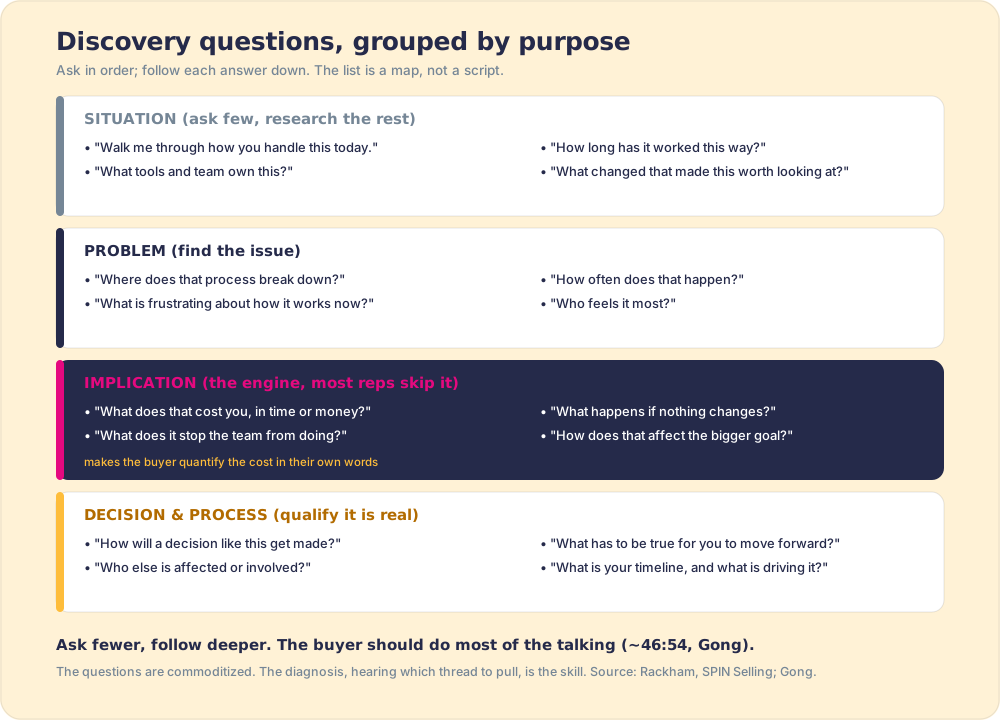
Grouped by purpose, because the order is the method: understand the situation, surface the problem, explore its cost, then map the decision. The structure follows SPIN selling, the most rigorous research on what discovery questions work.
- Situation (ask few). “Walk me through how you handle this today.” “What tools and team own this?” Necessary context, and the place reps waste the most time. Research the obvious ones beforehand; ask only what you cannot look up.
- Problem. “Where does that process break down?” “What is frustrating about the way it works now?” “How often does that happen?” These find the issue worth solving.
- Implication (the engine). “What does that cost you, in time or money?” “What does it stop the team from doing?” “What happens if nothing changes?” These make the buyer feel the weight of the problem, which is where urgency comes from.
- Decision and process. “How will a decision like this get made?” “Who else is affected or involved?” “What has to be true for you to move forward?” These qualify whether the deal is real, the work that MEDDIC formalizes.
The good discovery questions are not exotic. What makes them work is asking the implication group at all (most reps skip it) and following each answer down rather than marching to the next line.
Why is the implication question the one that matters?
Because it is the question that turns a problem the buyer can live with into one they will pay to fix. Neil Rackham’s study of 35,000 sales calls found that in larger, considered sales, the reps who won asked markedly more implication questions, the ones that explore consequences and cost (Rackham, SPIN Selling). A problem question establishes that something is wrong; an implication question makes the buyer quantify and feel it, so the cost of the status quo grows in their own mind, in their own words.
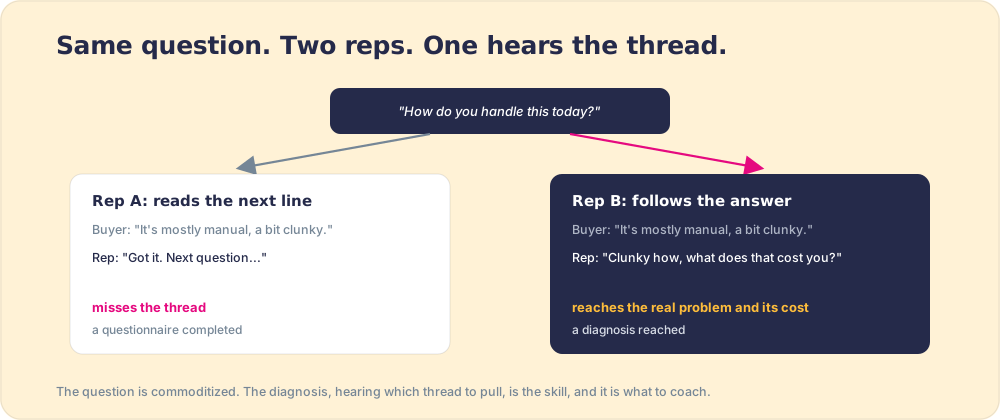
This is also why a discovery call should be mostly the buyer talking. Gong’s call data puts top performers near a 46:54 talk-to-listen ratio (Gong), and on a discovery call the gap should be wider still. The questions exist to make the buyer talk and to make the rep listen for the thread, not to fill the time with a checklist. A great set of b2b discovery call questions, asked as an interrogation, still loses.
How do you make discovery consistent across a team?
Give reps the question map and coach the follow-up, because the part that varies is not which questions get asked but whether the rep pulls the thread. The list is the easy thing to standardize; the diagnosis is the thing to coach, from recorded calls, one rep at a time.
This is the difference between handing out a list and building a skill, and it is the subject of sales coaching: the sales discovery questions are commoditized, so the edge is whether reps diagnose, which only coaching against real calls builds. A team that runs a consistent discovery motion and coaches the follow-up beats a team with a longer list every time.
What we recommend
Two ways to use discovery call questions. You can treat the list as a script: ask the questions in order, capture the answers, move to the demo. Or you can treat it as a map: ask fewer, lead with the implication group, and follow each answer to the real problem and its cost.
We recommend the map, and the evidence is clear: Rackham’s data says implication questions separate the winners, Gong’s says the buyer should be doing most of the talking, and both say the skill is in the listening, not the list. So give reps the question map, insist they reach the cost of the problem, and coach the follow-up. The questions are free; the diagnosis is the job.
Start with the method behind them in SPIN selling, the qualification that follows in MEDDIC, and the coaching that builds the skill in sales coaching.
Frequently asked questions
What are good discovery call questions?+
How many questions should you ask on a discovery call?+
What is the most important discovery question?+
Why don't discovery question lists work on their own?+
Your process, running itself.