Cold Call Script: The Opener Is the Whole Game, and You Are Doing It Wrong
A cold call is won or lost in the first ten seconds, and most cold call scripts waste them pitching. The opener's job is not to sell but to earn the right to keep talking. Here is how to write one that does.
A cold call script is a prepared structure for an unsolicited sales call, and its most important part is the opener, because a cold call is decided in the first ten seconds and the opener's job is to earn the right to keep talking, not to deliver a pitch.
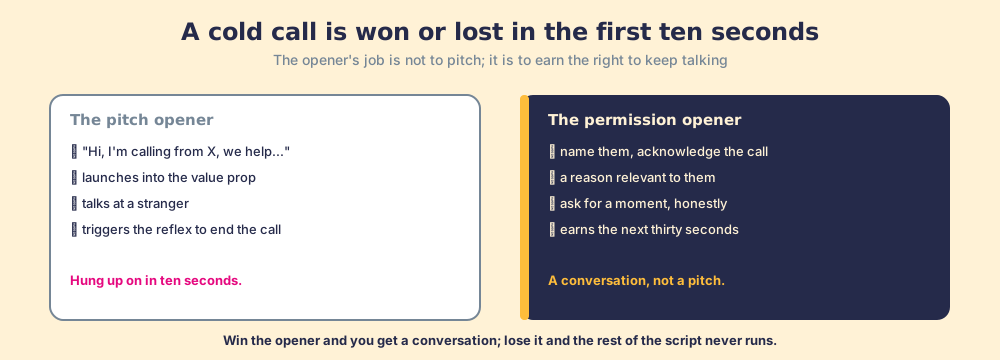
A cold call is won or lost in the first ten seconds, and almost every cold call script throws those seconds away. The standard opener, “Hi, I’m calling from such-and-such, we help companies like yours do X,” launches into a pitch at a stranger who did not ask for one, and it triggers the one reflex every cold-called person has: end the call. The script may have a brilliant value proposition, sharp discovery questions, and a clean ask, and none of it will ever run, because the opener got the rep hung up on before any of it could happen. The opener is not the warm-up to the cold call script. It is the part that decides whether there is a cold call at all, and its job is not to sell. It is to earn the right to keep talking.
A cold call script is a prepared structure for an unsolicited sales call, and its most important part is the opener, because a cold call is decided in the first ten seconds and the opener’s job is to earn the right to keep talking, not to deliver a pitch. Win the opener, and the rest of the script gets a chance.
Why does pitching in the cold call opener fail?
Because you are interrupting a stranger, and leading with a pitch triggers their reflex to end the interruption. The person you cold-called was doing something else, did not ask to hear from you, and has a well-worn habit of getting off sales calls fast (Gong, on cold-call opener research). An opener that launches into the value proposition confirms their worst guess in the first three words, this is a pitch, and activates the hang-up reflex before the rep reaches anything useful. The pitch opener fails not because the pitch is bad but because it is delivered before the rep has earned the right to deliver anything. You cannot pitch someone who has already decided to get off the phone.
The opener that works does the opposite: it lowers the prospect’s guard instead of raising it. It names the person, acknowledges honestly that you are an unexpected interruption, gives a reason that is relevant to them rather than to you, and asks for a moment. That structure respects the prospect’s reality and earns the next thirty seconds, which is all an opener is for. It is permission-based rather than pitch-based, and the permission is what the entire rest of the call depends on. This is the same persistence-and-respect logic that governs a good sales cadence: you earn the next step rather than seizing it.
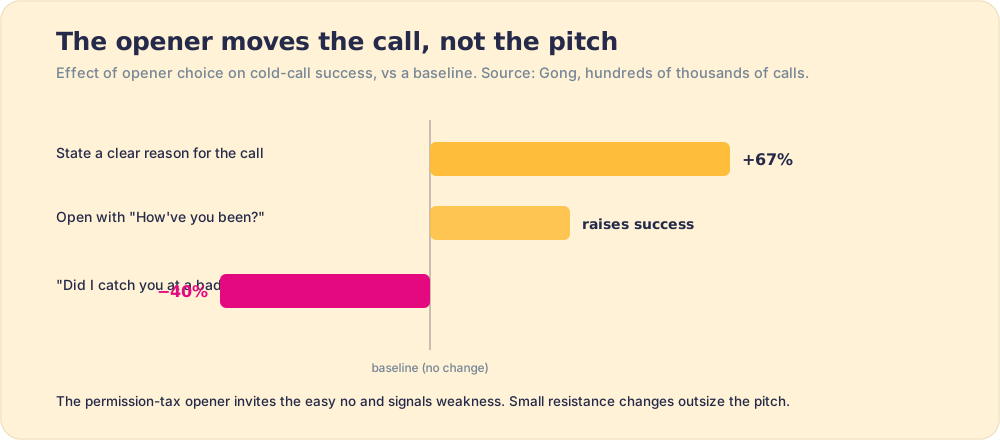
The numbers behind this are sharper than most reps expect, and they come from one of the largest data sets on the question. Gong analyzed hundreds of thousands of recorded cold calls and found that opening with the honest line “How’ve you been?” raised success rates, while the familiar permission-tax opener “Did I catch you at a bad time?” lowered them by around 40 percent against a baseline, because it invites the easy no and signals weakness (Gong cold-call research). The same analysis found that stating a clear reason for the call lifted success by roughly two-thirds. Read those together and the lesson is not “find the magic words.” It is that the opener’s whole function is to manage the prospect’s resistance, and small changes that lower resistance move the outcome far more than anything in the pitch that follows.
There is a named mechanism underneath this, and it is worth knowing because it tells you which b2b cold call script openers will work before you test them. Psychologists call it reactance: when people feel their freedom to choose is being taken, they push back to reassert it, and a pitch delivered to a stranger is a small theft of choice (on psychological reactance). The hang-up is reactance in its purest form. A permission opener defuses it by handing the choice back (“can I have thirty seconds, then you decide”), which removes the thing the prospect would otherwise be reacting against. You are not tricking anyone. You are giving them the control a cold call normally strips away, and a person who feels in control is far more willing to keep listening.
What should a cold call script include?
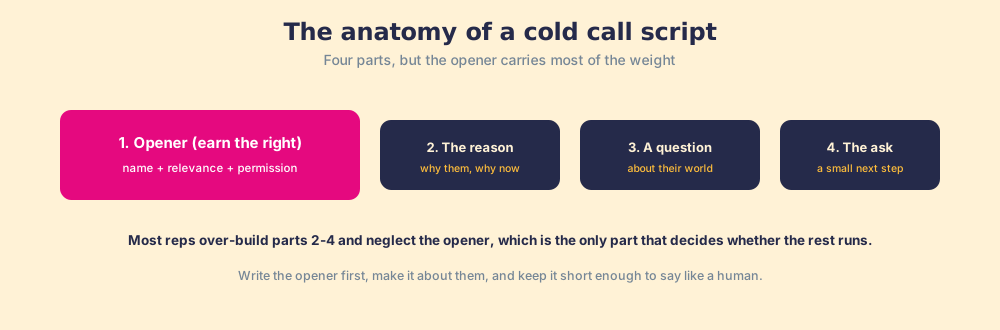
Four parts, with the opener carrying most of the weight. A cold call script has an opener, a reason, a question, and an ask, but they are not equal. The opener earns the right to keep talking, names the person, gives a relevant reason, asks permission, and it is the only part that decides whether the rest runs. The reason explains why them and why now, so the call feels deliberate rather than random. The question is about their world, not your product, because a question starts a conversation while a pitch ends one. And the ask is a small, easy next step, not a hard close, because the goal of a cold call is rarely to close, only to advance. Most reps invert the weighting, over-building the later parts and neglecting the opener, which is exactly backwards.
- Opener (earn the right). Name, relevance, permission. The only part that decides whether the call continues. Write it first.
- The reason. Why them, why now. Makes the call feel deliberate, not a random dial.
- A question. About their world, not your product. A question opens a conversation; a pitch closes one.
- The ask. A small next step, not a hard close. The cold call advances the deal; it rarely closes it.
A pair of cold call script examples makes the difference physical. The pitch opener: “Hi, this is Sam from Acme. We help RevOps teams cut reporting time by 40 percent. Do you have a minute to talk about your reporting stack?” The prospect hears a vendor reciting a value prop and reaches for the off-ramp the rep just handed them. The permission opener: “Hi Dana, it’s Sam, and I know I’m an interruption, so I’ll be quick. I called because your team just posted three RevOps roles, which usually means the reporting is fighting back. Mind if I take thirty seconds to say why I called, and then you tell me if it’s worth more?” The second names her, owns the interruption honestly, gives a reason rooted in her world (the job postings), and hands her the choice. It carries the same eventual goal as the first. It earns the right to get there. Notice it is not softer or more apologetic; it is more specific, and specificity is what separates a researched cold calling script from a dial.
How do you make a cold call script reps can run?
Write it short and human, build the opener from what works, and coach reps to internalize it rather than read it. A cold call script that gets read like a telemarketer’s card triggers the same hang-up reflex as a pitch, so the script has to be short enough to say like a person and internalized the way any good sales script is, as scaffolding the rep adapts, not a teleprompter. Build the opener from your own connected calls, studying which openers earn the conversation rather than guessing, the bottom-up approach behind any sales playbook. Then coach reps to deliver the opener naturally and adapt the rest to the person, and reinforce it as a behavior, the sales process adoption work that turns a script from a card into a skill. The best cold callers do not sound like they are running a script, because they have internalized one good enough to disappear.
What we recommend
Spend your effort on the cold call opener, because it decides whether the rest of the script ever runs, and stop wasting it on a pitch the prospect will not stay on the line to hear. A cold call is won or lost in the first ten seconds, and an opener that leads with the value proposition triggers the reflex to hang up, while one that names the person, gives a relevant reason, and asks for a moment earns the conversation. Build the script with the opener first and weighted heaviest, keep the script short enough to say like a human, and have reps internalize it rather than read it, coaching toward an opener that sounds natural and a call that adapts to the person. The reason this works is that it respects what a cold call is, an interruption that has to earn its welcome, rather than treating it as a captive audience for a pitch. Win the first ten seconds, and you have a conversation. Lose them, and the best script in the world never gets spoken.
From here: the script discipline in the sales script, the persistence behind it in sales cadence, more tactics in cold calling tips, and the adoption underneath in sales process adoption.
Frequently asked questions
What is a cold call script?+
How do you start a cold call?+
Why do most cold call scripts fail?+
What should a cold call script include?+
Your process, running itself.