B2B Sales Playbook: Build It for the Buying Group, Not One Champion
Most B2B sales playbooks are single-threaded: built for one champion. But a B2B deal is decided by six to ten stakeholders. The playbook that wins has plays for the group and for the consensus they must reach.
A B2B sales playbook is a documented set of plays for selling to a business, and the effective version is built for the buying group of six to ten stakeholders rather than one champion, because a B2B deal is decided by a committee reaching consensus, not one buyer choosing.
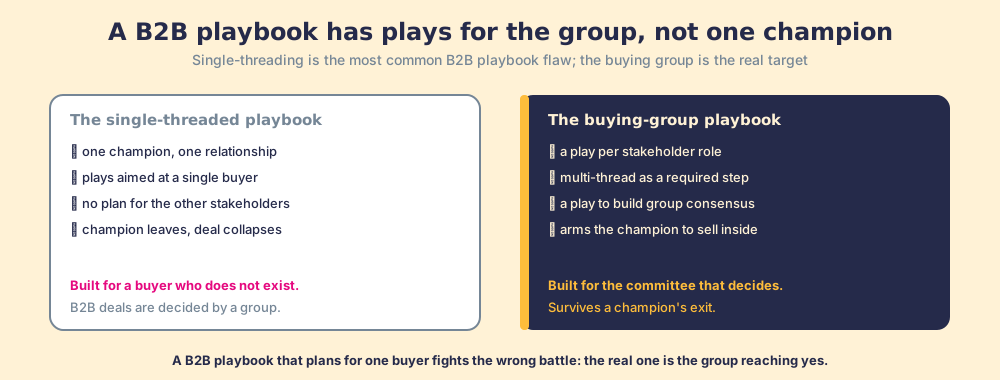
Pull the average B2B sales playbook apart and you find it was built for a buyer who does not exist: a single decision-maker who, persuaded by the right sequence of plays, says yes. Real B2B deals are not decided by that person, because that person is not the decision. A complex business purchase is decided by a buying group of six to ten stakeholders who must reach consensus with each other, and a playbook aimed at one champion is blind to the committee that decides. This single-threading is the most common and most expensive flaw in B2B playbooks: it plans for the relationship the rep enjoys and ignores the group the rep has to win. The playbook that wins B2B deals is built for the buying group, with plays for reaching all of them and helping them agree.
A B2B sales playbook is a documented set of plays for selling to a business, and the effective version is built for the buying group of six to ten stakeholders rather than one champion, because a B2B deal is decided by a committee reaching consensus, not one buyer choosing. Build it for the group, and the playbook starts matching the deal.
Why do single-threaded B2B playbooks fail?
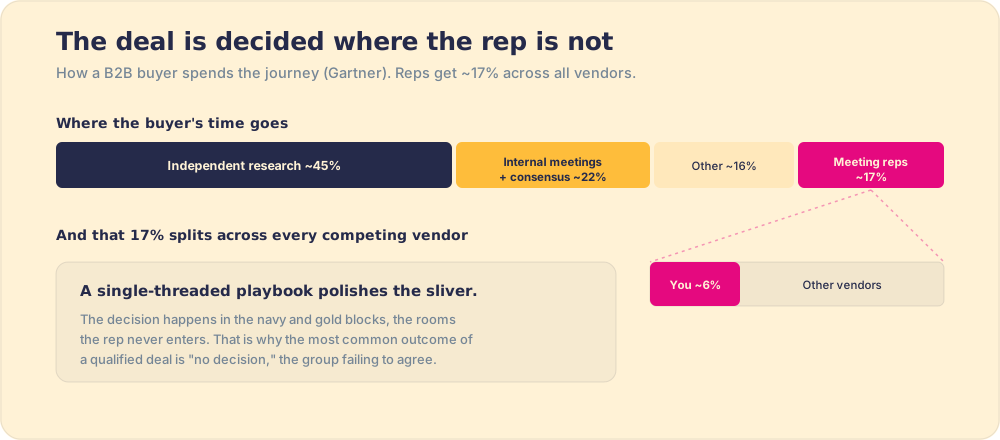
Because the deal is decided by a group, and a playbook built for one contact cannot reach or move that group. The buying-group reality is well documented: Gartner’s research finds that a typical complex B2B purchase involves six to ten decision-makers, each with a different priority and the power to stall, and that the journey is a non-linear scramble toward internal agreement rather than one buyer’s tidy progression (Gartner, on the B2B buying journey). Gartner’s sharper finding is what those stakeholders spend their time on: buyers report giving only about 17 percent of the buying journey to meeting with any supplier’s reps, and when several vendors are in the running, a single rep may get something like 5 or 6 percent of the buyer’s total attention. The deal is mostly being decided in rooms the rep is not in, by people the rep may never meet. A playbook that optimizes the one relationship the rep does have is polishing a sliver while the rest of the decision happens elsewhere.
A single-threaded playbook plans for none of that. It scripts the rep’s relationship with one champion and leaves the rep without a map of the other stakeholders, without a play reaching the economic buyer, and without any way to help the group converge. So the deal rides entirely on one person, which makes it one job change or one internal veto away from collapse, and the playbook offers no recovery because it never accounted for the group at all. The single largest cause of lost B2B deals is not losing to a competitor; Dixon and his colleagues found in The Challenger Customer that the most common outcome of a qualified deal is “no decision,” the group failing to reach agreement and defaulting to the status quo (Dixon, Adamson, Spenner & Toman, The Challenger Customer). A single-threaded playbook has no play for that failure, because it was never built for the group whose disagreement causes it.
The deeper failure is that single-threading fights the wrong battle, and here we have to take on the consensus directly, because the field has spent two decades teaching reps to find and cultivate a single great champion. MEDDICC makes the Champion a load-bearing letter. A generation of sales training treats “do you have a champion?” as the central deal-qualification question. That instinct is not wrong, a strong internal advocate is genuinely one of the best predictors of a win, and a rep without one is usually in trouble. Where the single-champion doctrine goes wrong is in treating the champion as the destination rather than the instrument. The champion’s value is not that they decide; it is that they sell for you in the rooms you cannot enter. Dixon’s later research even renamed the ideal champion a “Mobilizer,” precisely to stress that the job is mobilizing the group, not being the buyer. A playbook that helps a rep charm a champion while the buying group fails to reach consensus has optimized the visible relationship and lost the invisible decision, which is the contest we cover in the B2B sales process.
What plays does a B2B sales playbook need?
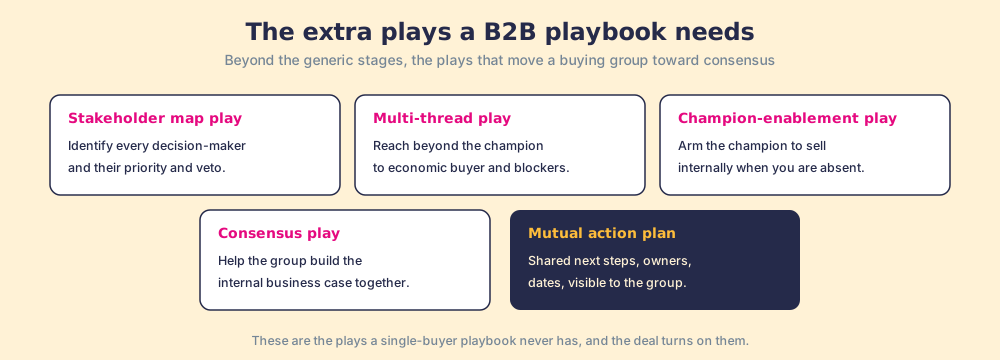
The plays that map, reach, and align the buying group, which a single-buyer playbook never contains. A B2B playbook keeps the standard stages, but adds a layer of plays aimed at the group. A stakeholder-map play identifies every decision-maker, their priority, and their veto, so the rep knows who must agree. A multi-thread play pushes the rep beyond the champion to the economic buyer and the likely blockers, so the deal does not ride on one contact. A champion-enablement play arms your internal advocate with the business case and answers to sell on your behalf when you are not in the room, which is most of the time. A consensus play helps the group build its internal business case together. And a mutual action plan gives the whole group shared next steps, owners, and dates, the subject of the mutual action plan. These are the plays the deal turns on, and the generic playbook has none of them.
- Stakeholder-map play. Identify every decision-maker, priority, and veto. You cannot win a group you have not mapped.
- Multi-thread play. Reach beyond the champion to the economic buyer and blockers, so no deal rides on one person.
- Champion-enablement play. Arm your advocate to sell internally when you are absent, which is where the deal is decided.
- Consensus and mutual action plan. Help the group agree and give it shared next steps. The committee converging is the close.
How do you build a B2B sales playbook reps will run?
Add the group plays, then get reps to run them on real deals, because a documented multi-thread play that no rep runs is no better than not having it. Build the playbook bottom-up from your won B2B deals to find how your best reps map and align buying groups, codify those as the group plays above, and then do the part that decides whether any playbook works: surface the plays in the flow of work so reps run them deal by deal, and measure adherence, especially on multi-threading, which reps skip under time pressure precisely when it matters most. This is the sales process adoption problem applied to B2B: the group plays only help if reps run them, deal by deal, and the way to ensure that is to make them appear in the work and measure whether they happened, not to hope reps remember a document.
A word of caution on where to start. The instinct is to download a B2B sales playbook template or copy a B2B sales playbook example from a blog, fill in the stages, and call it done. A template gives you the skeleton, which is fine, but the group plays that decide the deal are the ones a generic template never has, the stakeholder map, the multi-thread requirement, the consensus play, because those are specific to how your own buying groups behave. This matters most as deals move upmarket: an enterprise sales playbook lives or dies on the group plays, because enterprise buying groups are larger, slower, and more prone to “no decision” than mid-market ones. Start from a template for structure if you like, but build the group plays from your own won deals, where the real motion is already recorded in how your best reps won.
What we recommend
Build your B2B sales playbook for the buying group, because that is who decides the deal, and stop building it for the single champion the rep happens to know. A complex B2B purchase is six to ten stakeholders reaching consensus, so the playbook needs plays the generic version lacks: a stakeholder map, a multi-thread requirement, champion enablement, a consensus play, and a mutual action plan that gives the group shared next steps. Then make those plays real by surfacing them in the flow of work and measuring whether reps run them, especially multi-threading, the play reps skip under pressure and the one that most often saves the deal. The reason this beats the usual single-threaded playbook is that it matches the deal: it plans for the committee that decides rather than the relationship that merely feels like progress. In B2B, you are not winning a buyer. You are helping a group reach yes, and your playbook should be built for exactly that.
From here: the buying-group dynamics in the B2B sales process, the plan at the center in the mutual action plan, the build method in how to create a sales playbook, and the adoption underneath in sales process adoption.
Frequently asked questions
What is a B2B sales playbook?+
Why do most B2B sales playbooks fail?+
What should a B2B sales playbook include?+
How is a B2B playbook different from a B2C one?+
Your process, running itself.