SaaS Sales Playbook: The Close Is the Start, Not the Finish
Most SaaS sales playbooks end at closed-won. But in a subscription business, most revenue comes after the first sale, through retention and expansion. A SaaS playbook needs post-close plays for the whole customer life.
A SaaS sales playbook is a documented set of plays for selling subscription software, and it must extend past the close into onboarding, retention, and expansion, because in a recurring-revenue model most revenue comes after the first sale, not from it.
A SaaS sales playbook built as a one-time-sale playbook makes a costly error: it ends at closed-won. The deal is won, the playbook stops, the rep moves to the next logo. In a subscription business that is the wrong place to stop, because the first sale is the smallest part of a customer’s value. Most SaaS revenue comes after the close, through the customer staying and growing, and a playbook that treats the close as the finish line has documented the cheapest, smallest slice of the work and left the most valuable plays, the ones that keep and expand customers, left unwritten. In SaaS, the close is not the finish. It is the start of the part where the real money is made.
A SaaS sales playbook is a documented set of plays for selling subscription software, and it must extend past the close into onboarding, retention, and expansion, because in a recurring-revenue model most revenue comes after the first sale, not from it. Build the playbook for the customer’s life, not the deal alone.
Why must a SaaS sales playbook extend past the close?
Because subscription economics put the majority of a customer’s value after the first sale, so a playbook that ends at the close ignores where the revenue is. Acquiring a SaaS customer costs money up front, the sales and marketing spend, and that cost only pays back over the months and years the customer stays and expands. This is the retention economics Frederick Reichheld and Earl Sasser documented at Bain decades ago: by their analysis a five percent improvement in customer retention raised profitability somewhere between 25 and 85 percent in net present value, depending on the industry, because keeping and growing a customer is far more valuable than the initial acquisition (Reichheld & Sasser, “Zero Defections,” HBR). The number has been argued about since, and it should be: it is a model, not a law. But the direction is not in dispute, and in subscription software the effect is sharper than in the services Reichheld studied, because the customer pays again every period rather than once.
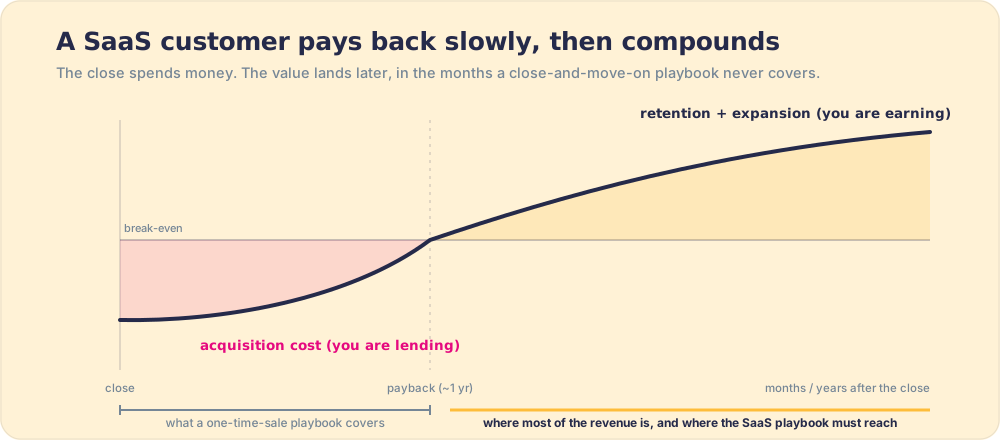
Think about what acquisition really buys. A new logo is not revenue; it is the right to bill a customer repeatedly, and a cost you have not yet earned back. The sales-and-marketing spend on that customer pays off only after a payback period, often a year or more, of subscription payments. Everything before payback is the company lending the customer money. Everything after is profit, and almost all of it sits past the close, in months the one-time-sale playbook does not cover. A playbook that ends at closed-won is a playbook that documents the lending and ignores the earning.
The market has noticed where the growth comes from. In ChartMogul’s benchmark data, SaaS businesses with net revenue retention above 100 percent grew about 49.5 percent over the trailing year, while those stuck in the 60 to 80 percent retention band grew about 9.2 percent (ChartMogul SaaS Retention Report). Same category, same year, a five-fold gap in growth, and the variable was not how many logos they signed but how much of the base they kept and grew. Over the same window the share of new annual recurring revenue coming from expansion rose from about 28.8 percent to 32.3 percent of the total, while net-business’s share fell. The money is migrating to the part of the customer life most playbooks never reach.
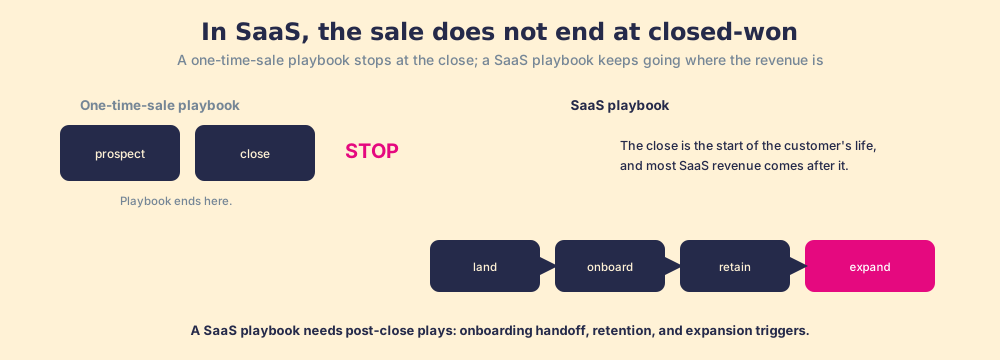
The practical consequence is that the most valuable plays in SaaS live after the close, and a one-time-sale playbook has none of them. The onboarding handoff that gets a customer to value before they churn, the retention play triggered by a health-score dip, the expansion play triggered by a usage threshold, these are where SaaS revenue is made or lost, and a playbook that stops at the close leaves every one of them undocumented and unrun.
Is chasing new logos the wrong instinct?
Not wrong, incomplete, and it is worth being fair to the instinct before correcting it. The whole folklore of selling, from “always be closing” to the comp plan that pays out on the signed deal, points the rep’s attention at the new logo. There is a reason: the new logo is visible, it is celebrated, and it is the moment the contract is signed. You can hear it on the sales floor. Nobody rings a bell for a renewal.
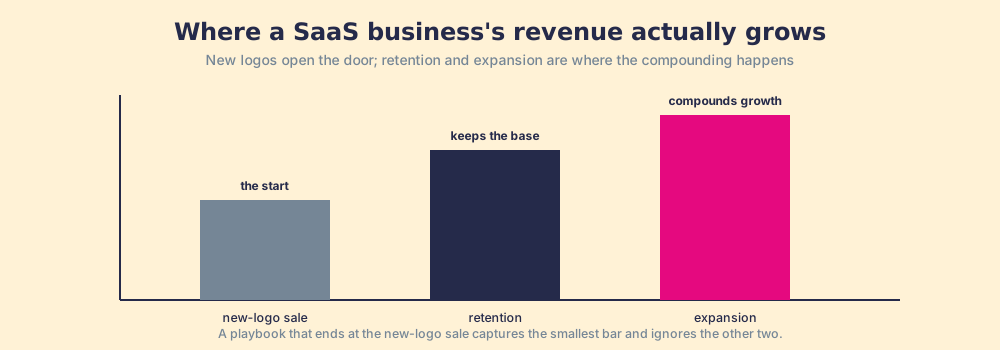
But the comp plan and the folklore were built for a one-time sale, and they mis-train a SaaS team. Jason Lemkin, who has watched more SaaS companies scale than almost anyone, has argued for years that lifetime value alone understates a happy customer, because that customer also throws off “second-order revenue”: the referrals, case studies, and expansions that a first-order CLTV calculation never captures, and that at scale come to rival the new-business line (Lemkin, SaaStr, on second-order revenue). A team that pours its best plays into the new logo and treats the rest as an afterthought is optimizing the smallest of three revenue streams and starving the two larger ones. The fix is not to stop closing. It is to write the post-close plays with the same care, and to measure whether they get run.
What plays does a SaaS sales playbook need?
The acquisition plays, plus the post-close plays that retention and expansion run on. A SaaS playbook keeps the standard land plays for winning the initial deal, but adds the plays a subscription business lives on. An onboarding-handoff play ensures the customer reaches value quickly and does not churn in the first weeks, the window where early churn is decided, and prevents the kind of rushed handoff we flagged as a source of revenue leakage. Retention plays tie to customer-health signals so a renewal risk triggers a defined response instead of a surprise. Expansion plays trigger on usage and outcomes, so a customer past a threshold gets the right expansion motion at the right moment. These post-close plays are the heart of a SaaS playbook, and a generic playbook focused on acquisition has none of them.
- Land play. Win the initial deal. Necessary, and the smallest part of the customer’s value.
- Onboarding-handoff play. Get the customer to value fast, so they do not churn early. The handoff is where retention starts.
- Retention plays. Triggered by health signals, so renewal risk gets a defined response instead of a surprise.
- Expansion plays. Triggered by usage and outcomes, so growth is a motion, not an accident.
How do you make a SaaS sales playbook reps and CSMs run?
Build the post-close plays from your own retention and expansion wins, then surface them in the flow of work for the people who run them. The post-close plays only matter if the rep and the customer-success manager run them, so document how your best CSMs save renewals and trigger expansions, codify those as plays, and put them in the flow of work where the work happens, with the right play surfacing on the account at the moment it applies, the same sales process adoption discipline that governs any playbook. The b2b saas sales playbook spans acquisition and post-sale, which makes it a revenue enablement problem as much as a sales one: owning the behavior across the handoffs from sales to success, where SaaS revenue most often leaks.
The handoff deserves a hard look, because it is the most under-documented moment in the whole saas sales process and the one where the early-churn window opens. The rep who won the deal carries context the customer-success manager does not: what the buyer was promised, which stakeholder championed it, what success was supposed to look like. When that context does not transfer, the customer lands cold, value arrives late, and the renewal is at risk before anyone has done anything wrong. A good post-close play makes the transfer a defined step with an owner, not an email and a hope. Measure adherence on the post-close plays as seriously as on the acquisition ones, because in a subscription business the post-close plays carry the larger number, and what goes unmeasured in the post-sale motion is exactly where avoidable churn lives.
What we recommend
Build your SaaS sales playbook for the customer’s life, not the deal, because in a subscription business the close is the start of the value, not the end of it. Keep the land plays, but add the post-close plays SaaS revenue runs on: an onboarding handoff that gets the customer to value before they churn, retention plays triggered by health signals, and expansion plays triggered by usage. Build those plays from your own retention and expansion wins rather than from a generic saas sales playbook template, surface them in the flow of work for the reps and CSMs who run them, and measure adherence on them as seriously as on acquisition. The reason this beats the usual close-and-move-on playbook is that it documents where SaaS revenue is, which is mostly after the first sale. A playbook that ends at closed-won has captured the smallest slice of the business. The SaaS playbook that wins keeps going to where the revenue compounds.
From here: the buying-group plays in the B2B sales playbook, the handoff losses in revenue leakage, the cross-functional scope in revenue enablement, and the adoption underneath in sales process adoption.
Frequently asked questions
What is a SaaS sales playbook?+
How is a SaaS sales playbook different?+
What should a SaaS sales playbook include?+
Why does the SaaS sales playbook extend past the close?+
Your process, running itself.