Sales Email Templates: The Template Is Not the Part That Earns the Reply
Sales email templates scale the structure of an email. Sent as-is, they are the generic spam buyers ignore. The reply comes from the one personalized line, not the template body. Here is how to use them right.
Sales email templates are reusable email structures for outreach, and they scale the skeleton of an email while the reply comes from the one personalized line, so a template sent as-is is generic spam and a template plus real personalization is what earns a response.
Sales email templates promise scale: write one good email, reuse it forever, send it to everyone. The promise is real for the part of an email that is structure, and a trap for the part that earns a reply. A template scales the skeleton, the opening, the value framing, the ask, which is the 80% of an email that holds steady from one recipient to the next. The reply does not come from the skeleton. It comes from the one line that proves the email was written for this person and no other, the 20% a template cannot supply. So a template sent as-is, the same words to a thousand inboxes, is the exact generic blast buyers have trained themselves to delete on sight, and a team that mistakes the template for the email has scaled the part that does not matter and skipped the part that does.
Sales email templates are reusable email structures for outreach, and they scale the skeleton of an email while the reply comes from the one personalized line, so a template sent as-is is generic spam and a template plus real personalization is what earns a response. Scale the structure, write the line, and templates work.
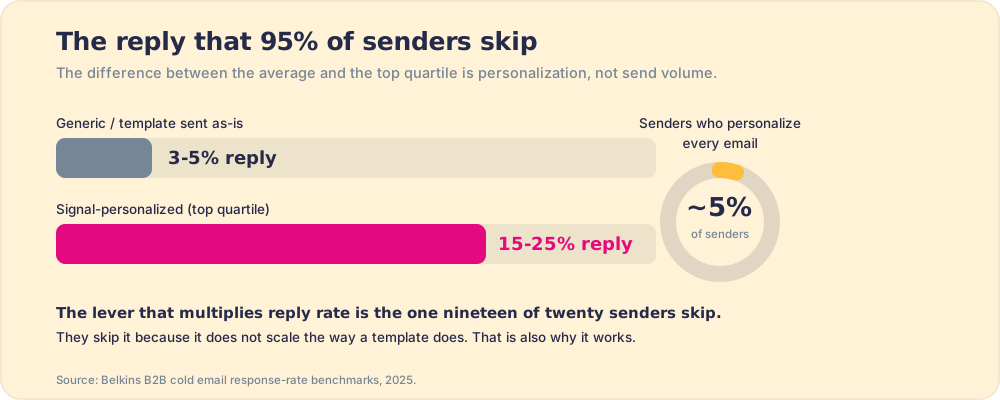
Here is the uncomfortable arithmetic. Across 2024 and 2025 benchmark studies, average B2B cold email reply rates sit around 3 to 5 percent, while the top quartile reaches 15 to 25 percent, and the gap between the two is almost entirely personalization, not volume (Belkins, cold email response rates, 2025). The same studies find that only about 5 percent of senders genuinely personalize every email, and those who do get two to three times the results. Sit with that for a moment, because it is the lesson in two numbers: the move that multiplies your reply rate is the one nineteen of every twenty senders skip, and they skip it for the same reason, it does not scale the way a template does. The template tempts you to skip exactly the part that was the point.
Why does a sales email template sent as-is get ignored?
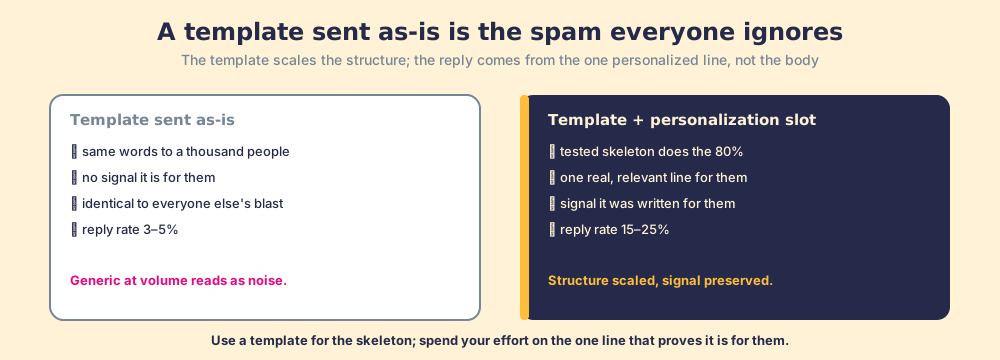
Because a template sent unchanged carries no signal that it was written for the recipient, and buyers filter out generic outreach on sight. An email identical to the one a thousand other people received looks exactly like what it is, a mass send, and the buyer’s learned response to a mass send is the delete key. This got worse fast as AI made generic email nearly free to produce: inboxes flooded, and reply rates to anything reading as automated fell, the pattern we traced in AI sales outreach. The benchmark numbers are blunt: generic cold email draws roughly 3 to 5 percent reply rates while signal-personalized outreach reaches 15 to 25 percent (Belkins, 2025). A template sent as-is lands in the first bucket by definition, because being the same for everyone is what “generic” means.
There is a name for what is happening in the buyer’s inbox, and it comes from biology before it comes from sales. The personalized line is a costly signal. In signaling theory, a signal is trustworthy precisely when it is expensive to fake: a peacock’s tail is believable because a sick bird could not grow one, and a specific, accurate reference to the buyer’s situation is believable because a mass-sender could not have written it at scale. That is the entire reason the personalized line works. It is not that buyers prefer flattery; it is that the line is evidence, the one thing in the email that a thousand-recipient blast could not have produced, which is why it reads as real where the polished body does not. A merge-tagged first name fails the test for the same reason a cheap imitation tail does: it costs nothing to generate, so it proves nothing.
The deeper point is that the template was never meant to be the whole email. It is the structure, and structure is necessary without being persuasive. What persuades a buyer to reply is the evidence that the rep understood something specific about them, and that evidence lives entirely in the personalized line a template leaves blank. Send the template without filling that line and you have sent structure without signal, which an inbox correctly reads as noise.
How should you use a sales email template?
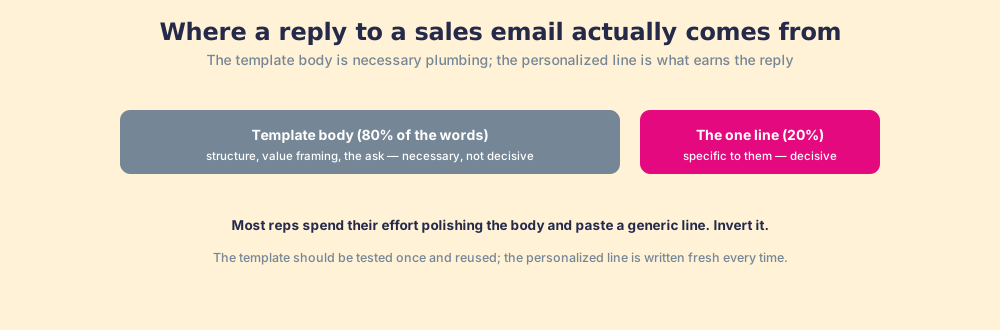
Keep the tested skeleton and write one real personalized line for each recipient, spending your effort on the line, not the body. The division of labor is the whole technique. The template handles the structural 80%: the opening that earns the next sentence, the way you frame value, the clear ask. That part is tested once and reused, because it does not change between recipients. The personalized line handles the decisive 20%: a reference to the recipient’s actual situation, a trigger event, a specific problem they have, the thing that proves the email was written for them and not blasted at them. A merge-tagged first name does not count, because buyers know a mail merge when they see one. The line has to carry real, specific signal, which is the same personalization premium that separates a good cold call script opener from a pitch.
- Template does the 80%. Structure, value framing, the ask. Tested once, reused. Necessary plumbing, not the persuasion.
- The line does the 20%. One specific, relevant detail about this recipient. Written fresh every time. This is the signal.
- Not a merge tag. A first name is not personalization; buyers see through it. The line must show real understanding.
- Spend effort on the line. Most reps polish the body and paste a generic line. Invert it, because the line earns the reply.
How do you scale sales email templates without scaling spam?
Standardize the skeleton, require a real personalized line, and measure reply rate rather than send volume. This is where most cold email templates go wrong: the team optimizes for volume, more sends, and lets the personalized line slide, because the line is the part that takes effort. The trap is identical whether you are sending one-off prospecting notes or a library of b2b sales email templates across a whole team, since the failure is structural, not a matter of which template you picked. So build a small library of tested skeletons, the bottom-up approach of any sales playbook, and make the personalized line a required, coached step rather than an optional one, the sales process adoption discipline applied to outreach. Then measure the thing that matters, reply rate, not emails sent, because send volume rewards exactly the generic blasting that kills reply rate. A team that templates the structure and personalizes the line scales the part that should be scaled and protects the part that earns the response. A team that templates everything scales its own irrelevance.
What we recommend
Use sales email templates for the skeleton and never as the finished email, because the template scales the 80% that is structure and the reply comes from the 20% that is specific to the recipient. A template sent as-is is, by definition, the generic mass send buyers ignore, and the reply-rate gap is brutal: 3 to 5 percent for generic versus 15 to 25 percent for signal-personalized. So keep a small library of tested skeletons, write one genuinely relevant line for each recipient that proves the email was for them, and spend your effort there rather than on polishing the body. Measure reply rate, not send volume, so the team is rewarded for the personalization that works rather than the blasting that does not. The template is plumbing. The one line you write for the person is the email. Scale the first and labor over the second, and templates make you faster without making you spam.
From here: the channel collapse from generic volume in AI sales outreach, the same personalization premium in the cold call script, the playbook it belongs to in the sales playbook, and the adoption underneath in sales process adoption.
Frequently asked questions
What are sales email templates?+
Do sales email templates work?+
Why do sales email templates get ignored?+
How do you personalize a sales email template?+
Your process, running itself.