AI Sales Pitch Generator: The Notes Are Free, the Performance Isn't
An AI sales pitch generator writes a tailored pitch in seconds. Aristotle could have told you why that is the easy third of persuasion, and why the room is won on the parts no generator can write.
An AI sales pitch generator is a tool that uses AI to produce a tailored sales pitch or script from inputs like the product, persona, and pain; it makes the words of a pitch nearly free, which is why the edge moves to delivery and fit, the performance AI cannot do for you.
Type a product, a persona, and a pain point into an AI sales pitch generator and a polished pitch appears in the time it takes to refill your coffee: a hook, three value props, two proof points, a clean close, all on-message and tailored to the buyer. A year ago that took a rep an afternoon. The speed is real, and the temptation that comes with it is the problem. A pitch that arrives that easily feels finished, and it is not. It is the easy part of pitching, produced fast, and now produced as fast by everyone you compete with. The reason it feels finished and is not was diagnosed twenty-three centuries before the first prompt.
So it is worth being clear about what the tool makes and what it does not. An AI sales pitch generator is a tool that uses AI to produce a tailored sales pitch or script from inputs like the product, persona, and pain; it makes the words of a pitch nearly free, which is why the edge moves to delivery and fit, the performance AI cannot do for you. The generator writes the sheet music. Whether the room is moved is a different skill, and it is the one that was always doing the work.
What is an AI sales pitch generator, and what does it give you?
A first draft, fast, and that is more valuable than it sounds and less than it looks. Feed it the product, the buyer, and the problem, and it returns a structured pitch: the opening, the value propositions mapped to the persona’s pain, supporting proof, and a call to action. For a rep staring at a blank page, or a team that wants every new hire working from a competent baseline, that is a real head start, and it is why an AI pitch generator has become a standard piece of the stack. It breaks the blank page, it enforces structure, and it scales a decent floor across the whole team.
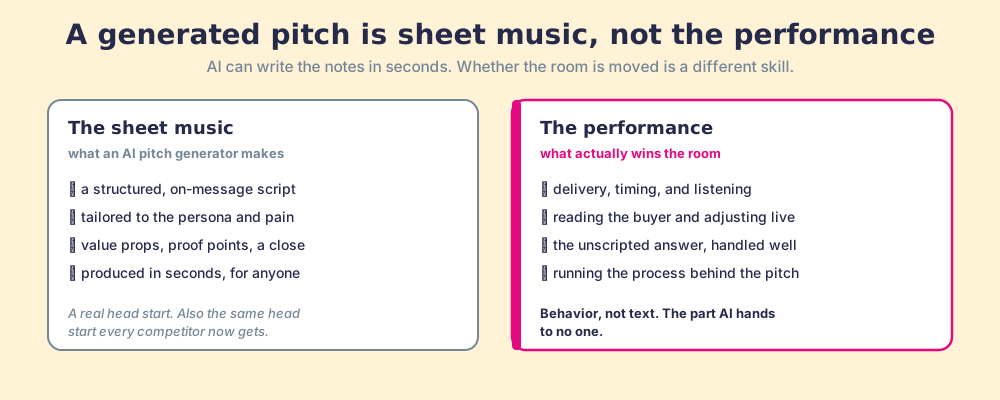
The catch is the same one running under every generative tool in selling: it produces an input. The script is the knowledge half of a pitch, and the knowledge half is exactly what AI has made cheap. We trace that whole shift in generative AI for sales, and the pitch generator is its purest small example. When a competent, tailored script costs a prompt, the script stops being where reps differ, because they all have one. The difference moves to what a rep does with it in front of a buyer, and to see why that is not a soft observation but a structural one, it helps to borrow the oldest framework in persuasion.
Why doesn’t a generated pitch win the deal?
Because a generator produces only one of the three things that persuade, and the one that matters least on its own. In the Rhetoric, Aristotle separated persuasion into three modes: logos, the logic of the argument; ethos, the credibility of the speaker; and pathos, the emotional connection with the audience (Aristotle, Rhetoric). A pitch generator is a logos machine. It can build a tight argument tailored to the persona, and it cannot supply one ounce of ethos or pathos, because those are not properties of the text. Ethos is whether the buyer trusts the person in the room, built from presence and the way a hard question gets handled. Pathos is whether the buyer feels the stakes, built from timing and tone and reading the room. Both are performed live by a human, and neither survives the trip into a document.
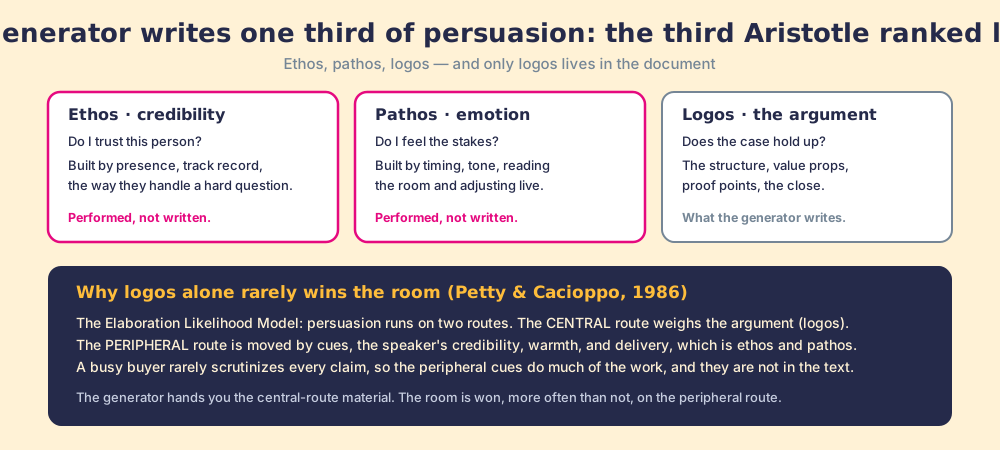
Modern persuasion research explains why this is not a quaint point but a decisive one. Richard Petty and John Cacioppo’s Elaboration Likelihood Model, the most cited framework in the field, holds that persuasion travels two routes: a central route, where the listener carefully weighs the argument, and a peripheral route, where attitudes shift on cues like the speaker’s credibility, warmth, and delivery (Petty & Cacioppo, 1986). Which route dominates depends on how motivated and able the listener is to scrutinize every claim, and a busy buyer in a forty-minute pitch, half-listening while three other tabs compete, is rarely running the central route at full power. So the peripheral cues, the ethos and pathos, do much of the persuading, and those are precisely the part the generator cannot produce. It hands you the central-route material and leaves the route that more often decides the room untouched.
The evidence from inside real sales calls agrees. Gong’s analysis of more than a million calls found the best reps talk about 46% of the time and listen the rest, while weaker reps talk 68% or more (Gong). The winning pitch is not the one with the best-worded argument; it is the one delivered by someone listening, adjusting, and building trust in real time, which is ethos and pathos at work, none of it in the script. We cover that finding in conversation intelligence.
This is where we part company with the pitch behind the pitch generators, the marketing that says “AI writes your winning pitch.” It does not, and it cannot, because winning a pitch is mostly ethos and pathos and a generator only does logos. The honest claim is “AI writes a strong first draft of your argument,” which is genuinely useful and a great deal smaller than the promise. There is even a failure mode the tool invites: a rep who trusts the polished output reads it word for word, sounds like a person reciting someone else’s words because they are, and stops listening to the buyer in order to stay on script. That move sacrifices ethos and pathos to protect logos, which is exactly backwards. A generated pitch delivered as a teleprompter is a flat pitch with good grammar.
How do you use an AI sales pitch generator well?
Treat the output as a draft to perform, never a script to read, and spend your effort on the two modes the generator cannot reach. The split is clean once you see it: let the generator do the logos, and own the ethos and pathos yourself.
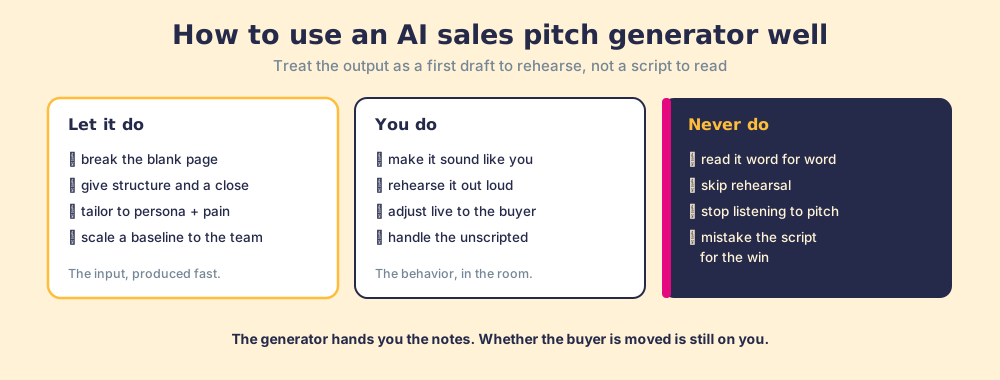
- Let it break the blank page. Use the generator for the first draft, the structure, and a tailored baseline, the logos. This is the part it does faster than you, so let it.
- Make it yours, out loud. Rewrite it in your own voice and rehearse it spoken, not read, because ethos lives in how it sounds coming from you, not in the words on the page.
- Adjust to the room. Treat the script as a plan you will depart from the moment the buyer tells you to, which they will, because pathos is a real-time read, not a paragraph.
- Run the process behind it. A great pitch in a deal with no disciplined follow-through still stalls, which is why the pitch sits inside the broader motion of sales process adoption, not on its own.
For more on the substance of a strong pitch, the worked examples in sales pitch examples are the place to start; the generator is a faster way to a first draft of those, not a replacement for understanding why they work.
What we recommend
Use an AI sales pitch generator, and use it for exactly what it is: a fast way to a good first draft of your logos. For newer reps especially, it raises the floor and saves real time, and there is no reason to write every argument from scratch when a competent baseline is a prompt away. So adopt one, and let it own the blank page and the structure.
Then put your energy where Aristotle and the persuasion research both point, which is the performance and the process, not the prose. The argument is free now, so it cannot be your edge; your edge is the ethos and pathos a generator cannot fake and the disciplined follow-through it knows nothing about. Two reps with the same generated pitch will get different numbers, and the difference will be everything the tool did not do: the trust one of them earned and the room one of them read. Buy the draft, and invest in the performance, because the notes are free and the playing never will be.
From here: the worked pitches in sales pitch examples, the wider shift in generative AI for sales, the assistant that supports the rep in AI sales assistant, the full tool field in the best AI sales tools, and the process that closes the deal in sales process adoption.
Frequently asked questions
What is an AI sales pitch generator?+
Are AI-generated sales pitches any good?+
Will an AI pitch generator improve my close rate?+
How should you use an AI sales pitch generator?+
Your process, running itself.