AI Sales Assistant: The Difference Between One That Helps and One That Works
An AI sales assistant can draft your email, summarize your call, and update your CRM. Useful, and the human-factors research warns it can also erode reps' judgment. Here is the distinction that decides which to buy.
An AI sales assistant is software that suggests answers, drafts content, and acts on tasks in the CRM to help a rep sell. The ones that change the number go further: they ensure the rep runs the standard and measure whether the behavior happened, not the knowledge alone.
There is a particular kind of disappointment that follows buying an AI sales assistant. It does everything the demo promised. It drafts the email in a blink, summarizes the call before the rep has left the meeting, updates the CRM without being asked, and surfaces a tidy briefing before every call. The rep’s day genuinely gets lighter. And then the quarter closes and the win rate has not moved, and the assistant that did so much somehow did not do the one thing you bought it for. The tool was excellent. It was solving the wrong half of the job, and, if you are unlucky, gently corroding the right half while it worked.
The confusion sits in the word “assistant,” so it helps to be precise. An AI sales assistant is software that suggests answers, drafts content, and acts on tasks in the CRM to help a rep sell; the ones that change the number go further, ensuring the rep runs the standard and measuring whether the behavior happened, rather than producing knowledge alone. Most assistants are good at the first job. Only a few do the second, and the second is the one the number turns on, for a reason that goes deeper than productivity.
What is an AI sales assistant, exactly?
It is AI pointed at the rep’s workload, and the category has climbed a ladder of capability. The bottom rung is suggest: the assistant answers a question or drafts a first pass, and a human takes it from there. The middle rung, which most of the 2026 tools have reached, is act: the assistant does the task itself, logging the activity, updating the field, sending the sequence, scheduling the follow-up. This is the shift every platform is advertising, from AI that recommends to AI that executes. It is real, and it clears a lot of drudgery.
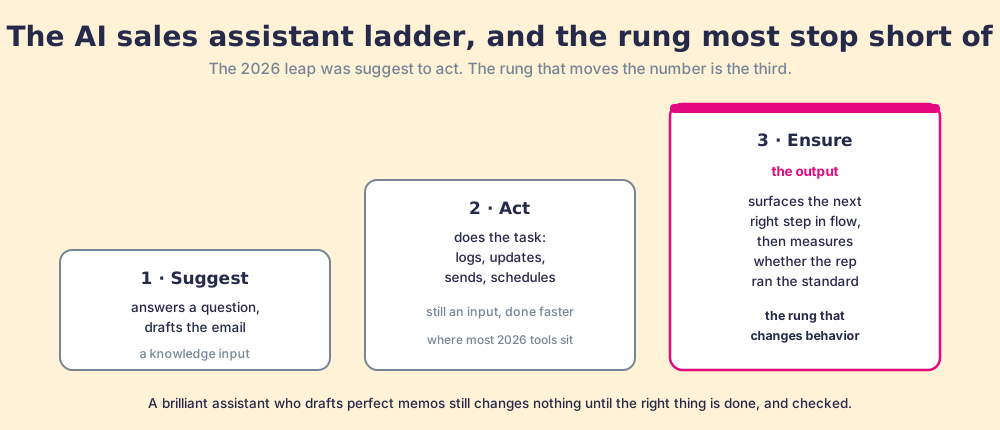
The catch is worth sitting with. Both suggest and act work on the same side of the job: they make the knowledge work faster. A drafted email, a logged call, an updated field, a scheduled follow-up, these are all inputs, the raw material a rep carries into selling. Producing them faster is a real gift, because reps spend under a third of their time selling and drown the rest in exactly this admin (Salesforce, State of Sales). Clearing it is worth real money. It is also not the same lever as making the selling itself more likely to work.
Why an assistant that acts can make a rep worse
This is the part the demos skip, and it is the reason “ensure” matters more than it looks. Hand a person an automated aid that is usually right, and a predictable thing happens to them, not to the software. They stop checking. Human-factors researchers Raja Parasuraman and Victor Riley named this in their 1997 paper Humans and Automation: Use, Misuse, Disuse, Abuse: the failure mode of good automation is not breakdown, it is misuse, overreliance, and its companion complacency, “a psychological state characterized by a low index of suspicion” (Parasuraman & Riley, Human Factors, 1997). When the aid is right ninety-five times, the human stops scrutinizing the ninety-sixth. Cognitive scientists call the result automation bias: accepting the machine’s output without the verification you would have applied to your own work.
For a sales assistant the cost is slow and compounding. A rep who lets the AI draft every email, score every lead, and summarize every call gradually stops forming their own read, the way a driver who always follows the navigation stops learning the city. Lisanne Bainbridge mapped this in 1983 in Ironies of Automation: automating the easy parts of a task leaves the human the hard residual, and erodes exactly the skill they need when the residual arrives (Bainbridge, Automatica, 1983). Her final irony is the one to carry into any AI purchase: the better the automation, the rarer and more decisive the human’s intervention, so the more skill it demands. An assistant that does the rep’s thinking for them is building the rep’s dependence on it and thinning the judgment the deal will eventually need.
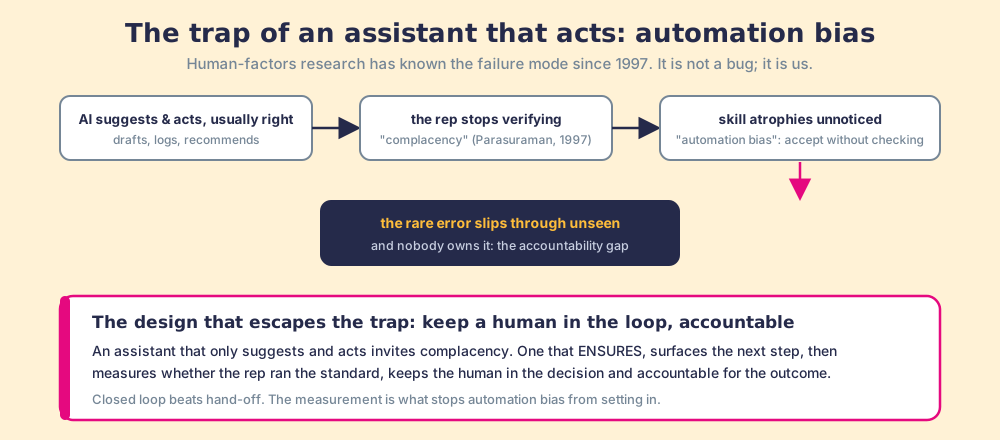
There is a second, sharper cost when the assistant becomes an agent that acts on its own: the accountability gap. When AI sends the email or advances the stage and no one inspects it, no one fully owns the outcome, and a drift in how deals are handled can run for a quarter before anyone notices. This is where we break with the boldest framing in the category. Salesforce calls Agentforce “digital labor” and the industry is racing from assistants that suggest to agents that act unwatched. Acting is genuinely useful, but autonomy without measurement is precisely the design human-factors research warns against, because it maximizes complacency and dissolves accountability at the same time. The answer is not to refuse the automation. It is to close the loop.
Suggest, act, ensure: which one changes the number?
The third rung, ensure, and almost nothing lives there. To ensure is to put the next right step in front of the rep in the flow of the work and then measure whether they ran the standard, so the assistant is accountable for behavior, rather than output alone, and the rep stays in the loop rather than drifting into complacency. The difference is the difference between a brilliant chief of staff who writes flawless memos and one who also makes sure the right thing gets done and that you stay sharp enough to judge it. The first is impressive. The second changes outcomes, because a perfect memo nobody acts on changes nothing, and an assistant that thinks for you eventually leaves you unable to think.
This is the same knowing-doing gap that runs under every AI-in-sales question: organizations rarely fail for want of knowledge, they fail at turning it into action (Pfeffer & Sutton, The Knowing-Doing Gap, 2000). An assistant that suggests and acts is a knowing machine, and a magnificent one. But our own field data found 89% of teams have a defined sales process and only 36% see reps run it, a 53-point sales execution gap that more drafting and faster logging do nothing to close, and over-trusted automation can widen. The gap is on the doing side. An assistant only reaches it if it ensures the doing and keeps a human accountable for it.
How do the AI sales assistants compare?
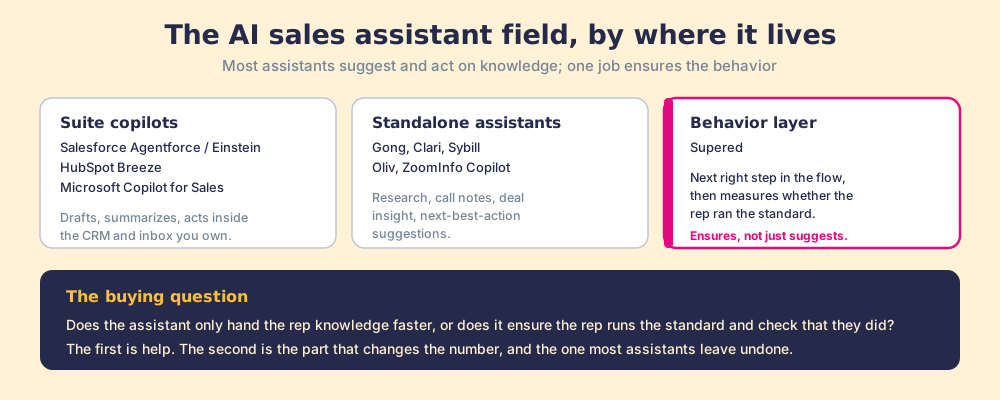
The AI sales assistant software field clusters by where it lives, and the better question than “what is the best AI sales assistant” is “which rung does it reach, and does it keep a human in the loop.” Be fair to each of these AI sales assistant tools: every one clears real work.
- Suite copilots. Salesforce Agentforce and Einstein, HubSpot Breeze, and Microsoft Copilot for Sales embed AI in the CRM and inbox you already run. Microsoft’s lives inside Outlook and Teams so reps never open the CRM; Salesforce and HubSpot push from suggest into autonomous agents. Strong on suggest and act, native to your stack, and worth governing for the accountability gap as they gain autonomy.
- Standalone assistants. Gong, Clari, Sybill, Oliv, and ZoomInfo Copilot lead on research, call notes, deal insight, and next-best-action. Sharp suggestions, and the action still rests with the rep.
- The behavior layer. A tool like Supered occupies the third rung: it surfaces the next right step in the flow of work and measures whether the rep ran the process, inside HubSpot and Salesforce. It ensures the behavior, and the measurement is what keeps the rep engaged rather than complacent.
What we recommend
Buy the productivity, and design against its hidden cost. An AI sales assistant that drafts, summarizes, and acts will give your reps hours back, and that alone justifies most of them; if your team is drowning in admin, a suite copilot native to your CRM is an easy yes. So get one, with clear eyes about what it is buying you, which is speed on the knowledge work, an input that is commoditizing across every vendor at once, and which, left unwatched, can breed the complacency the human-factors literature has documented for thirty years.
Then point the center of your spend at the rung that changes the number and guards against the trap at the same time. The assistant worth the most is the one that ensures the rep runs the standard and measures whether they did, because that single design choice does three things at once: it touches the doing side of the gap, where the deal is won; it keeps a human in the loop and accountable, where the agent-that-acts model does not; and it makes the rep sharper rather than softer, by keeping their judgment in the decision. As AI makes suggesting and acting nearly free, ensuring the behavior, and keeping the human responsible for it, is the part that holds its value. Pick the assistant that helps; weight the budget toward the one that works and keeps your team awake.
From here: the wider shift in generative AI for sales, the full buyer’s guide in the best AI sales tools, the coaching version in AI sales coaching, the argument in AI sales enablement, and the behavior system underneath in sales process adoption.
Frequently asked questions
What is an AI sales assistant?+
What is the best AI sales assistant?+
What is the difference between an AI sales assistant and an AI sales agent?+
Can an AI sales assistant make reps worse?+
Your process, running itself.