Sales Readiness Software: A Buyer's Guide by the Behavior It Produces
Sales readiness software is sold as training-and-certification delivery: drill the rep, score the quiz, mark them ready.
Here is how to judge these tools by the behavior they produce instead, and how to choose by the job you need done.
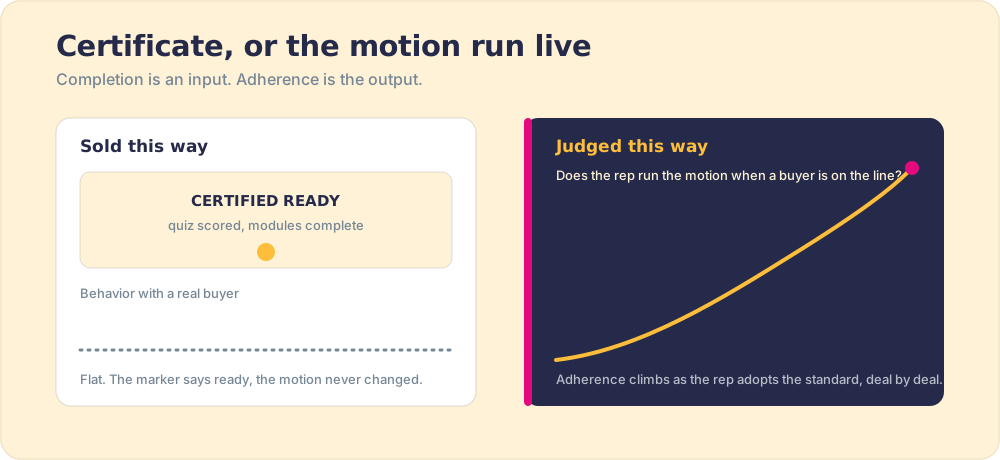
Sales readiness software is the category of tools that train, certify, and score reps before they sell; the more useful definition is behavioral, the system meant to make a rep run the motion when a real buyer is on the other end.
A new rep finishes the readiness program. The courses are complete, the certification quiz is passed at ninety-four percent, the practice pitch was recorded and graded, and the dashboard now shows a small green tick beside their name that reads, in effect, ready. The following week they get a live deal, a real buyer with a real budget objection, and they freeze, hunt through a folder, and promise to follow up. The platform certified them. With a buyer in the room, in the only moment that counted, the certificate did nothing.
That gap is the whole subject here, and almost no buyer’s guide for sales readiness software names it. The category is sold as delivery: drill the rep, score the quiz, mark them ready, move on. The promise is that readiness is a thing you can complete. Our view is the opposite. Readiness is not a certificate. It is whether the rep runs the motion when a real buyer is on the other end. Completion is an input you can schedule. Adherence is the output you have to measure, and the two come apart far more often than the dashboard admits. This is a buyer’s guide that judges these tools by the behavior they produce, not the modules they ship.
So here is the definition we will use. Sales readiness software is the category of tools that train, certify, and score reps before and during the time they sell. The behavioral version, the one that predicts whether the spend pays off, is this: readiness software is the system meant to make a rep run the motion when a real buyer is on the other end. Judge it by the behavior it produces on real deals, not the modules it owns.
What is sales readiness software, exactly?
Strip the brand names away and a sales readiness platform is a system for getting a rep prepared to sell and proving they are. It teaches the product, the pitch, and the process, then tests that the teaching landed. Useful, ordinary, and worth defining in plain words before we argue about it.
The reason the behavioral definition matters is that the two readings lead to different purchases. Read readiness as a completion problem and every gap looks like a course to assign and a quiz to pass. Read it as a behavior problem and the question changes to whether the rep does the thing the course was about when a buyer is across the table. A rep who scored ninety-four percent on the objection-handling module and then went silent on the first real objection is, by the only definition that pays, not ready. The module is complete. The behavior is missing, and only one of those shows up on the readiness dashboard.
People split readiness and enablement endlessly, and the line is real but narrow. Sales enablement is the broad work of equipping reps to sell, the content, the training, the coaching, the systems behind all of it. Readiness is the slice that asks whether a given rep is prepared, usually through certification and skills assessment. The trouble is that in most sales readiness tools, readiness collapses into two numbers, course completion and quiz score, and both measure attendance rather than behavior. We have written more on that confusion in what sales readiness actually means.
This matters more every year because the category keeps selling capability faster than reps adopt it. The Sales Enablement Collective’s 2025 Impact of Enablement report found that 79.7% of enablement leaders say reps leave at least 40% of a stand-alone tool’s features untouched (SEC). Read that slowly. Four out of five teams pay for readiness capability that the people it was bought for never use. The hard part was never building the course. It is getting the standard to show up in the moment a rep is with a buyer.
What does sales readiness software actually do?
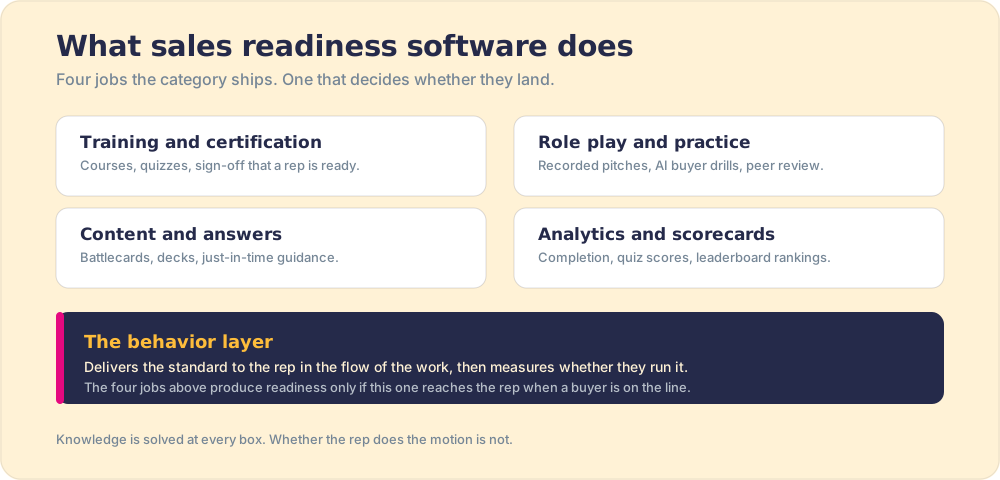
However many logos a readiness suite carries, the work organizes into four jobs, plus a fifth that decides whether the first four pay off. Naming them cleanly is half the battle, because most teams buy by feature list and then cannot say which job each part is really holding.
- Training and certification. Courses, learning paths, quizzes, and the formal sign-off that a rep has passed. This is the spine of every readiness platform and the part buyers picture first.
- Role play and practice. Recorded pitches, peer review, and increasingly AI buyer simulations that let a rep drill a discovery call or an objection before a real one arrives. Genuinely useful, and still practice, not the deal.
- Content and just-in-time answers. Battlecards, decks, and guidance the rep can reach for, in theory, at the moment of need. In practice usually a search bar a rep under pressure does not open.
- Analytics and scorecards. Completion rates, quiz scores, leaderboard rankings, and certification status rolled up for the manager. This is where readiness gets reported, and where the confusion lives, because these numbers measure the input, not the behavior.
Those four are the category as the market draws it. The fifth job is the one that decides whether any of them change what a rep does with a buyer.
- The behavior layer. This is not a box most readiness suites list, and it is the one that determines the return on the other four. It takes the standard, the process, the talk track, the next right step, and delivers it to the rep in the flow of the work, the instant the buyer raises the objection, so running the motion is the path of least resistance instead of a memory test. Knowledge is solved; any rep can find the doc and an AI can summarize it in seconds. What the certified rep does with a live buyer and three tabs open is the unsolved problem, and it is the problem this layer exists to close.
Readiness or adherence: which one are you actually buying?
Here is the distinction that decides whether the money is well spent. Readiness, as most tools measure it, is a state you certify. Adherence is a behavior you inspect. They sound like the same thing and they are not, and the gap between them is where deals slip and no one can say why.
You can see the confusion in how readiness gets reported. A scorecard that is green on completion and quiz scores tells you the rep absorbed the material in a classroom. It tells you nothing about whether they run the discovery framework on Tuesday’s call. Knowing better is not doing better. The classroom, information-first approach is the weak lever for changing behavior, because a selling motion cannot be learned by listening any more than swimming can. Pass every quiz on the freestyle stroke and you will still sink the first time you are in deep water with someone watching.
The certificate is not the swim.
This is not a discipline problem, and it is worth saying plainly because the readiness-software pitch often implies it is. When a certified rep does not run the motion, that is a system failure, not a people failure. The standard was taught off the work, weeks before the work arrived, and nothing delivered it back at the moment of need. The forgetting curve did the rest. You can only expect what you inspect, and a completion report inspects attendance, not the motion. The fix is never to blame the rep; it is to make the right action easy and visible the instant the buyer raises the question.
The cost shows up in the buyer’s experience, which is what a process is for in the first place. Gartner has found that 77% of B2B buyers describe their most recent purchase as complex or difficult (Gartner). A rep who freezes on the objection makes that worse. A rep who runs the standard, every time, makes the buying experience clearer and more consistent, which is what actually closes deals in a market where buying already feels hard. Readiness that never reaches the buyer is readiness in name only.
Does the spend on sales readiness tools pay off?
It pays off when it changes behavior, and not otherwise. The evidence that the readiness layer moves numbers is real, but read the mechanism carefully. CSO Insights, the research arm now inside Korn Ferry, found that teams running dynamic, data-backed coaching post win rates roughly 28% higher than teams without it (cited via SEC). The lift does not come from owning a coaching tool or assigning more courses. It comes from the coaching happening, reliably, against real deals. The tool is the means. The behavior is the cause.
Now the number that settles the argument. In the State of Sales Enablement 2026, teams whose guidance is embedded in the flow of work hit quota at 49%; teams whose guidance lives in docs, wikis, and a separate readiness tool hit quota at 15%. Same content. The only variable is where it reached the rep, and the difference is more than three times, roughly 3.3x.
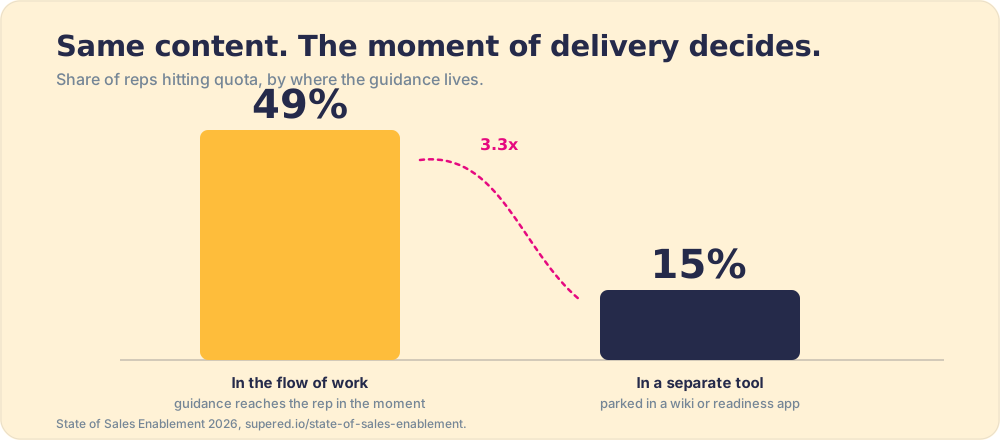
Teams whose guidance is embedded in the flow of work hit quota at 49 percent. Teams whose guidance lives in docs, wikis, and a separate tool hit quota at 15 percent. Same content. The moment of delivery is the lever.
That 49% against 15% is the whole buyer’s guide in two numbers. A readiness platform that drills the rep beautifully and then parks the standard in a course library is, structurally, the 15% case. The drilling was not wasted, but the delivery was, and delivery is the variable. We saw the same pattern in why ramp is a behavior problem, not a knowledge one: the front-loaded firehose evaporates before the first real deal, and the number that matters is time to adoption, not time to certification.
How do you choose a sales readiness platform?
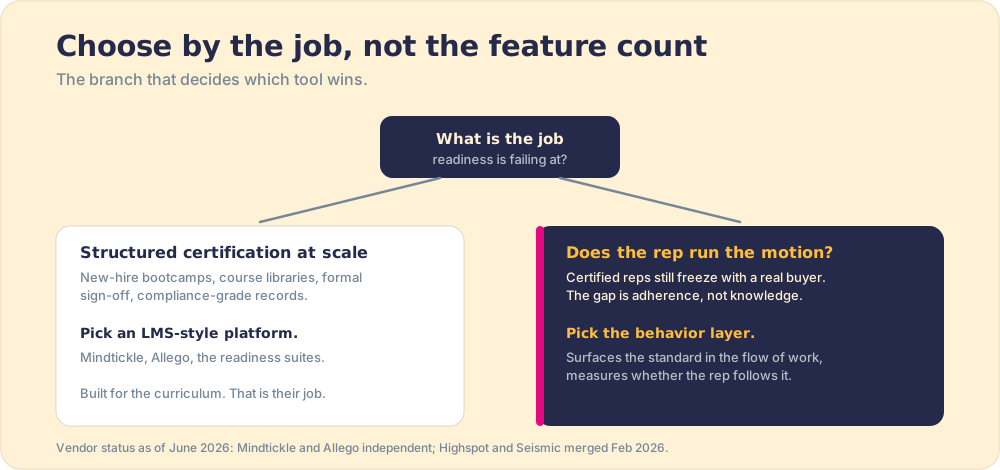
Start from the job that is failing, not the longest feature list. The conventional process runs the other way: shortlist the suites, compare module counts, pick the richest one. That optimizes for the wrong variable. It selects the platform with the most courses, when what you need is the one that produces the behavior you are short on. So make the clean branch on the job.
If your problem is structured certification at scale, new-hire bootcamps, formal course libraries, compliance-grade records of who passed what and when, then an LMS-style readiness platform is built for exactly that. Mindtickle and Allego, both independent as of June 2026, are strong here; this is their job, and if it is yours, they are a fair pick. Be honest about that branch, because the evenhandedness is what makes the other branch credible.
If your problem is that certified reps still freeze with a real buyer, you do not have a curriculum gap. You have an adherence gap, and no amount of additional coursework closes it, because the failure is not in what the rep knows. It is in what reaches them in the moment. That is the behavior layer’s job: surface the standard in the flow of the work and measure whether the rep runs it, deal by deal.
A behavior-first selection runs in a different order:
- Name the change in what reps do. Not “we need a readiness tool,” but “reps should run the discovery framework on the first call without leaving the CRM.” State the behavior as something you could watch happen on a real deal.
- Ask where the tool lives. A capability reps must leave their workflow to reach is one most will not. Weight integration with the CRM and the tools reps already work in above almost everything else.
- Pilot for adoption, not for the demo. Watch a small group for a few weeks and count the behavior on real deals, not the logins or the completion rate.
- Judge it on adherence, then renew on it. A readiness tool earns its renewal when you can show the motion it was bought to instill is happening with buyers. If you cannot point to the change, you are paying for a certificate.
One more shift worth tracking, because a readiness buyer’s guide written before it is already dated: AI is moving fast into role play, the AI buyer that lets a rep drill an objection a hundred times before a real one arrives. It is genuinely useful, and it amplifies the process you already have. Run it behind an adopted standard and it compounds good behavior. Run it without one and it drills reps, at scale, on a motion nobody is following with buyers.
So when you next evaluate sales readiness software, do not start by counting modules. Start by watching a certified rep on a live call and asking whether the standard reached them when the buyer pushed back. That one question reorders the entire shortlist. If you want the wider category map, what a sales tech stack is shows where readiness sits among the other layers; if you are ranking specific platforms, the best sales enablement tools sorts them by job; and if you want the system that turns readiness from a certificate into behavior reps actually run, start with the sales enablement software guide.
Frequently asked questions
What is sales readiness software?+
What is the difference between sales readiness and sales enablement?+
What does sales readiness software actually do?+
How do you choose a sales readiness platform?+
Does sales readiness software actually improve win rates?+
Your process, running itself.