Data-Driven Sales Coaching: Why the Data Usually Points at the Wrong Thing
Data-driven sales coaching promises objectivity.
Most of it coaches the data that is easy to capture rather than the behavior that decides the deal, a bias old enough to have a name.
Data-driven sales coaching is the practice of grounding coaching in observed data rather than impression, and it works only when the data captures the leading process behaviors that decide deals, not the lagging activity metrics that are merely easy to count.
“Data-driven” is one of those phrases that ends an argument, because who could be against data. So sales teams wire up the dashboards, pull the activity reports, and coach from numbers instead of hunches, and it feels like progress. Then six months on, the coaching is precise, objective, and changing nothing, and the reason is hiding in plain sight: the data the team gathered is the data that was easy to gather, which is almost never the data that decides a deal. Data-driven coaching is only as good as its data, and the default data is aimed at the wrong behavior.
Data-driven sales coaching is the practice of grounding coaching in observed data rather than impression, and it works only when the data captures the leading process behaviors that decide deals, not the lagging activity metrics that are merely easy to count. The phrase promises objectivity. Whether it delivers improvement depends entirely on which numbers you chose, and the default choice is the wrong one.
Why does the data point at the wrong thing?
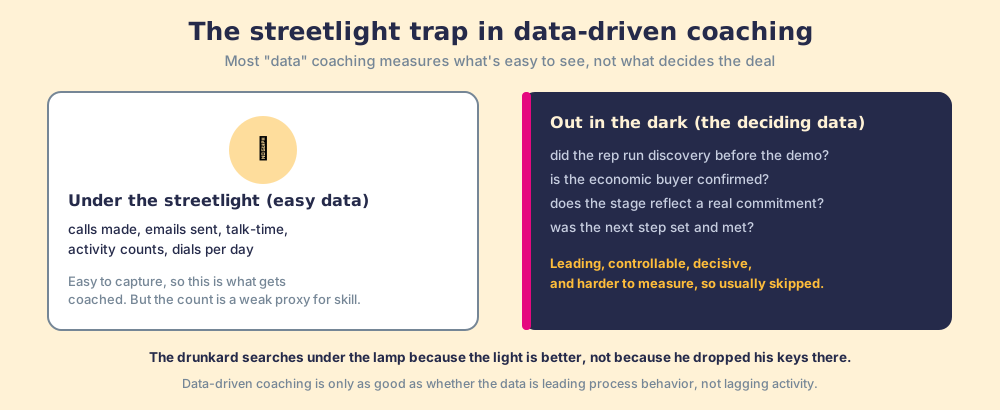
Because of a bias old enough to be a joke, and rigorous enough to have a name in the research literature: the streetlight effect. A police officer finds a drunk man searching the ground under a streetlight and helps him look for his lost keys. After a while the officer asks if he is sure he lost them here. “No,” the man says, “I lost them in the park, but the light is better here.” Behavioral scientists adopted the parable as the name for observational bias: we search where the looking is easy rather than where the keys fell (on the streetlight effect). It is the precise failure mode of data-driven coaching.
In a sales pipeline, the streetlight is activity. Calls made, emails sent, dials per day, talk-time: all of it is captured automatically and sits in a dashboard waiting to be coached. So it gets coached, with rigor and conviction. Out in the dark, where the light is poor, sit the behaviors that decide whether a deal closes: was discovery run before the demo, is the economic buyer confirmed, does the stage reflect a real commitment, was the next step set and met. These are harder to capture and harder to see, so the average data-driven program walks right past them to the well-lit activity numbers and coaches the keys it did not drop.
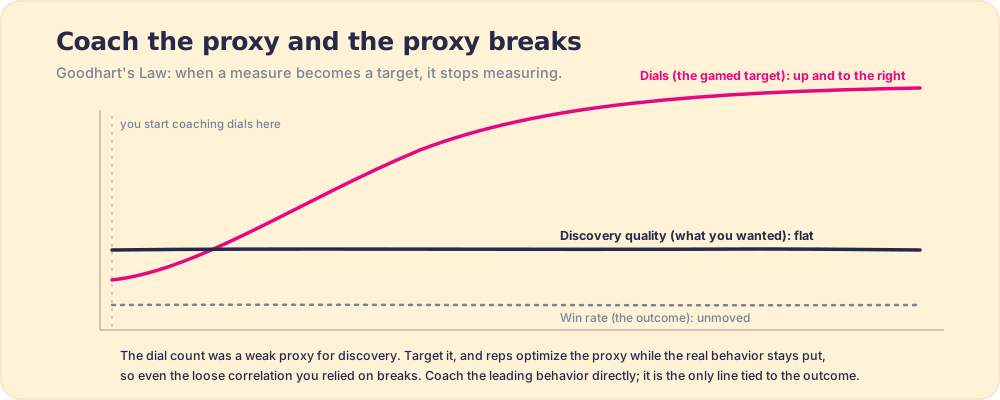
There is a second, nastier reason the easy metric is the wrong one, and it has a name too: Goodhart’s Law, after the economist Charles Goodhart, usually stated as “when a measure becomes a target, it ceases to be a good measure.” The moment you coach dials, reps chase dials, and a metric that was a weak proxy for effort becomes a target gamed for its own sake. You will get more dials. You will not get more discovery, because the dials were never causing the discovery; they were standing in for it, badly, and now even that loose correlation breaks. So coaching the streetlight metric does more than waste attention, it actively degrades the number you were using as a stand-in. The data-driven program ends up worse than a manager who coached on gut, because at least the gut was aimed at the deal.
The trap comes dressed as rigor. A dashboard full of green activity bars feels like control, and the feeling is the problem, because it is confidence pointed at the wrong tier. The manager believes they are coaching with data. They are coaching whatever the data happened to capture, which is whatever was easiest to capture, which rarely decides the deal.
What data should sales coaching use?
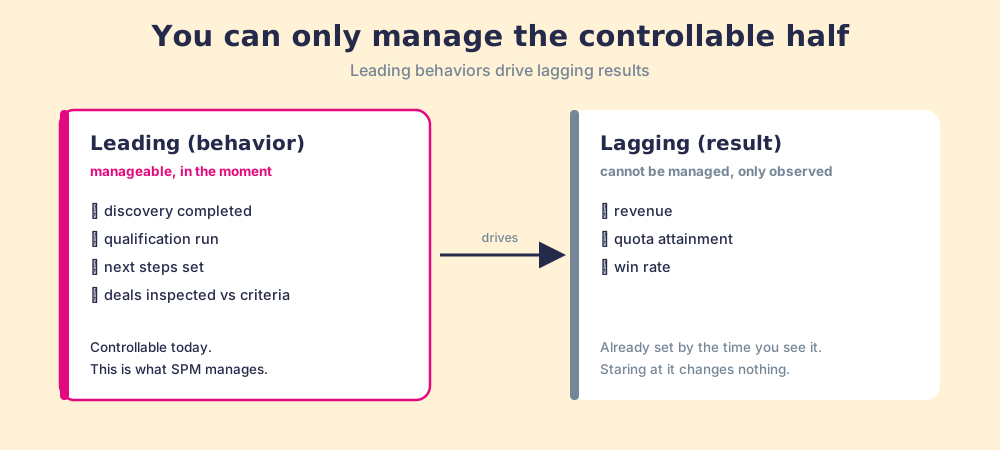
Leading process behaviors, the ones a rep controls in the moment and that predict the result. The distinction between leading and lagging indicators is the distinction that decides it, and we lay it out in full in sales performance management: a lagging indicator (revenue, win rate, quota attainment) reports what already happened and cannot be coached, because the deal is over; a leading indicator (discovery run, qualification scored, next step set) is happening now and can be changed. Activity counts sit in a third category, and they need careful handling, because the easy dismissal is wrong. Capturing activity is genuinely useful: it is how you verify the process ran at all, and what a rep does shapes the buyer’s experience. Measuring activity is fine. Coaching skill against the count is the mistake, because volume is a weak proxy for the quality of the behavior underneath it. A rep can make forty dials and run zero good discovery calls, and the activity dashboard will glow green the whole time. Count the activity to confirm the work happened. Coach the behavior to make the work good.
So the discipline of genuinely data-driven coaching is to measure the deciding behavior even though it is harder, rather than the easy behavior because it is there. Measuring the hard behavior separates sales coaching metrics that change results from sales coaching analytics that decorate a dashboard. Our own research found that teams who consistently inspect deals against a defined process hit quota at 6.3 times the rate of those who rarely do (The State of Sales Enablement), and inspection means looking at process adherence, the dark-side data, not the activity counts under the lamp.
What does data-driven sales coaching look like in practice?
The practical version of data-driven sales coaching coaches three tiers of data differently, and the tiers are easy to confuse. Sort your metrics into these buckets before you coach a single one.
- Lagging outcomes. Revenue, win rate, quota attainment. Report them, never coach them; the deal is already decided, and “close more” is not a behavior.
- Activity counts. Dials, emails, talk-time. Worth capturing to verify the work happened, and easy to, which is the catch: glowing on a dashboard, they tempt you to coach the count instead of the behavior. Use them to confirm the motion ran. Do not mistake the count for the quality of the motion.
- Leading process behavior. Discovery run, qualification scored, stage earned by a real commitment, next step set and met. Harder to see, controllable in the moment, and the only tier worth coaching. This is data driven coaching that moves the number.
What we recommend
Be suspicious of any data-driven coaching program that is easy to set up, because the easy data is the streetlight data. The move is to pay the cost of measuring the behavior that decides deals: define the few leading process behaviors that matter (a sales competency model with observable levels is one way to write them down), capture adherence to them deal by deal, and coach off that, not off the activity report that was sitting there. Done this way, the data points the manager at the one behavior to develop, and the rep experiences it as coaching with evidence rather than surveillance of effort. There is a real difference between a manager who says “your dials are down” and one who says “this deal skipped discovery, walk me through it.” Only the second is coaching, and only data aimed at the deciding behavior makes it possible.
From here: the leading-versus-lagging distinction in sales performance management, the full method in the sales coaching guide, the metrics worth tracking in sales KPIs, and the inspection system underneath in sales process adoption.
Frequently asked questions
What is data-driven sales coaching?+
What metrics should data-driven sales coaching use?+
Why does data-driven coaching often fail?+
How do you make sales coaching data-driven without it becoming surveillance?+
Your process, running itself.