Cold Calling Tips: Why the First Ten Seconds Decide the Call
The best cold calling tips are not clever lines, they are a consistent opener that earns the next thirty seconds. The science of the first ten seconds, the tips that work, and why consistency beats charisma.
Cold calling tips are the techniques for making unsolicited sales calls connect, and the ones that work share a principle the clever-line lists miss: the opener is a pattern interrupt plus permission that earns the next thirty seconds, and the lever is running it consistently.
Most cold calling tips are a collection of clever opening lines, as if the right magic sentence will turn a stranger into a meeting. It will not, and the premise is the problem. A cold call is not won by wit in the first ten seconds; it is won by earning the next thirty. The opener’s only job is to interrupt the buyer’s pattern honestly and buy a little permission to keep talking, and the reps who do that consistently beat the reps hunting for a perfect line they deliver differently every time.
So here are cold calling tips that hold up, the science of why the opening seconds matter so much, and the unglamorous truth underneath all of them. The throughline, and our point of view: the gains come from running a consistent, proven motion, not from charisma, which is exactly why a team can be coached into better cold calling and a lucky individual cannot be copied.
That view is not the consensus, so it is worth naming who owns this topic and where we part ways before the list. Three people wrote most of what you have read about cold calling, and they disagree with each other in public. Reading their fight teaches more than any opener.
Aaron Ross, in Predictable Revenue (2011), built his whole book around routing around the cold call. The cover line promises growth “without having to make another unproductive cold call ever again,” and his “Cold Calling 2.0” is a research-and-referral sequence designed so a rep never dials a stranger. Jeb Blount answers him directly. Fanatical Prospecting (2015) tells the rep to pick up the phone every day and treat the dial as sacred, and his “30-Day Rule” states plainly: “The prospecting you do in this 30-day period will pay off for the next 90 days. It is a simple, yet powerful universal rule that governs sales and you ignore it at your peril.” Ross wants the cold call engineered out of existence. Blount says skip the phone and your pipeline goes dark in 90 days. They cannot both be the whole truth.
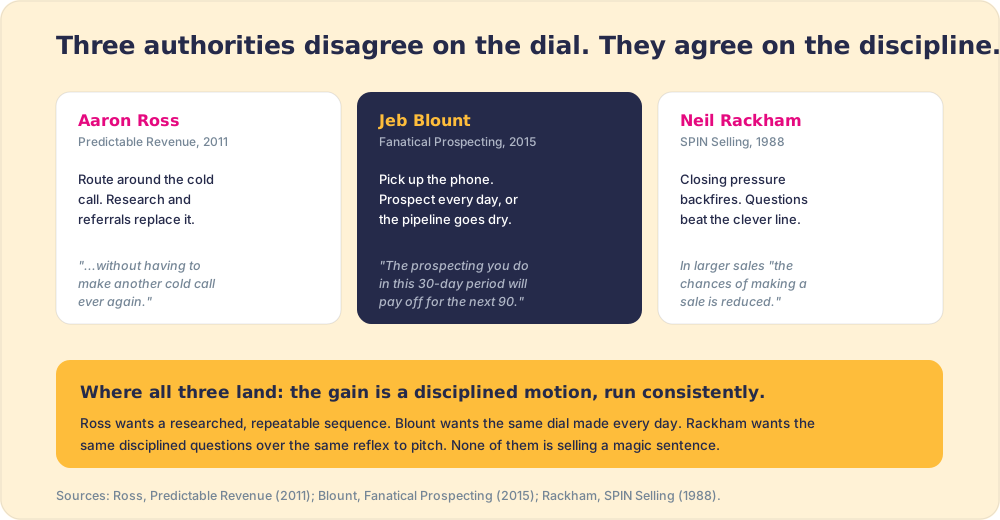
Here is the resolution, and our position. Ross is right that a smart, researched sequence beats spray-and-pray. Blount is right that the phone still reaches a human faster than any other channel. What both are arguing for is the same thing under different names: a disciplined motion run the same way every time. Ross wants the sequence designed; Blount wants the dial made daily. Neil Rackham, who studied 35,000 sales calls for SPIN Selling (1988), supplies the third leg and the warning most tip lists ignore. His research found the hard close, the clever pressure line, actively hurts in real B2B deals: “Closing techniques may increase the chances of making a sale with low-priced products. With larger sales comprised of expensive products or services, the chances of making a sale is reduced.” The opener matters; the magic line does not. Across all three, the lever is the same, and it is the one the lists skip: run the disciplined motion consistently, on every call, and inspect whether it happened (tenets 4 and 6). A clever sentence is knowledge, and knowledge is solved. Whether the rep runs the motion is the unsolved part.
What are the best cold calling tips?
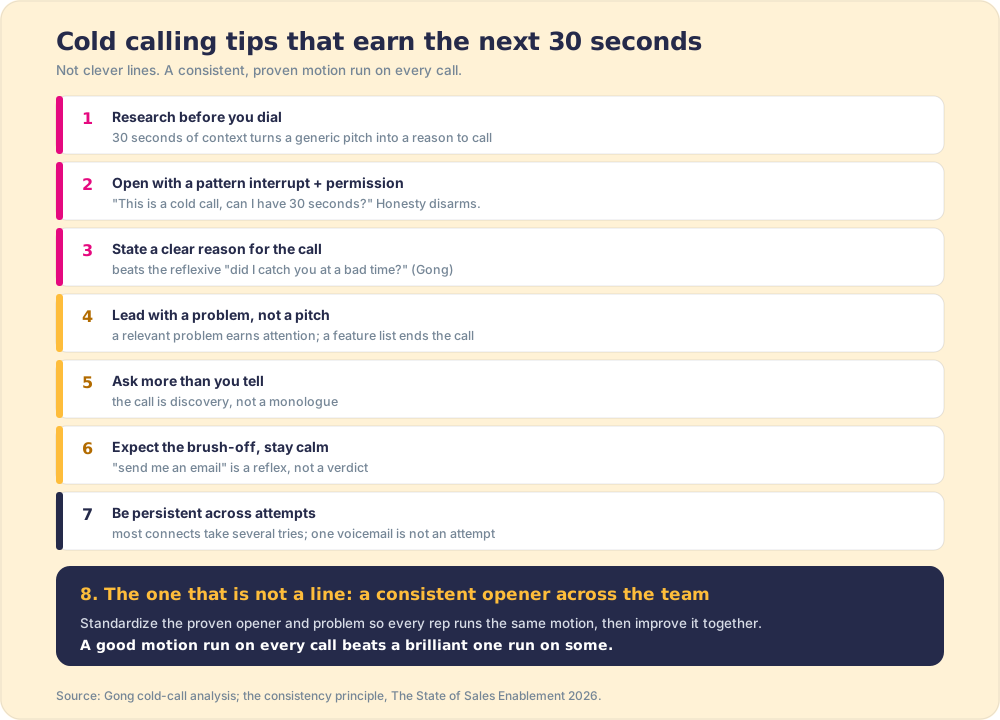
Eight that survive contact with a real dialer, ordered from before the call to the habit that makes it repeatable.
- Research before you dial. Thirty seconds of context (a trigger event, a role, a relevant problem) turns a generic pitch into a reason to call. The best cold calling techniques start before the phone rings.
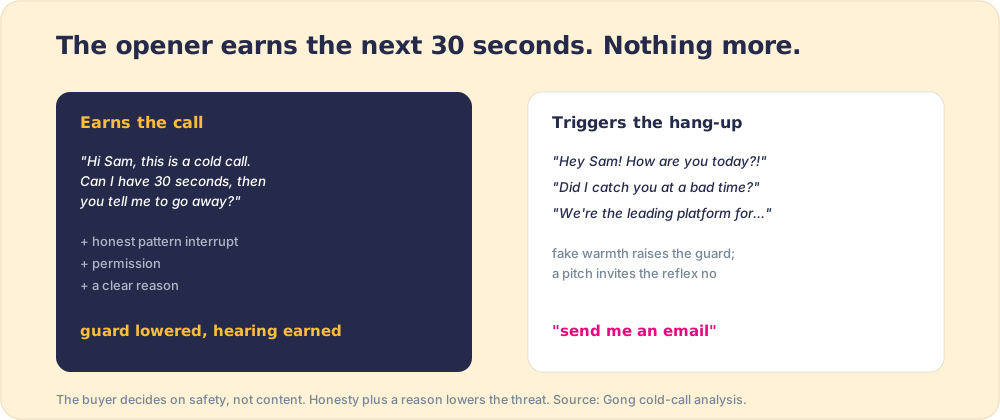
- Open with a pattern interrupt and permission. Name who you are, admit it is a cold call, and ask for thirty seconds. Honesty disarms; fake familiarity raises the guard.
- State a clear reason for the call. Gong’s analysis of sales calls found that openers giving a specific reason outperform the reflexive “did I catch you at a bad time?” (Gong). Tell them why you are calling, fast.
- Lead with a problem, not a pitch. Open on a problem the buyer’s peers have, not your product’s features. A relevant problem earns attention; a feature list ends the call.
- Ask more than you tell. The call is discovery, not a monologue. A question keeps the buyer engaged; a pitch invites the hang-up.
- Expect the brush-off, and stay calm. “I’m busy” and “send me an email” are reflexes, not verdicts. A calm, specific response to the reflex often earns the real conversation.
- Be persistent across attempts. Most connects take several tries; one dial and a voicemail is not a real attempt. Persistence, sequenced and polite, is most of the game.
- Run a consistent opener across the team. The deepest tip, and not a line: standardize the proven opener and problem so every rep runs the same motion, then improve it together. Consistency beats individual flair.
Why does the opener matter so much?
Because the buyer decides whether to keep listening in the first few seconds, and that decision is about safety, not content. A cold call is an interruption, and the buyer’s default is to end it. The opener’s job is to lower that defensiveness fast enough to earn a hearing, and the data on which openers do that is unusually clear. Gong analyzed openers across hundreds of millions of calls and found that stating a clear reason for the call makes a rep 2.1 times more likely to book the meeting, while the reflexive “did I catch you at a bad time?” makes them about 40% less likely (Gong). A pattern interrupt as plain as “how have you been?” lifted success from a 1.5% baseline to about 10%, a sixfold swing, because it scrambles the buyer’s reflex to brush you off for the half-second you need.
This is also why the “cold calling is dead” camp, the spirit of Ross’s route-around-it approach, overstates the case. The cold call is not dead; it is done badly by most, which is precisely the opening for teams that do it well. Ross is right that a researched, referral-led sequence is stronger than blind dialing, and wrong if the lesson taken is to abandon the phone, the move Blount spends a whole book warning against. A relevant, well-opened call still reaches a decision-maker faster than almost any other channel, and the bar is low because so many reps either do not call or call with a pitch. The opportunity is in the consistency most teams never build, the same logic behind a good cold call script that gives reps a skeleton instead of a straitjacket, the approach we cover in sales techniques.
How do you make cold calling consistent across a team?
Standardize the motion, then coach it, because cold calling is a skill built by deliberate practice, not a talent you are born with. Pick one opener and one problem-led approach, make them the team standard, and improve them together from recorded calls. A team that runs the same proven opener on every call will out-dial a team of improvisers, because they are compounding one motion instead of scattering a hundred.
The reason consistency wins is the same principle that runs through everything we publish: a good motion run on every call beats a brilliant one run on some. That is why the highest-value cold calling tips for beginners are not more lines but a single repeatable opener, and why b2b cold calling improves fastest when the team runs one standard and coaches it, the subject of sales coaching and sales process adoption.
What we recommend
Two ways to improve cold calling. You can collect openers, hand reps a list of clever lines, and hope one lands. Or you can standardize one proven motion, an honest pattern-interrupt opener, a relevant problem, a calm brush-off response, run it on every call, and coach it from recordings.
We recommend the second, and the reasoning is consistent: the data says the opener and the reason for calling matter more than the script’s cleverness, and the gains come from running a proven motion every time rather than from charisma you cannot copy. So pick the opener, make it the standard, be persistent, and coach the motion. The clever line is not the lever; the consistent call is.
Start with the broader craft in sales techniques, the discovery that follows a connect in SPIN selling, and the system that makes the motion consistent in sales process adoption.
Frequently asked questions
What are the best cold calling tips?+
Do cold calls still work in 2026?+
What is the best cold call opener?+
How do you get better at cold calling?+
Your process, running itself.