ChatGPT Prompts for Sales: The Prompt Was Never the Lever
A working library of ChatGPT prompts for sales, and the harder truth underneath it: a model that has never seen your deal can only ever hand you a draft. What you do with the time and the draft is the part that moves a number.
ChatGPT prompts for sales are the instructions a rep gives a language model to draft outreach, research a buyer, build a training script, or rehearse a call; the prompt produces a confident draft that still has to become a good action on a real deal.
A rep finishes a discovery call, opens a fresh ChatGPT tab, and types: “Help me write a sales email aimed at CFOs.” The model answers in two seconds, polished and confident, addressed to a CFO who does not exist about a deal it has never heard of. The rep reads it, frowns, deletes half, and starts typing the email they would have written anyway. The tool was instant. The output was air.
That small scene plays out a few hundred thousand times a day, and the industry’s response has been to hunt for the better prompt, as if somewhere out there is the magic incantation that turns the model into a closer. It is the wrong thing to chase. A prompt, however clever, only ever produces a draft, and the draft comes from a model that has never seen your deal, your buyer, or the call you just got off. The lever was never the prompt. It is what the rep does with the time the model frees and the draft it returns.
So let us be plain about the term first. ChatGPT prompts for sales are the instructions a rep gives a language model to draft outreach, research a buyer, build a training script, or rehearse a call. Useful, real, worth getting good at. The catch is the one vendor slides leave off: the prompt produces a confident draft that still has to become a good action on a real deal, and only a human, then inspection, tells you whether it did.
The deeper pattern runs under every prompt. Knowledge is solved. Any rep can find the doc, and any model can summarize it. What a rep does in the moment of the work, that is the unsolved problem, and a prompt does not touch it. The State of Sales Enablement 2026 puts a hard number on the same idea: teams whose guidance reaches reps in the flow of the work hit quota at 49%, against 15% for teams whose guidance sits in docs, wikis, and a separate tool (State of Sales Enablement 2026). Same content. The difference is whether it became behavior. AI prompts for sales live on exactly that fault line.
What makes a good ChatGPT prompt for sales?
Specificity, and nothing else comes close. The model is a brilliant improviser with no information about your account, so a thin prompt forces it to invent the situation, and it will invent a generic one every time. The fix is the same one a sales manager uses on a new hire: brief it like it knows nothing, because it does.
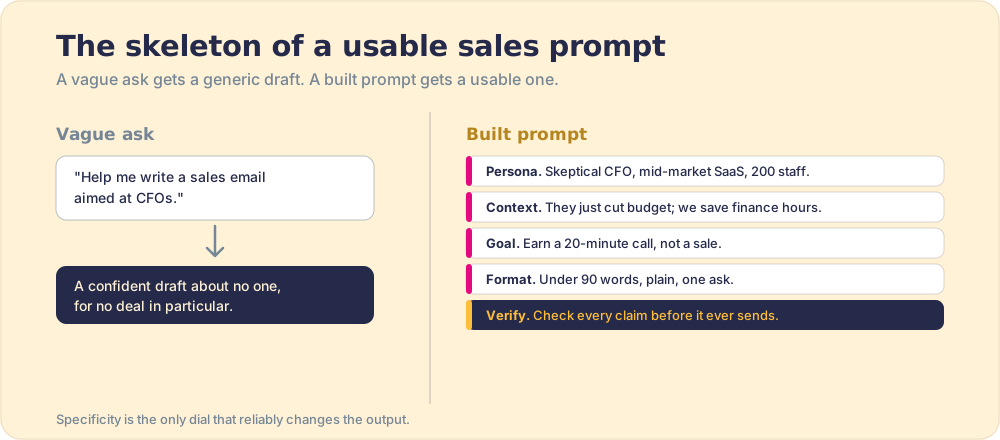
The skeleton of a usable prompt has five parts, and they are easy to remember because they are the questions you would answer before any real outreach:
- Persona. Who is on the other end, in detail. Not “a CFO” but “a skeptical CFO at a 200-person SaaS company who just cut budget.” The model writes to the picture you give it.
- Context. What is true about this deal right now. The trigger, the prior conversation, the thing you sell that maps to their pain. Without it the draft floats free of reality.
- Goal. The one thing this message is for. A cold email earns a call, not a signature. State the single job, or the model will try to do all of them and accomplish none.
- Format. Length, tone, structure. “Under 90 words, plain, one ask.” Constraints make the output usable; their absence makes it a wall.
- Verify. The instruction to flag anything it is not sure of, and your own commitment to check it. The model fabricates with total confidence, so this part is not optional.
Watch the difference in practice. “Write a sales email aimed at CFOs” returns boilerplate. Now feed it the skeleton: persona, the budget cut, the finance-hours you save, a 20-minute call as the goal, under 90 words. The draft sharpens immediately. Then iterate, because the first draft is a starting point: “shorten it and make it more compelling,” “make it more casual,” “now turn it into a three-step follow-up sequence.” The conversation is where the value compounds, not the single magic line.
One caveat on the picture. A more specific prompt produces a more specific draft; it does not produce a true one. The model will state your competitor’s pricing or the buyer’s org chart with the same confidence whether it knows the fact or invented it. Specificity buys you relevance, never accuracy. The verify step exists for that reason, and so does the rule that the human never leaves the loop.
What are the best ChatGPT prompts for sales?
The genuinely useful sales prompts cluster into six jobs. Five of them produce a draft. The sixth does something different, and that difference is what this post is really about.
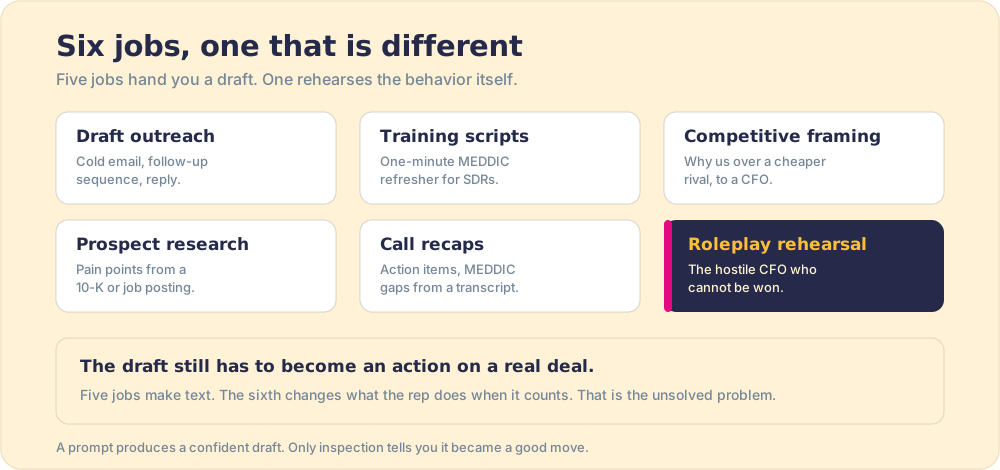
The library, written as prompt skeletons you can adapt:
- Draft outreach and sequences. “You are writing to [persona] who just [trigger]. We help them [outcome]. Write a cold email under 90 words whose only goal is a 20-minute call. Then draft a three-step follow-up sequence.” This is the workhorse, and the one most worth iterating on.
- Build a training script. “Write a script for a one-minute training video that teaches new SDRs the basics of MEDDIC, with one concrete example per letter.” Short-form enablement content the model is good at, because the subject is general knowledge, not your deal.
- Frame a competitive case. “How would you convince a skeptical CFO to consider [our product] over [cheaper rival], granting that we cost more? Give me the three strongest arguments that hold up to scrutiny.” Useful for shaping the case; never for the facts, which you verify.
- Research a prospect. “Here is a job posting for a VP of RevOps [paste]. List the top three pain points this role implies, and how I would address each in a cold email.” Paste a 10-K, a LinkedIn profile, or a posting, and let the model pull priorities out of dense text.
- Recap a call. “Here is a call transcript [paste]. Recap the action items and draft a follow-up email. Then tell me what we captured against MEDDIC and what is still missing.” The recap saves real minutes; the gap analysis is the part a tired rep skips.
- Run a roleplay. “You are a hostile CFO who thinks all sales tools are overpriced and you are determined not to be convinced. I am the rep. Push back hard on every claim I make.” Set up an unwinnable buyer and let the rep practice objection handling with nothing at stake.
Five of those six end with a draft sitting in a window. The roleplay ends with a rep who has rehearsed a hard conversation. Hold that distinction; we come back to it.
What are the best ChatGPT prompts for deal qualification and discovery?
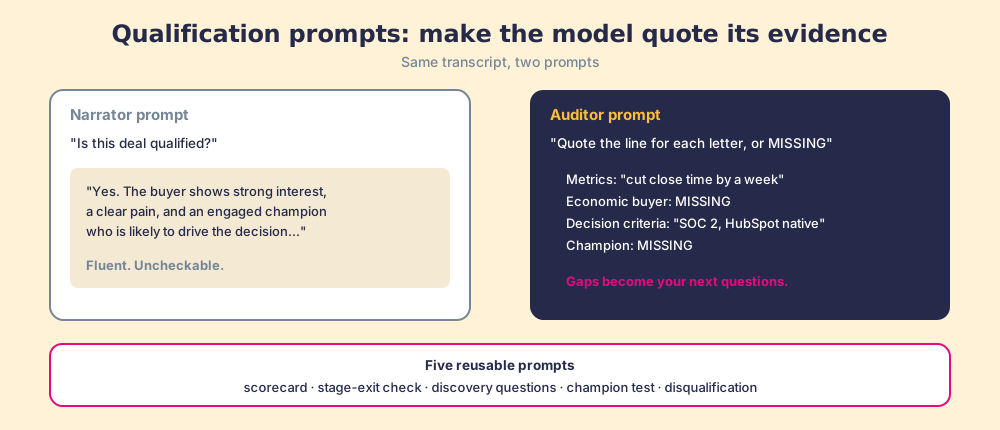
The best qualification prompts make the model show its evidence, because a model asked “is this deal qualified?” will say yes in fluent paragraphs. Make it quote the transcript or admit a gap. Five prompts, written to paste as-is:
- Qualification scorecard. “Score this deal against MEDDPICC using only the transcript below. For each letter, quote the exact line that supports it, or write MISSING. Do not infer. Then list the three questions I should ask next to fill the gaps. [paste transcript]”
- Stage-exit check. “Our exit criteria for Stage 2 are: [paste criteria]. Here are the deal notes: [paste]. Which criteria do the notes prove, which do they only suggest, and which are absent? Answer in a table.”
- Discovery question builder. “I am meeting a [title] at a [size, industry] company who mentioned [trigger]. Write eight open discovery questions that uncover the business impact, the timeline driver, and who else signs off. No yes-or-no questions.”
- Champion test. “Based on these emails [paste], is [name] acting as a champion or a friendly contact? List the specific behaviors that support your answer and the one action I could ask for that would prove it.”
- Disqualification prompt. “Argue that I should drop this deal. Use only the notes below. Then tell me which single fact, if true, would make your argument wrong.”
The quote-or-MISSING instruction carries the first prompt. It turns the model from a narrator into an auditor, and it makes the output something a manager can check in thirty seconds. For the frameworks themselves, see MEDDPICC and BANT; the prompts work with any methodology whose criteria you can paste in.
Where do ChatGPT prompts for sales go wrong?
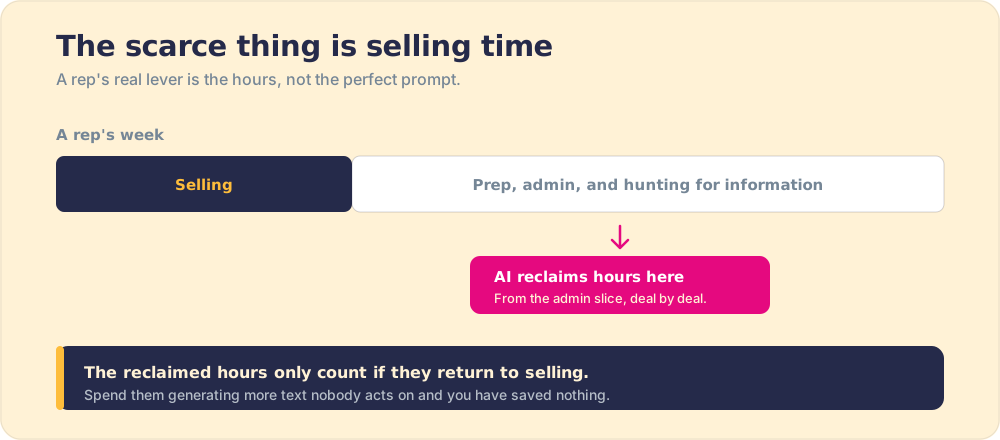
They go wrong when the team mistakes more text for more progress. The model is a tireless writer, so the temptation is to point it at every blank box and let it fill them, and a rep can spend a happy afternoon generating emails, summaries, and battlecards that look like work and move no deal an inch.
The math of a rep’s week explains the trap. Sellers spend only about 25% to 40% of their day selling, the Sales Enablement Collective reports; the rest goes to prep, admin, and hunting for information (SEC). Salesforce’s State of Sales survey of more than 7,700 sellers lands at the low end of that range: reps spend 28% of their week selling, the rest swallowed by deal management and data entry (Salesforce, State of Sales). The scarce resource is the selling slice, and the real prize from generative AI is giving some of it back. The SEC finds that reps who lean on generative AI reclaim about 4.8 hours a week (SEC, AI and Sales: A Winning Combination). The hours are the asset. They are also fragile, because reclaimed time spent generating text no buyer receives is not reclaimed at all.
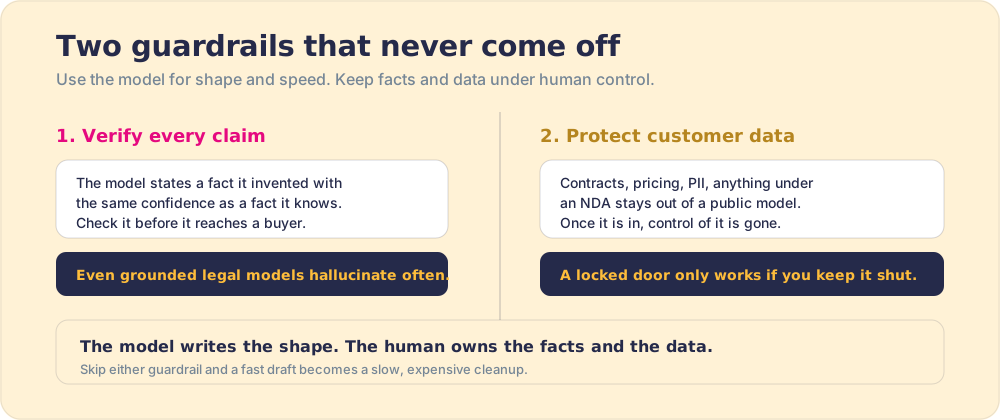
There are two other ways these prompts fail, both worth naming because they end careers in trust. The first is the fabrication. Language models hallucinate, which is the polite word for inventing facts with a straight face. Researchers at Stanford’s RegLab studied the legal models built specifically to avoid this and still found hallucination rates ranging from 17% to upward of 33% (Stanford HAI). A purpose-built, retrieval-grounded system still made things up one query in six. A general chatbot drafting your competitive email has no such guardrails. Verify before it ships, always.
The second is data leakage. The instinct to paste a contract, a customer record, or a full deal history into the prompt for “better context” is exactly the instinct to resist. Sensitive customer data, pricing, and anything covered by an NDA stays out of a public model, because once it is in, you have lost control of where it goes. Think of a public model as a room with a door that only locks from your side: what you carry in, you cannot reliably carry back out. The rule is boring and it holds everything up: use the model for shape and speed, keep the facts and the customer’s data under human governance.
Can ChatGPT coach a sales rep?
The roleplay job stands apart from the other five, and it shows the limit of the whole tool.
The roleplay is real coaching value. Set the model up as a hostile, hard-to-win buyer, and a rep can rehearse the exact objection they freeze on, ten times, before they ever face it on a real call. Rehearsal is the oldest behavior-change mechanism there is. It works because, as the psychologist Anders Ericsson showed across decades of deliberate-practice research, skill comes from repeated effort at the edge of your ability with immediate feedback, not from being told the right answer once (Ericsson, Peak). A roleplay bot is a sparring partner that never tires and never judges. For drilling a script, it is a genuine asset.
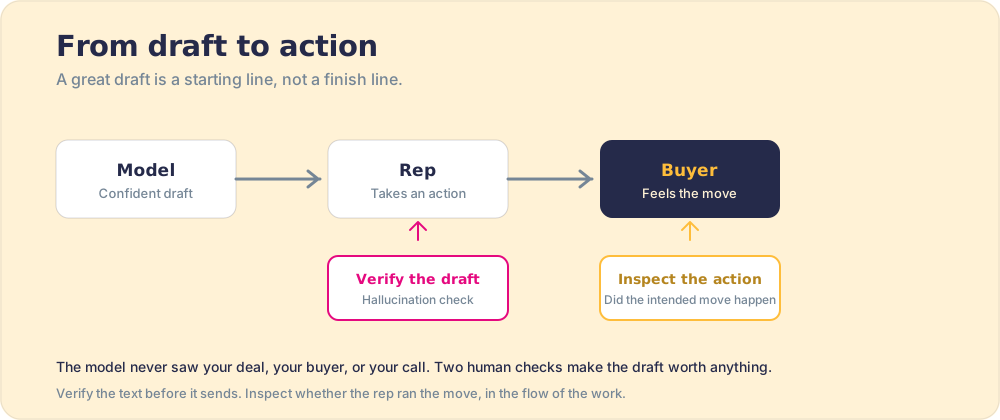
But rehearsal is not coaching, and the gap between them is the gap this entire post is about. Coaching requires three things a prompt cannot supply: seeing what the rep actually did in the flow of the work, comparing it to the standard you expect, and closing the difference. The model never sees the live interaction. It rehearses the behavior in a sandbox and then goes blind the instant the rep walks into the real call. You can practice with it all morning and it will never know, and never be able to tell you, whether you ran the move when it counted.
Our whole worldview sits on that line. You can only expect what you inspect, and AI has to be governed by its effect on behavior, measured at the level of the individual buyer interaction, not by how good the draft read. A roleplay that rehearses an objection is upstream of the only question that matters: did the rep handle the objection that way when the buyer was real? The prompt cannot answer it. Inspection can.
What ChatGPT prompts work once it is connected to your CRM?
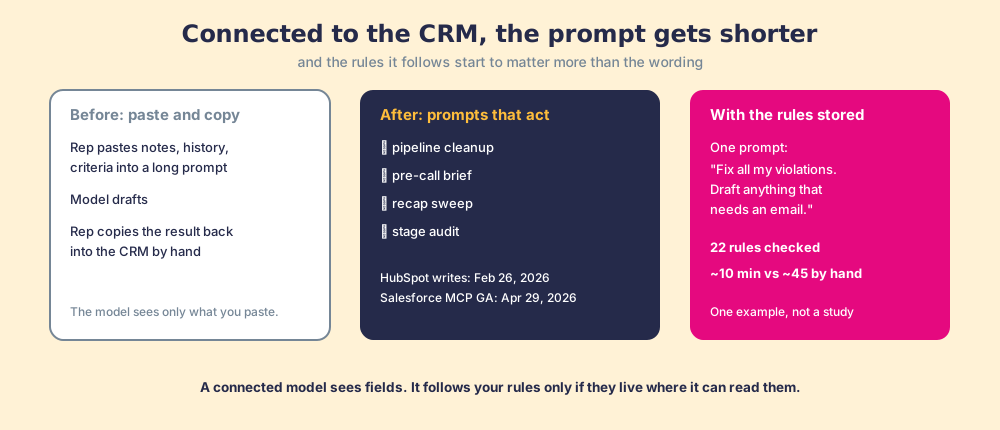
The prompts change shape once ChatGPT can read and write your pipeline. HubSpot’s connector has let ChatGPT “create and update CRM records and log activities directly from ChatGPT’s chat window” since February 26, 2026 (HubSpot developer changelog), and Salesforce’s hosted MCP servers went generally available for ChatGPT, Claude and other clients on April 29, 2026 (Salesforce Developers). A connected model no longer needs you to paste the deal. It needs you to say what good looks like.
- Pipeline cleanup. “List my open deals with a close date in the past, no next step, or no amount after discovery. For each, propose the fix from the notes and my calendar, and wait for my approval before changing anything.”
- Pre-call brief. “Build a one-page brief for my next meeting with [company] from the CRM history: who attended before, what they objected to, what we promised, and what is still open.”
- Recap sweep. “Find every meeting this week with no logged follow-up and draft a recap email for each with one recommended next step. Save them as drafts.”
- Stage audit. “Which of my deals moved stage this week without meeting our exit criteria? [paste criteria]”
The weak spot is the bracket at the end of that last prompt. A connected model sees fields; it does not know your team’s rules unless someone pastes them in, every time, the same way. I run this with the rules stored in Supered: one prompt, “Look at my board and fix all my violations. Draft anything that needs an email,” reads 22 sales expectations, finds what my deals break, updates HubSpot from context, and leaves the emails in Gmail drafts for me to review. In my own pipeline that took about 10 minutes against about 45 by hand, one example rather than a study. The prompt gets short when the rules live in one place (how we keep sales expectations followed).
How do you make ChatGPT for sales enablement pay off?
Sequence it behind a process reps already follow. Prompt-library posts skip this step, and it is the part that decides whether AI compounds your results or your chaos.
AI amplifies the process you have. Point a powerful drafting tool at a team with no shared standard for outreach, discovery, or follow-up, and you get faster, more confident, better-written versions of whatever they were already doing, including the wrong things. The model does not impose a process; it accelerates the one in the room, and if that one is “every rep improvises,” AI makes the improvisation slicker, not better. Get the behavior right first. Then the prompt library becomes a force multiplier instead of a faster path to inconsistency. We made this case at length in generative AI for sales, and it is the throughline of how we think about AI sales enablement generally.
This is also where ChatGPT for sales enablement stops being a personal productivity hack and becomes a team capability. The individual rep’s reclaimed 4.8 hours is nice. The team-level question is harder: are reps using the model to run the standard motion better, or to invent forty private motions faster? You cannot answer that from the prompt. You answer it by inspecting what reps actually do, deal by deal, against the process you expect, and the SEC’s own data shows where that lands: 50% of enablement teams now use AI for call analysis and conversation intelligence (SEC), which is the field reaching, however unevenly, for exactly this, the move from generating text to inspecting behavior.
Teams that consistently inspect deals against a defined process hit quota at 6.3 times the rate of teams that rarely do. It was the largest single effect we measured. The prompt produces the draft. Inspection is what tells you the draft became the right move.
That 6.3x figure, from the State of Sales Enablement 2026, is the punchline to the whole prompt conversation. The best prompt in the world produces a draft. Whether that draft turns into the action you intended, on the buyer in front of you, is a question only inspection answers, and inspecting deals at scale is the largest performance lever in our data. A prompt library without inspection is a faster way to produce text whose effect on behavior you cannot see.
The product belongs in the story here. Supered is the Business Logic Layer: it surfaces the next right action in the flow of the work, inside HubSpot, Salesforce, Salesloft, Gong, and Gmail, the instant the rep needs it, and then measures adherence so a manager can see whether the move happened. The draft from the model is upstream of that. The Business Logic Layer is what turns “the rep had a good draft” into “the rep ran the play, and we can prove it.”
The verdict: build the library, then govern the behavior
So what should a sales team do with ChatGPT? Two moves, in order.
- Build the prompt library, and make it a real asset. Standardize the six skeletons above, train reps on the persona-context-goal-format-verify shape, and put the reclaimed hours back into selling. This is genuine value, and a team that ignores it leaves time on the table.
- Govern the behavior, because the draft is only the start. A model that never saw your deal cannot tell you whether the rep ran the play. Sequence AI behind a process reps adopt, then inspect what they do in the flow of the work, deal by deal, so the time you freed becomes the action you wanted. The prompt was never going to be that lever.
The prompt was never the lever. It is a fast way to a confident draft, and a confident draft is a starting line. The number moves when that draft becomes a good action on a real deal, and the only way to know it did is to look. If you want the broader picture of the model in a seller’s hands, start with ChatGPT for sales; if you want the system that turns the time AI frees into measured behavior, the sales enablement software guide maps it; and if you want the data behind the 6.3x, read the State of Sales Enablement.
Frequently asked questions
What are ChatGPT prompts for sales?+
What makes a good ChatGPT prompt for sales?+
What are the best ChatGPT prompts for sales?+
Can ChatGPT coach a sales rep?+
Is it safe to use ChatGPT for sales?+
What are good ChatGPT prompts for deal qualification?+
What ChatGPT prompts work once it is connected to your CRM?+
Your process, running itself.