WalkMe Pricing in 2026: The Quote, the Second Invoice, and the SAP Question
A clear-eyed look at WalkMe pricing in 2026: the real contract numbers buyers pay, the costs that never appear on the quote, and how the SAP acquisition changed what the number means.
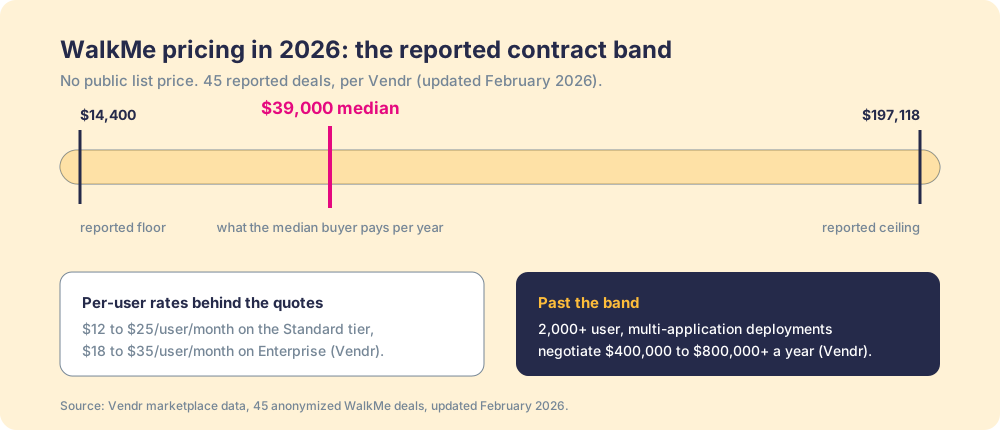
WalkMe pricing is quote-based enterprise pricing: no public list price, a median contract of 39,000 dollars a year across 45 reported deals, a band from 14,400 to 197,118 dollars, and per-user rates of 12 to 35 dollars a month by tier and term (Vendr, February 2026).
Ask WalkMe what it costs and you will receive, in place of a number, a meeting. This is not evasion so much as architecture. WalkMe sells the way enterprise infrastructure sells, by quote, and the quote is assembled from dials the vendor rarely names up front. The numbers do exist, though. Procurement platforms have been logging real WalkMe contracts for years, and the picture they draw is specific enough to budget against.
WalkMe pricing is quote-based enterprise pricing: no public list price, a median contract of 39,000 dollars a year across 45 reported deals, a band from 14,400 to 197,118 dollars, and per-user rates of 12 to 35 dollars a month depending on tier and term (Vendr, February 2026). Hold the shape of that band in mind. The ceiling is nearly fourteen times the floor, and the distance between them is decided by dials you control before the first call.
| WalkMe pricing, 2026 | Number | Source |
|---|---|---|
| Public list price | None; quote only | WalkMe |
| Median annual contract | $39,000 | Vendr, 45 deals, Feb 2026 |
| Reported contract range | $14,400 to $197,118 | Vendr, Feb 2026 |
| Per-user rate | $12 to $25/mo (Standard), $18 to $35/mo (Enterprise) | Vendr, Feb 2026 |
| Typical entry minimum | $30,000 to $50,000 ACV (Standard tier) | Vendr, Feb 2026 |
| Implementation, one-time | $15,000 to $150,000+ | Vendr, Feb 2026 |
| Content build and upkeep | $30,000 to $100,000+ per year | Vendr, Feb 2026 |
| Renewal escalator | 5 to 10% automatic increase | Vendr, Feb 2026 |
How much does WalkMe cost in 2026?
The band above is wide because WalkMe sells to two different sizes of problem, and the same logo covers both.
- The median deal. The median buyer pays 39,000 dollars a year, across the 45 deals Vendr has handled (February 2026). Use it as the anchor for a first budget line.
- The mid-market range. Buyers with 200 to 1,000 users commonly land between 50,000 and 300,000 dollars a year depending on application count, tier, and bundled services (Vendr).
- The enterprise range. Deployments of 2,000+ users across four or more applications negotiate 400,000 to 800,000 dollars and up (Vendr).
- The floor that is not a floor. The cheapest reported deal was 14,400 dollars, but Standard-tier minimums typically start at 30,000 to 50,000 dollars in annual contract value, so a small team asking for a small quote usually hears a number above its whole tooling budget (Vendr).
What pricing model does WalkMe use?
The WalkMe pricing model is an annual subscription quoted per user per month, and the quote turns on four dials (Vendr, February 2026):
- User count. The primary driver. Contracts differ on whether a “user” means a named seat, an active user, or total headcount, and the definition is negotiable, so get it in writing before you compare quotes.
- Application count. Standard tiers often include one to three overlaid applications; each additional system raises the price or forces a tier jump.
- Tier and modules. Standard runs 12 to 25 dollars per user per month with minimums of 30,000 to 50,000 dollars; Enterprise runs 18 to 35 dollars with minimums of 75,000 to 150,000 dollars. Add-ons stack on top: WalkMe Insights at 10,000 to 50,000 dollars a year, ActionBot at 15,000 to 40,000, and a base contract commonly grows 15 to 40 percent once modules attach.
- Term. Multi-year commitments of 24 or 36 months buy lower per-user rates, and December, WalkMe’s fiscal year-end, is when the discounts get generous.
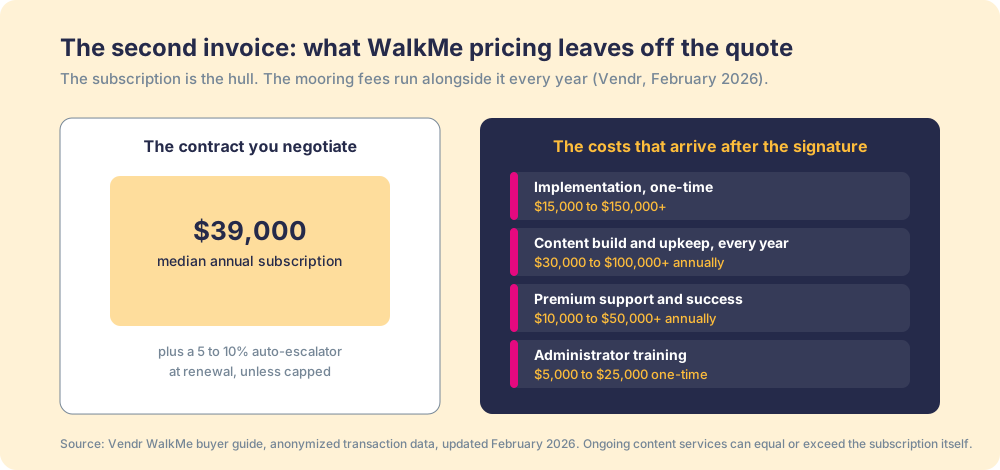
One clause deserves its own sentence. Vendr reports that WalkMe contracts commonly carry auto-renewal with a built-in 5 to 10 percent annual price escalation, which means the number you negotiate is the smallest number you will ever pay unless you cap it in writing.
What hidden costs does WalkMe pricing leave off the quote?
Anyone who has owned a boat knows the purchase price is the cheapest part of the boat. The slip fee, the winter storage, the engine that wants a mechanic every season: the hull is a one-time number and the ownership is an annuity. WalkMe works the same way, and Vendr’s transaction data prices each mooring fee (February 2026):
- Implementation. 15,000 to 50,000 dollars one-time for small deployments, 40,000 to 100,000 for mid-sized, and 100,000 to 200,000+ for large enterprise rollouts.
- Content build and upkeep. The walkthroughs need authors, and they need re-authors every time an underlying screen or workflow changes. Buyers who purchase ongoing content services pay 30,000 to 100,000+ dollars a year, and teams that build in-house pay it in salary instead. This line can match or exceed the subscription.
- Premium support. 10,000 to 50,000+ dollars a year for dedicated success managers and faster response times.
- Administrator training. 5,000 to 25,000 dollars to certify the internal builders.
The content line is the one that compounds, and the reason is behavioral rather than financial. A walkthrough is a document wearing a costume, and documents decay: the process changes, the screen moves, the tour breaks, and someone has to notice and rebuild it. Guidance content is a depreciating asset from the day it ships, which is why the maintenance number in Vendr’s data is annual and the implementation number is not. The wider field carries the same disease, and the digital adoption platform guide walks through why the category’s upkeep burden is structural rather than a WalkMe quirk.
Does the SAP acquisition make WalkMe cheaper?
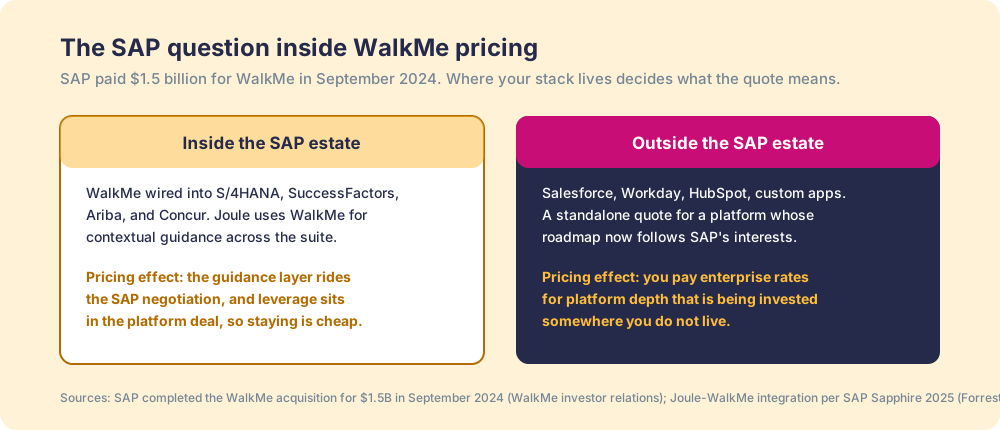
SAP completed its acquisition of WalkMe in September 2024 for 1.5 billion dollars in cash (WalkMe investor relations), and by SAP Sapphire 2025 the integration was explicit: Joule, SAP’s assistant, now uses WalkMe for contextual guidance across the suite (Forrester on Sapphire 2025). SAP has meanwhile been restructuring its own packaging, folding a Business AI Base entitlement into RISE and S/4HANA Cloud subscriptions in July 2025 while moving premium AI into separately metered units (SAP Business AI pricing).
For your budget, that history splits the answer in two.
- The SAP shop. WalkMe is becoming native plumbing across S/4HANA, SuccessFactors, Ariba, and Concur. The guidance layer rides the platform negotiation, where your bargaining power is real, and paying for it there is often the cheapest guidance money you will spend.
- The mixed or non-SAP shop. The quote still arrives the same way, but you are paying enterprise rates for a platform whose deepest investment now flows toward applications you do not run. Nothing breaks today. The incentive drift is the cost, and it is why buyers on neutral stacks read the field in WalkMe alternatives before renewal rather than after.
Who should pay WalkMe’s price, and who should not?
The verdict, plainly.
- The right buyer. An enterprise with thousands of users, several complex applications (an ERP, an HRIS, a CRM), a funded adoption team to build and maintain content, and, increasingly, an SAP estate. For that buyer the per-user math works and the platform depth is the product.
- The wrong buyer. A mid-market team whose pain is one or two applications, or any team without a named owner for content upkeep. The 30,000 to 50,000 dollar entry minimum plus the second invoice puts the real first-year cost far above what the problem justifies, and lighter tools cover the job; the field is scored in best digital adoption platforms.
- The mispriced buyer. The team buying WalkMe to fix adoption of a process rather than adoption of an application. This buyer gets no line in any pricing guide, including Vendr’s, and the next section is for them.
The cost no WalkMe tier covers
Suppose you taught someone a house by walking them through one room and showing them which switch works the dishwasher. Useful, genuinely. But the household does not run on switches. It runs on a routine that moves through every room in order, and knowing the dishwasher panel cold says nothing about whether dinner, dishes, and lights-out happen the same way each night. A DAP teaches the switches in one application. The work your revenue depends on is a process that spans the CRM, the inbox, the billing system, and the delivery tool, and it either runs the same way on every account or it does not.
The data says it mostly does not. In our field research, 89 percent of teams have a defined process and 36 percent follow it (The State of Sales Enablement). That 53-point gap is the line item missing from every quote above, because a six-figure WalkMe deployment can succeed completely on its own terms, every tour finished, every tooltip served, while the process the tours were meant to serve goes unrun in the spaces between applications. The spend returns nothing when the process is not followed, and no dashboard in the deployment will say so, because the tooling measures navigation and the failure lives in behavior.
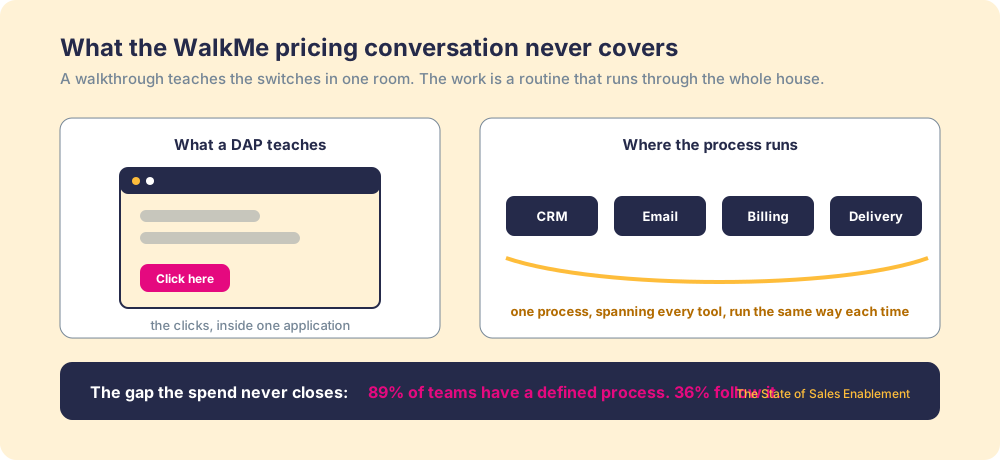
That gap is a different job with a different unit of measure, and it is the job Supered was built for. Supered is the process-level business logic layer rather than the application-level walkthrough: the documented process surfaces at the step where it applies, in the tools the team already uses, and adherence is measured in the flow of work, so a manager can see which accounts ran the play and coach the ones that did not while the work is still in motion.
We recommend budgeting WalkMe with both invoices on the table: the 39,000 dollar median contract as your anchor, the implementation and the 30,000-to-100,000 dollar annual content line beside it, and a written cap on the 5-to-10 percent escalator (all Vendr, February 2026). Then ask which problem you are pricing. An SAP estate with a navigation problem should negotiate WalkMe inside the platform deal and will do well. A team whose defined process is not being followed will find that no number in this article measures that, and should spend accordingly. The comparison shopping continues in WalkMe alternatives, and if the process is the problem, book a demo and price the business logic layer against the walkthrough.
Frequently asked questions
How much does WalkMe cost in 2026?+
What pricing model does WalkMe use?+
What hidden costs come with WalkMe?+
Did the SAP acquisition change WalkMe pricing?+
Is WalkMe worth the price?+
Your process, running itself.