SOP Template: The Six Parts, and the One Every Template Skips
A good SOP template has six parts. Most stop at five and skip the one that decides whether the procedure is ever followed: the inspection hook that ties it to the work.
An SOP template is a reusable structure for a standard operating procedure, with six parts: purpose, scope and roles, steps, decision points, definition of done, and an inspection hook, the last being the part most templates skip and the one that decides whether it is followed.
Most SOP templates are shaped like a confession of good intentions. They have a title, a purpose, a list of steps, maybe a revision date, and they get filled in with care, posted to a shared drive, and then ignored by everyone the moment a real task arrives and time is short. The template was not bad. It was missing the one part that turns a description of work into work that gets done, and almost every template you can download is missing it too.
An SOP template is a reusable structure for writing a standard operating procedure, and a good one has six parts, purpose, scope and roles, steps, decision points, definition of done, and an inspection hook, with the last being the part most templates skip and the one that decides whether the procedure is followed. Hold the sixth part in mind as we go, because the first five are the easy ones and the sixth is the one that matters.
What should an SOP template include?
Six parts, and the order is deliberate: it walks from why down to whether.

- Purpose. Why this procedure exists and what failure it protects against. Without it, people drop the steps under pressure because they do not know what the steps are for. A step whose reason is invisible is the first one cut when time is short.
- Scope and roles. When the procedure applies and who owns each part. Ambiguity here is where work falls between two people.
- The steps. Numbered, one action each, in order. A step with two actions in it is a step that gets half-done.
- Decision points. The if-then forks where people go wrong. The standard operating procedure template that lists only the happy path leaves the hard parts to guesswork.
- Definition of done. What complete and correct looks like, stated plainly, so there is no debate later.
- Inspection hook. How adherence is checked, in the flow of the work. This is the part nearly every template skips, and the reason most SOPs die.
A word on sop format before we go further, because format is where good intentions usually drown. The instinct, when you sit down to write a procedure, is that more detail makes a better SOP. It is the wrong instinct, and it is worth naming because nearly every downloadable template encourages it with page after page of fields. A procedure is not a contract; it is a thing a busy person reads at the moment of the work, often with one eye on something else. The best sop format is therefore short, numbered, one action per line, explicit at the forks, and silent everywhere a competent person needs no instruction. A nine-page narrative SOP is not more rigorous than a one-page checklist. It is less likely to be read, which makes it less rigorous in the only place rigor counts, the doing.
Why do SOPs get ignored even when they are well written?
Because writing an SOP is not running one. A procedure exists only to the degree adherence to it is inspected, and a document with no inspection hook makes following it optional. When following the procedure is optional and skipping it is faster, friction wins, and the beautifully written SOP becomes shelf decoration. This is not a discipline problem with the people; it is a design problem with the document. The fix is structural: deliver the procedure at the moment of work and make whether it was followed visible.
The principle behind the inspection hook is old and well tested. The aviation checklist, studied by Atul Gawande in surgery, reduced complications because its use was verified, not merely recommended: a World Health Organization trial across eight hospitals cut inpatient deaths from 1.5 percent to 0.8 percent and major complications from 11 percent to 7 percent when the checklist was run, not handed out (Haynes et al., New England Journal of Medicine, 2009). The checklist is an SOP. What made it work was that someone confirmed it happened. An SOP template without an inspection hook is the same checklist left in a drawer.
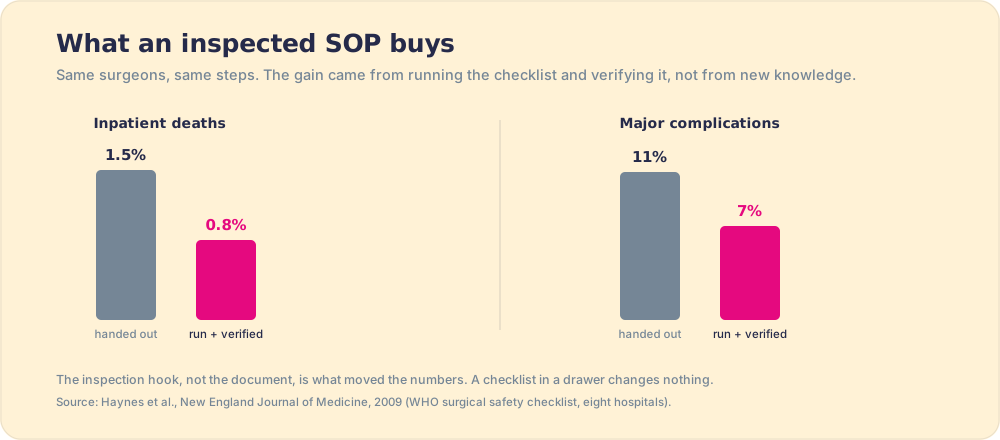
Gawande is candid about the mechanism, and it is humbling: the surgeons in the trial already knew every step on the list. The list added no knowledge. What it added was a forcing function that made the known steps consistent and a deviation visible, which is the entire job of the inspection hook. This is the deeper principle behind the old operator’s line that you can only expect what you inspect. An expectation that is never checked is not an expectation, it is a hope, and hope degrades on contact with a busy week. The reason is not that people are lazy. It is that, absent inspection, the procedure and the rushed shortcut look identical from the outside, so there is no signal and no correction, and the shortcut wins on effort every time. Inspection is what converts a written intention into an enforced one, and a template that cannot be inspected has skipped the one part that makes the other five real.
The common objection here is that inspection means surveillance, a manager hovering with a clipboard. That gets it backwards. Manual inspection is the thing that fails, because it eats the time a manager should spend coaching and so gets abandoned within a month. The win is automating the inspection so the burden lifts off the human entirely: the system shows where the procedure was followed and where it slipped, and the manager spends the recovered time on the slip, coaching, not chasing. Inspection done right is less hovering, not more, because the machine watches and the human teaches.
How do you get an SOP template followed?
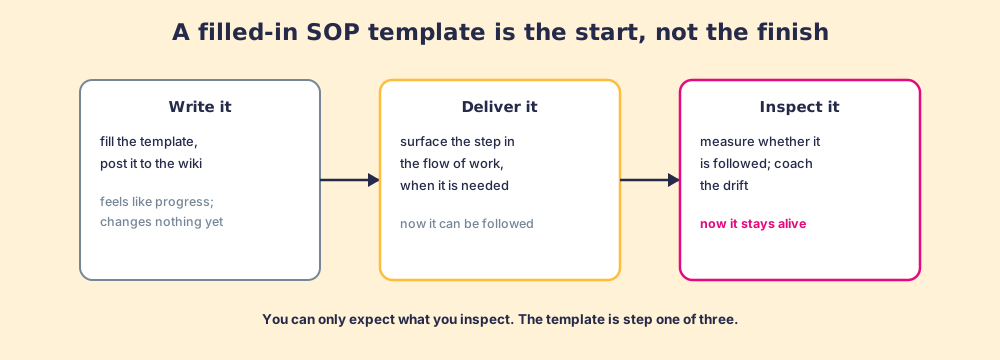
Treat the filled-in template as the first of three steps, not the finish line. Write it well, then deliver it at the moment of work so following it costs no detour, then inspect adherence so drift surfaces while there is time to coach. The gap this closes is not small. In the State of Sales Enablement, across 198 leaders, 89 percent had documented procedures and only 36 percent saw them followed, a 53-point gap that is entirely the difference between a written SOP and a run one. Writing is the cheap step, often a single afternoon. Delivery and inspection are the slow, unglamorous work where the procedure actually earns its keep. The full method for writing the procedure is in how to write an SOP, and the tool side in SOP software.
What we recommend
Use a six-part SOP template and refuse to ship one without the inspection hook, because the first five parts describe the work and the sixth is the only one that makes it happen. Write the steps short and action-per-step, name the decision points where people go wrong, and state the definition of done so plainly there is no argument. Then do the two things a template alone cannot: deliver the procedure at the moment of work, and inspect whether it was followed. A procedure you cannot inspect is a procedure you cannot expect, which is a polite way of saying you do not have one. The template is where it starts. Inspection is where it survives.
From here: the writing method in how to write an SOP, the tooling in SOP software, and the bigger picture in process documentation.
Frequently asked questions
What should an SOP template include?+
What is the best format for an SOP?+
Why do SOPs get ignored even when they are well written?+
How is an SOP template different from a process map?+
Your process, running itself.