Digital Adoption: A Ladder, Not a Login
Digital adoption gets measured as logins and finished tours, which is the bottom rung of a four-rung ladder. The rung that pays is whether the work gets done right on real work.
Digital adoption is the degree to which people use software the way it was meant to be used, and it is a four-rung ladder, access, usage, proficiency, and behavior, where only the top rung, the task being done right on real work, is the one that pays.
A company buys a tool, rolls it out, watches the login chart climb, declares the rollout a success, and then wonders, a year later, why the work still happens the old way. The chart was not wrong. It was measuring the wrong rung of the ladder. Digital adoption is talked about as if it were a single thing you either have or lack, when it is a climb, and most teams stop counting at the first step and call the view from there a summit. Software adoption, the same idea under a plainer name, fails for the same reason.
Digital adoption is the degree to which people use software the way it was meant to be used, and it is a four-rung ladder, access, usage, proficiency, and behavior, where only the top rung, the task being done right on real work, is the one that pays. Climb the ladder in your head and you will see where a stalled rollout truly stalled.
What is digital adoption, rung by rung?
The four rungs look like progress and only one of them is the thing you were buying.
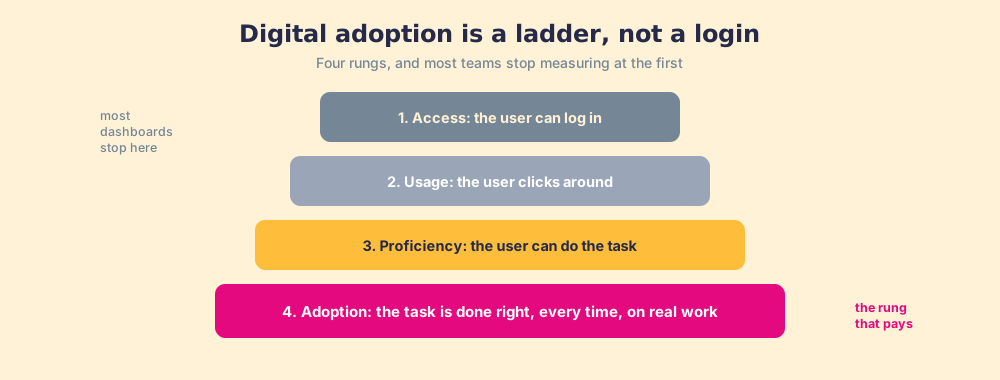
- Access. The user can log in. Necessary, and meaningless on its own.
- Usage. The user clicks around, racks up sessions, touches features. Easy to measure, easy to mistake for the goal.
- Proficiency. The user knows how to do the task. This is where training and in-app guidance live, and where most tooling is strong.
- Adoption. The task is done right, every time, on real work. This is the rung that connects to the outcome, and the one almost nobody measures.
The reason the climb stalls is not laziness. It is that the bottom rungs are cheap to instrument and the top rung is not, so teams measure what is easy and report it as if it were what mattered. A login is not an arrival, and a finished tour is a fact about the tour.
There is a name for this in measurement theory: the streetlight effect, after the old joke about the drunk searching for his keys under the streetlight, not because he dropped them there but because that is where the light is. Login counts and tour completions are the streetlight. The keys, whether the work got done right, are out in the dark where instrumenting them is hard, so the whole industry searches under the lamp and reports what it finds there as if it were the thing it lost. The danger is not that login data is wrong. It is that it is precise, and precision about the wrong rung feels like progress. A dashboard glowing green at the access rung is the most comfortable lie in a rollout, because every number on it is true and none of it is the point.
How did digital adoption become a category?
The story is one of help moving steadily closer to the moment of work. In the 1990s, adoption meant a binder and a classroom. The 2000s brought the learning management system and e-learning, which moved training onto the screen but kept it separate from the work. The 2010s produced the digital adoption platform: in-app tours and tooltips that put the help inside the software at last. Each step shortened the distance between the help and the work.
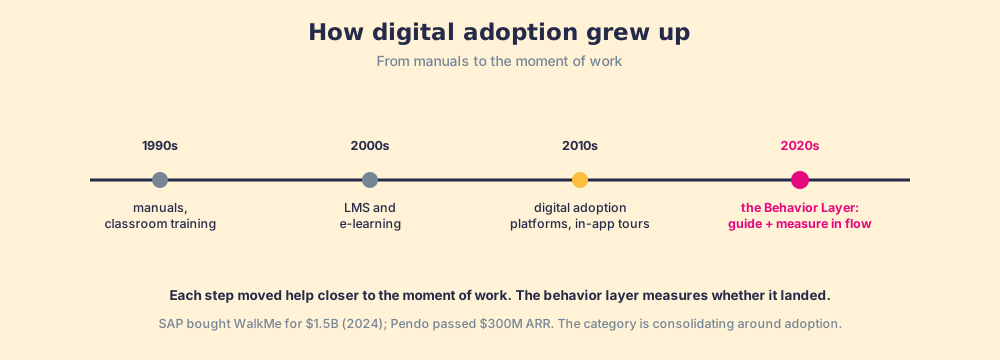
The pattern under that history is worth naming, because it predicts where the category goes next. Every generation of the tooling closed part of the distance between the help and the work, and stopped one rung short of the behavior. The binder was in a different building from the job. The LMS was in a different tab. The in-app tour finally got into the same screen, which felt like arrival, and it was a real advance. But a tour still fires on the software’s schedule rather than the work’s, so it lands at onboarding and has nothing to say when the hard task arrives. The distance the category kept shrinking was spatial, how far the user had to travel to find the help. The distance that actually decides adoption is temporal, how far the help is from the moment of need. Close the room and leave the timing wrong, and you have moved the manual onto the screen without changing whether anyone follows it.
The market is consolidating around the outcome too. SAP acquired WalkMe for 1.5 billion dollars in a deal completed September 2024, folding the leading enterprise platform into a software suite. Pendo, independent, passed 300 million dollars in annual recurring revenue and extended into AI agent analytics. The category that started as in-app tours is being absorbed into larger platforms, and the live question is whether the next step (measuring whether the help changed behavior at all) gets built or assumed. AI sharpens that question rather than settling it. An agent can now generate the tooltip, draft the next step, even act on the user’s behalf, which makes proficiency cheaper than ever and the behavior rung no easier, because the governing question becomes whether the agent did the work the right way, which is once again a measurement problem at the top of the ladder.
Why does digital adoption stall, and what fixes it?
It stalls at the gap between proficiency and behavior, the same gap psychologists call the intention-action gap. People know how to do the task and still do not do it, because under pressure the workaround is easier than the right way. Peter Gollwitzer’s research on implementation intentions, across a meta-analysis of 94 studies, found that linking an action to a specific cue in the moment roughly doubles follow-through (Gollwitzer & Sheeran meta-analysis). Proficiency is the knowledge. The cue at the moment of work is what turns it into behavior, and a tour fired at onboarding is not that cue.
There is a second mechanism stacked underneath, and it is older than any software. Hermann Ebbinghaus, testing his own memory in the 1880s, mapped what we now call the forgetting curve: without reinforcement, recall of newly learned material drops by roughly half within a day and keeps falling (on the Ebbinghaus forgetting curve). A digital adoption platform that teaches a workflow in a week-one tour is fighting that curve with one hand. By the time the user faces the real task, weeks later, under deadline, most of the tour is gone, and what remains is the path of least resistance, which is usually the old way. This is why proficiency, the third rung, is genuinely unstable: it decays unless the cue and the practice keep showing up where the work is. The tour does not fail because it was a bad tour. It fails because it taught once and the work asked weeks later, and memory does not wait.
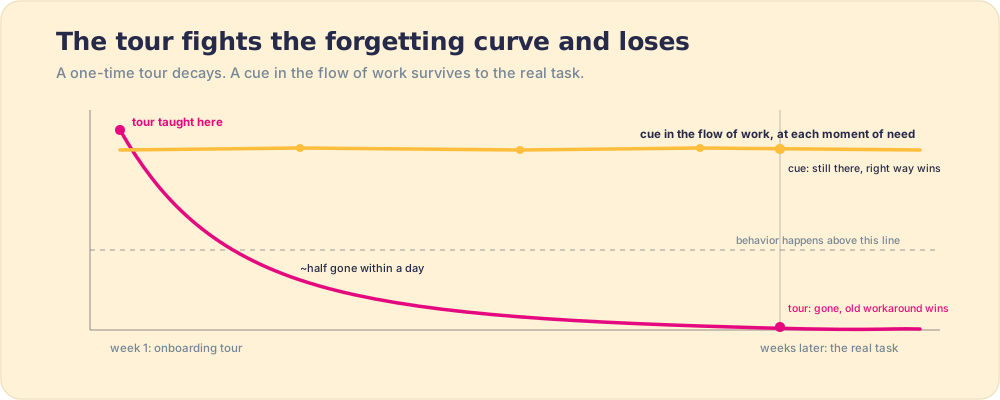
The fix is to design for the top rung directly: reduce the distance between the right action and the work, surface the cue at the moment of need, and measure the behavior rather than the logins. Teams whose process reaches people in the flow of the work see the rollout deliver at 49 percent versus 15 percent in our research, which is the gap between adoption and mere usage rendered in the only number that matters. The full system view is in user adoption, and the tool comparison in best digital adoption platforms.
What we recommend
Stop reporting usage as adoption, because the two diverge constantly and the gap is where your rollout is dying. Build the measurement around the top rung: is the process the software exists for being followed, on real work, visible in time to coach. Buy a digital adoption platform for the proficiency rung if your users genuinely need teaching, and do it well. But recognize that proficiency is not adoption, and that closing the last gap, from knowing how to doing it every time, requires a cue at the moment of work and a measure of the behavior, which is the behavior layer, not the tour. The ladder has four rungs. Measure the one you were buying.
From here: the system view in user adoption, the tool category in best digital adoption platforms, and why the curve stalls in technology adoption.
Frequently asked questions
What is digital adoption?+
What is the difference between digital adoption and a digital adoption platform?+
Why do digital adoption efforts fail?+
How do you measure digital adoption properly?+
Your process, running itself.