Win-Loss Analysis: Why the Reason You Lost Is Almost Never the One in the CRM
Win-loss analysis is only as good as its source, and the usual source, the rep's own account, is the least reliable one. Two cognitive biases guarantee 'we lost on price' is mostly wrong. Here is the fix.
Win-loss analysis is the structured study of why deals are won and lost, and it is reliable only when the source is the buyer rather than the rep, because hindsight bias and self-serving attribution make a rep's own account of a loss the least trustworthy explanation available.
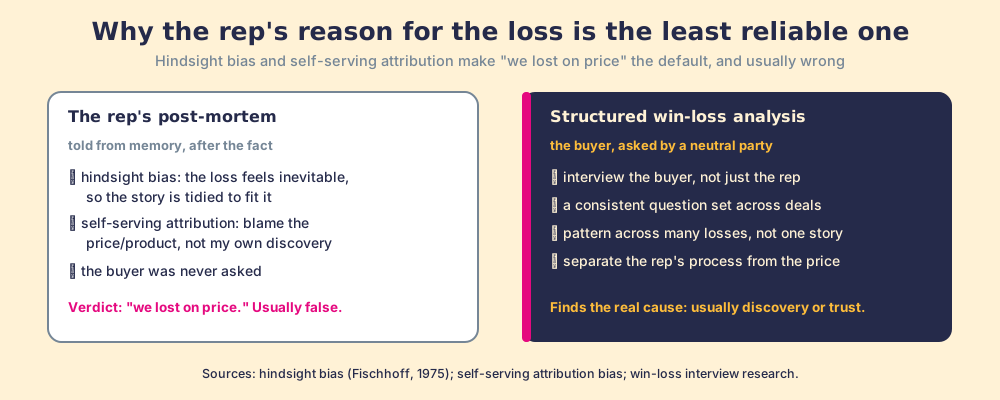
Pull the closed-lost reasons from any CRM and the top answer is almost always “price.” It is the most-recorded reason a deal dies, and it is mostly fiction, not because reps are dishonest but because the source of the data is wrong. The reason in the CRM was written by the person with the strongest incentive and the weakest vantage point to explain the loss: the rep who lost it. Win-loss analysis built on that source does not study why deals are lost. It studies what losing reps tell themselves, which two well-documented biases guarantee is unreliable.
Win-loss analysis is the structured study of why deals are won and lost, and it is reliable only when the source is the buyer rather than the rep, because hindsight bias and self-serving attribution make a rep’s own account of a loss the least trustworthy explanation available. Fix the source, and the analysis starts telling the truth.
Why is the rep’s account of a loss unreliable?
Because two cognitive biases distort it in the same direction, both well established in psychology. The first is self-serving attribution: people credit their successes to their own ability and blame their failures on external, uncontrollable factors. A rep who wins says they ran a great process; the same rep who loses says the price was too high or the product lacked a feature. Attributing the loss to price protects the ego and costs nothing, while attributing it to weak discovery does the opposite, so the bias runs one way. The second is hindsight bias, identified by Baruch Fischhoff in 1975: once an outcome is known, people reconstruct the past to make it look inevitable, tidying the messy reality into a clean story that fits the result (Fischhoff, on hindsight bias). After a loss, the rep’s memory edits the deal into a tale where the loss was always coming, and the edits favor causes outside their control.
Put the two together and “we lost on price” is exactly the answer you would predict from a biased source, regardless of what happened. It is the explanation that protects the rep and fits the known outcome, which makes it the default and not the truth. The buyer, the one person who made the decision, is rarely asked.
The size of the distortion is larger than most leaders guess. When practitioners compare what reps record as the loss reason against what buyers say in structured interviews, price drops sharply as a cause. Anthony Iannarino, who has written extensively on consultative selling, puts the underlying point bluntly: in most B2B deals price is a stand-in for a value case the seller failed to make, not the real reason a buyer walked (Iannarino, on losing to price). The buyer rarely chose the cheapest option. They chose the option that felt like the safest bet to solve their problem, and “too expensive” is the polite exit line they give a seller who never built that case. Recording the polite exit line as the cause is how a team studies its losses for years and learns nothing, because the recorded reason and the real reason point in opposite directions.
Why does the interviewer have to be neutral?
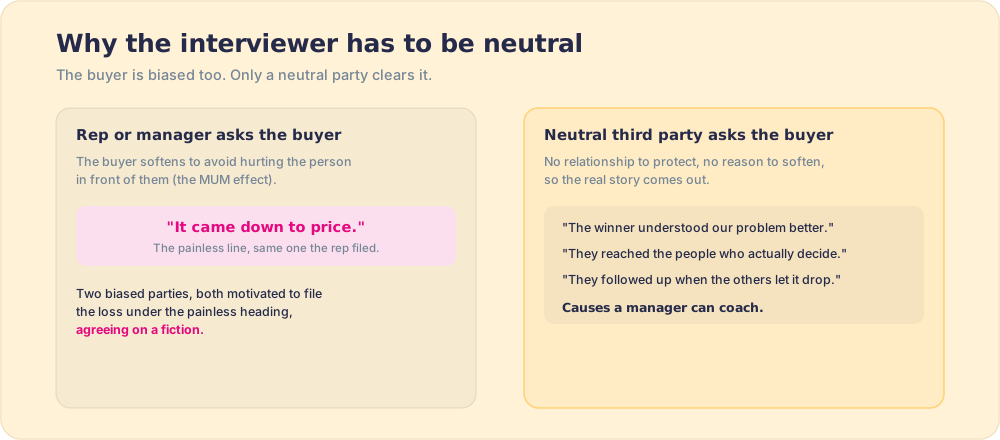
Because the buyer is biased too, in the opposite direction, and only a neutral party clears it. Ask a buyer directly why they did not pick you, with the rep or their manager on the call, and you will hear a softened, face-saving version. People avoid delivering hard feedback to the person who will feel it, a well-documented reluctance social psychologists call the “MUM effect,” the tendency to withhold unpleasant news from those it concerns. The buyer who chose a competitor does not want to tell your rep, to their face, that the rep ran a weak discovery or never reached the real decision-maker. So they reach for the same comfortable line the rep reached for: it came down to price, or budget, or timing. Two biased parties, both motivated to file the loss under the painless heading, agreeing on a fiction.
A neutral third-party interviewer breaks that collusion. The buyer has no relationship to protect and no reason to soften, so the real story comes out: the vendor who understood the problem better, reached the right people, kept following up when the others let the thread drop. This is why the method matters as much as the source. Interviewing the buyer through the rep is barely better than asking the rep, because the same social pressure that distorts the rep’s memory now distorts the buyer’s candor. The neutral interviewer is the instrument that finally lets the decision-maker tell the truth.
How do you run win-loss analysis that finds the truth?
Change the source and the method, because the biases are structural and only a structured process corrects them. A real win loss analysis process has a few non-negotiables.
- Interview the buyer, not the rep. The buyer made the decision, so the buyer holds the real reason. The rep holds a rationalization. A neutral third-party interviewer gets more candor than the rep’s own manager would.
- A consistent question set. Ask the same questions across deals, what triggered the evaluation, who decided, what criteria mattered, what the winner did differently, so patterns are comparable rather than a pile of anecdotes.
- Patterns over stories. Draw conclusions from many deals, not the one vivid loss everyone remembers, because a single deal is noise and the pattern is the signal.
- Separate controllable from uncontrollable. Split the factors the rep controlled (discovery, multi-threading, follow-up) from the ones they did not (price, timing), because only the first kind can be coached, and the buyer’s account usually points there.
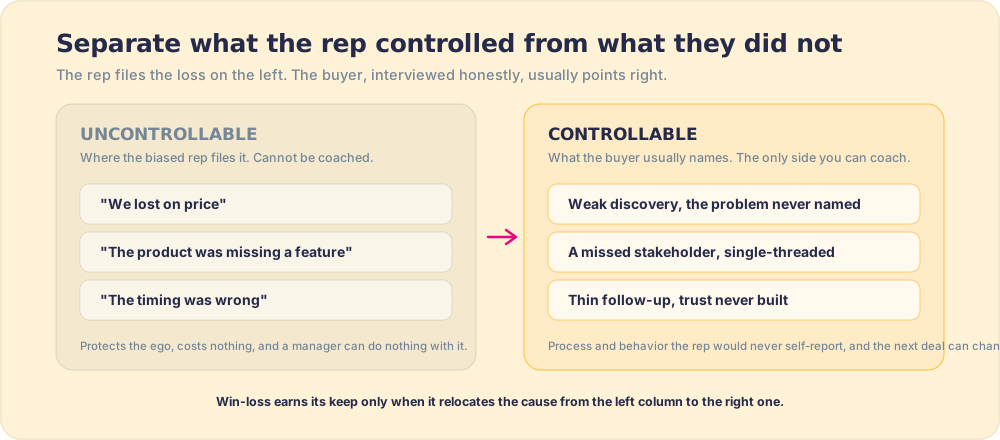
When teams do this, the recorded reason shifts. Buyers, interviewed honestly, rarely confirm the price story; they describe a vendor who understood their problem better, reached the right people, or built more trust, which are process and behavior factors the rep would never self-report. That is the payoff of a real sales win loss analysis: it relocates the cause from the uncontrollable place the rep put it to the controllable place a manager can coach. Run as a recurring win loss review, this becomes a feedback loop into coaching, which is the subject of sales coaching and the sales process steps the analysis should feed.
What we recommend
Treat your win-loss analysis as only as good as its source, and change the source. Stop mining closed-lost dropdowns for the truth, because they record the rep’s biased rationalization, and “we lost on price” is what hindsight and self-serving attribution produce by default. Instead, interview the buyer, ideally through a neutral party, with a consistent question set, look for patterns across many deals, and separate what the rep controlled from what they did not. Then close the loop by feeding the real patterns into the process and the coaching, because the point of studying the last deal is to change the next one. The reason you lost is rarely the one in the CRM. The buyer knows the real one, and a structured win-loss review is how you finally ask them.
From here: the process the patterns should improve in sales process steps, the coaching that acts on them in sales coaching, the qualification that prevents bad-fit losses in lead qualification, and the adherence underneath in sales process adoption.
Frequently asked questions
What is win-loss analysis?+
Why is 'we lost on price' usually wrong?+
How do you do win-loss analysis properly?+
What questions should a win-loss interview ask?+
Why should a win-loss interview use a neutral third party?+
Your process, running itself.