The Sales Cycle: Why You Can't Shorten It by Pushing
The sales cycle is the time from first contact to close. What the stages are, how to measure cycle length and velocity, why most cycles are long because of rework, and how to shorten one without pushing.
The sales cycle is the average time and sequence of stages it takes a deal to move from first contact to closed-won, which makes it a measure of how well the sales process runs, not a dial you can turn directly.
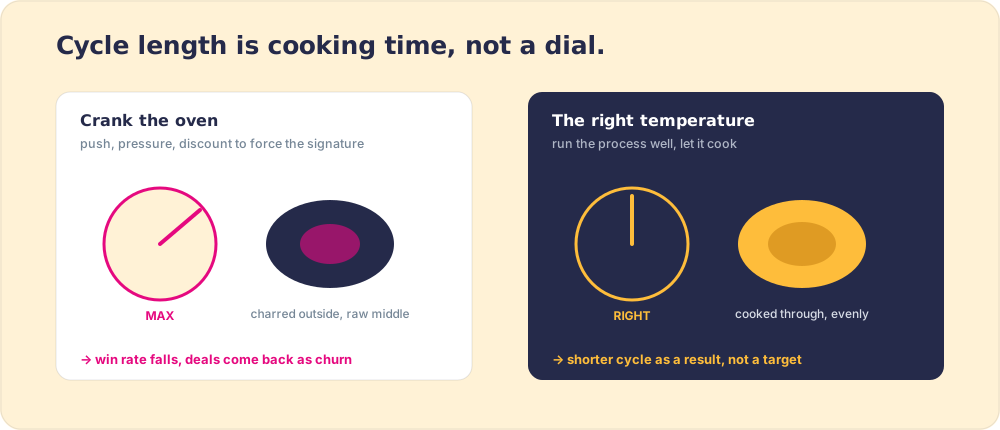
A roast does not cook faster because you turn the oven to its highest setting. Crank the heat to rush dinner and you get a joint that is charred on the outside, raw in the middle, and has to go back in, which makes the whole meal later than if you had left it alone at the right temperature. Time, for some things, is not a dial you turn. It is a result of doing the thing properly, and trying to force it usually costs you more time than patience would have.
The sales cycle is one of those things, and most attempts to shorten it are the equivalent of cranking the oven. A leader sees a long cycle, tells the team to push, adds end-of-quarter pressure, sprinkles in discounts to force a signature, and is then surprised when win rates fall and the deals that do close come back as churn. The cycle is not a setting. It is the time it takes a deal to cook, and you change it by improving how the deal is run, not by shouting at the oven.
The instinct to push is worth taking seriously before we argue with it, because it is not stupid. A deal that drags is a deal at risk, and a good seller feels that risk in their gut. Urgency closes business. Most reps have, at some point, leaned on a stalling buyer, named a deadline, dangled a discount, and watched the deal come in. So the leader who tells the team to push is reasoning from real experience. The trouble is that the experience came from a different kind of sale.
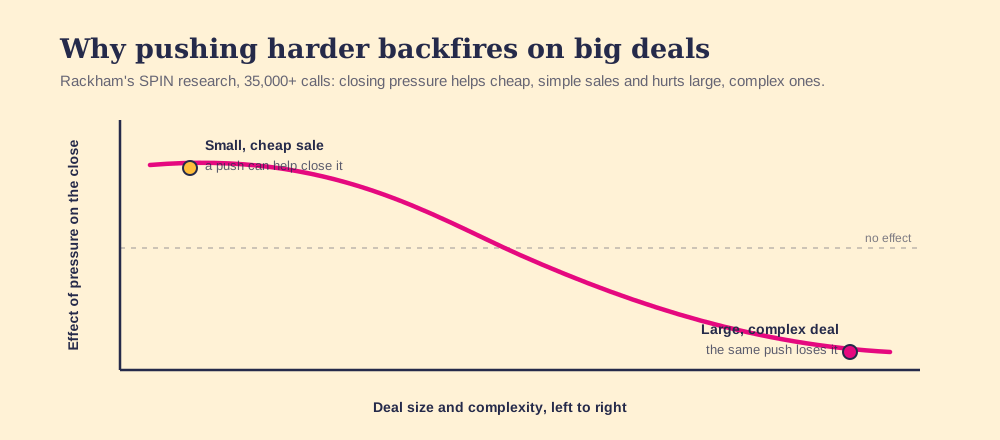
The sharpest evidence for that predates almost everything written about pipeline since. Neil Rackham’s team at Huthwaite studied more than 35,000 sales calls across 23 countries, the largest behavioral study of selling ever run (Huthwaite International), and the result that made SPIN Selling famous is the one most relevant to a long cycle. On small, cheap, one-call sales, closing pressure works. On large, complex, multi-meeting deals, the same pressure reduces the chance of a sale. Rackham did not hedge it:
“Closing is a method of putting pressure on the customer, and the larger the sale, the more negatively people generally react to pressure.” (Neil Rackham, SPIN Selling, 1988)
Read that against your own pipeline. The deals with a long cycle are, by definition, the large and complex ones. They run to six or ten people and several months precisely because the purchase is consequential. Which means the school of “create urgency, push harder, close sooner” is being applied to exactly the deals where Rackham’s calls showed pressure does the most damage. The tactic that shortened the small sale lengthens the big one, because it sends a wary buying group back to re-examine a decision they were close to making. Push the roast and it goes back in the oven.
So if pressure is the wrong lever, what is the right one? The answer is to stop treating the cycle as a number you turn and start treating it as a readout of how the deal is run.
What is the sales cycle?
The sales cycle is the average time and sequence of stages it takes a deal to move from first contact to closed-won. It carries two meanings at once, and keeping them straight is the start of using it well: it is a sequence (the named stages a deal passes through) and a duration (how long that passage takes, which people call sales cycle length). Both are downstream of one thing: how the deal is run.
That is the idea this whole post turns on, so it is worth stating bare. The sales cycle is a measurement of the process, not a target independent of it. You do not set a cycle length the way you set a quota. You run a process, and the cycle is the time that process produces. Treat the number as a thing to attack directly and you push on the symptom; treat it as a readout of the process and you fix the cause.
Sales cycle vs sales process vs pipeline: what’s the difference?
These three words get used as if they mean the same thing, and the blur causes real confusion in planning. They are different views of the same motion.
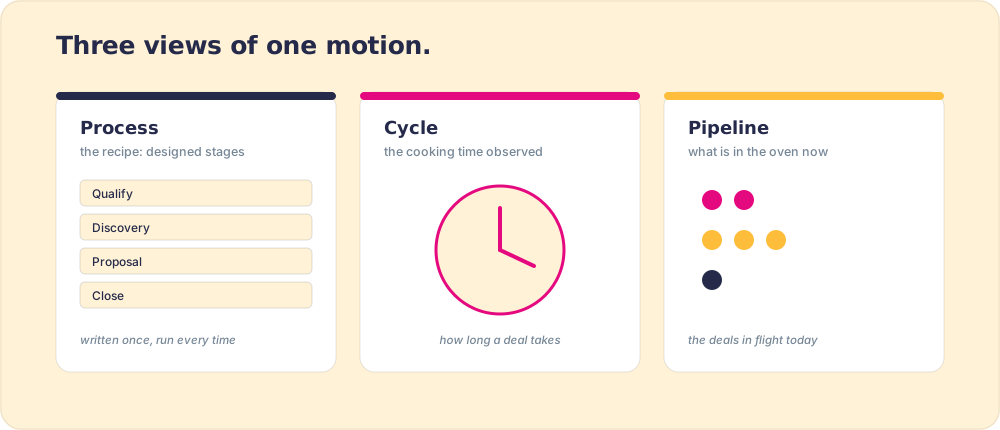
- Sales process. The design: the defined stages and the work inside each one. It is the recipe, written down once and meant to be followed every time. (We cover building it in the sales process steps.)
- Sales cycle. The time a real deal takes to run the process from first contact to close. It is the cooking time you observe, an output of how well the recipe was followed.
- Sales pipeline. The set of deals currently in flight across those stages, at a given moment. It is what is in the oven right now. (We cover it in what is a sales pipeline.)
Hold them apart and a useful diagnosis appears. If the process is sound but the cycle is long, the problem is adherence: the recipe is fine, the cooking is sloppy. If the pipeline looks healthy but the cycle keeps stretching, deals are stalling rather than dying, which is its own warning sign.
What are the stages of a sales cycle?
A common B2B sequence runs through seven sales cycle stages, though the exact names matter far less than two properties they must have. Here is the typical shape.
- Prospecting. Finding and reaching the accounts worth pursuing.
- Connecting and qualifying. The first real contact, where you decide the deal is worth a cycle at all.
- Discovery. Diagnosing the buyer’s current state and the cost of their problem, the work that gap selling and good questioning drive.
- Presentation or demo. Showing the fit against the need you diagnosed, not a generic tour.
- Proposal. Putting the terms and the business case in writing.
- Negotiation. Resolving price, terms, and the paper process.
- Close, then onboarding. The signature, and the handoff that decides whether the deal renews.
The two properties that matter: each stage needs a clear, buyer-side exit criterion (what must be true about the buyer, not the rep, to advance), and the team has to run the same stages consistently. Without consistency, cycle length is noise, because it means something different on every rep’s deals. This is the same discipline of buyer-commitment stages we argue for in the sales process steps.
How do you measure sales cycle length?
Measure from first qualified contact to close, average it across won deals, and never trust the blended number on its own. The average sales cycle reported company-wide is one of the most misleading figures in sales, because it hides the variation that matters: a 30-day SMB cycle and a 180-day enterprise cycle blend into a “105-day” number that describes no real deal. Segment by deal size, by segment, and by lead source before you read anything into it.
Then pair length with velocity, because length alone cannot tell you whether a change is good. Sales velocity combines the four things that decide how fast revenue moves:
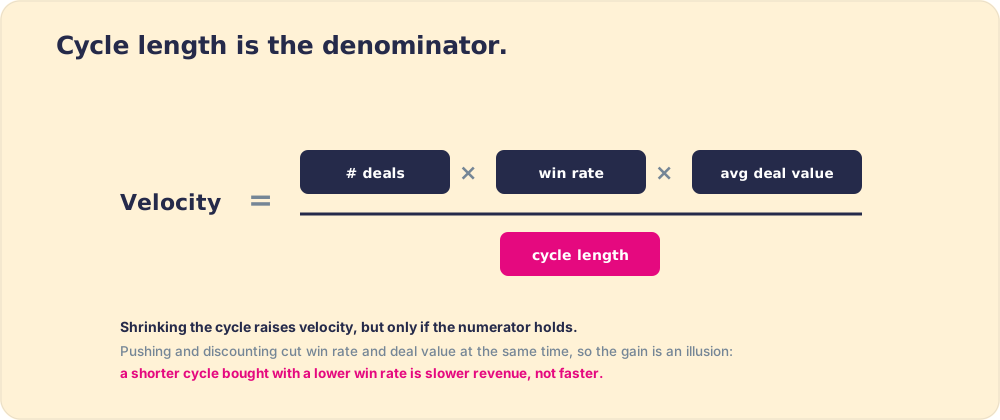
The formula makes the trap visible. Velocity equals the number of deals, times win rate, times average deal value, divided by cycle length. Cutting the cycle by pushing looks like it should raise velocity, since cycle length sits in the denominator. But pressure and discounting drop win rate and deal value at the same time, and those sit in the numerator, so the gain is an illusion. A shorter cycle bought with a lower win rate is slower revenue, not faster.
Why is your sales cycle so long?
Because most of the length is not slow steps; it is backtracking. When you watch a long deal closely, the time rarely goes to a stage taking longer than it should. It goes to the deal looping back: discovery re-opened because the rep qualified thin the first time, a new decision-maker discovered in month three who has to be sold from scratch, a security review nobody asked about that adds six weeks at the end. The cycle is long because the deal keeps going back into the oven.
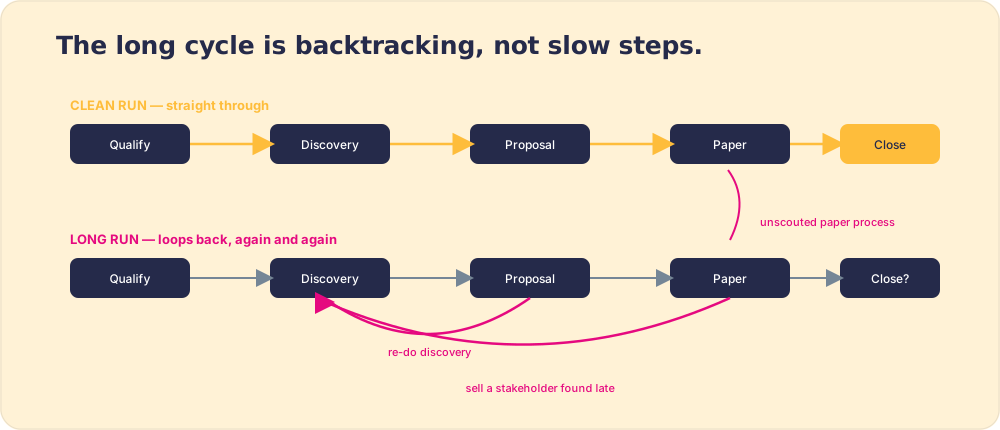
The data points to the same place. In The Jolt Effect, Matt Dixon and Ted McKenna found that 40 to 60 percent of qualified deals end in no decision (The Jolt Effect), and a deal that ends in no decision usually spent months stalled and looping first, inflating average cycle length before it died. Gartner adds the structural reason the loops happen: the buying group now runs to six to ten people, and buyers spend only about 17 percent of the journey with suppliers (Gartner). A rep who threads a single contact is almost guaranteed to discover another decision-maker late, and that late discovery is a loop you pay for in weeks.
How do you shorten the sales cycle?
Remove the rework, do not rush the steps. Once you see that the cycle is long because of loops, the levers that shorten sales cycle length are obvious, and none of them is “push harder.” This is where Rackham’s finding turns into a method. If pressure backfires on the deals with long cycles, the seller’s job is to earn the buyer’s commitment instead, and that is bought with discovery, not deadlines. Keenan, in Gap Selling, puts a number on it: spend the first quarter of the cycle learning the buyer’s current and future state, because a deal you understand cold does not loop back to be re-understood (Gap Selling). Depth up front is what removes the backtracking later.
- Qualify harder, earlier. Most re-discovery is the bill for thin first-call qualification. A disciplined qualification step (MEDDPICC is one) prevents the loop where you re-open the deal because you never understood it.
- Multithread from the start. If the buying group is six to ten people, threading one contact guarantees a late-stage surprise. Map the group early and you remove the most expensive loop there is.
- Qualify the paper process early. Ask in week three what legal, security, and procurement will require, so the six-week review is scheduled instead of sprung. The added P in MEDDPICC exists for exactly this, and a mutual action plan co-authored with the buyer puts every one of those steps on a shared calendar before it can stall the deal.
- Surface the next right step in the moment. Much of a long cycle is a deal sitting still because the rep is unsure what to do next. Guidance that reaches the rep while they work the deal keeps it moving without pressure.
This is why cycle length is, at bottom, an adoption metric. The State of Sales Enablement 2026 found that teams who consistently inspect deals against a defined process hit quota at 6.3 times the rate of teams that rarely do, and the same discipline that lifts quota shortens cycles, because a deal run cleanly the first time does not loop. The cause underneath a long cycle is usually a process that exists on paper and is not run, which is the subject of sales process adoption.
What we recommend
Two ways to attack a long sales cycle sit in front of every leader, and they pull in opposite directions. You can push the clock: pressure reps, compress timelines, discount to force signatures, and treat cycle length as a number to beat down directly. Or you can fix the cooking: tighten qualification, multithread early, scout the paper process, and surface the next step in the moment, so deals stop looping and the cycle shortens as a result.
We recommend fixing the cooking, and four independent sources point the same way. Rackham’s 35,000 calls show that pressure, the engine of the whole “push harder” school, reduces the chance of closing the large complex deals that have long cycles in the first place. The velocity formula shows that a shorter cycle bought with a lower win rate is slower revenue, not faster, so pushing is self-defeating on the math too. The Jolt data says the length is mostly stalled and looping deals, not slow steps. Gartner’s buying-group numbers say the loops come from late discovery a tighter process prevents, and Keenan’s discovery rule says the fix is depth at the front. Our own data closes the case: the teams that inspect and run the process are the ones whose deals do not backtrack. Those converge on one instruction: stop turning up the oven, and cook the deal properly the first time.
So treat cycle length as a readout, not a target. If you want the design underneath it, read the sales process steps; for how the cycle relates to the deals in flight, what is a sales pipeline; for why a clean cycle makes the forecast trustworthy, sales forecasting; and for the system that keeps deals from looping, the sales playbook guide.
Frequently asked questions
What is the sales cycle?+
What is the difference between a sales cycle and a sales process?+
What are the stages of a sales cycle?+
How do you measure sales cycle length?+
How can you shorten the sales cycle?+
Your process, running itself.