Sales Coaching: the Manager's Highest-Leverage Hour
Sales coaching is the most praised and least defined act in sales management. What it actually is, the science of why it works, who to coach first, and how to make the hour.
Sales coaching is the ongoing work of improving how a rep sells by observing their real deals, diagnosing one specific behavior to change, and guiding deliberate practice of it, which makes it distinct from training (transferring knowledge) and from managing (inspecting numbers).
Ask ten sales leaders whether they believe in coaching and ten say yes. Ask them what they did in their last coaching session, and you get ten different answers, several of which are not coaching at all. One reviewed pipeline. One gave a pep talk. One forwarded a call recording with the note “thoughts?” and one, honestly, ran out of time and skipped it. The word is sacred and the practice is a fog, and a thing nobody can define is a thing nobody can get better at.
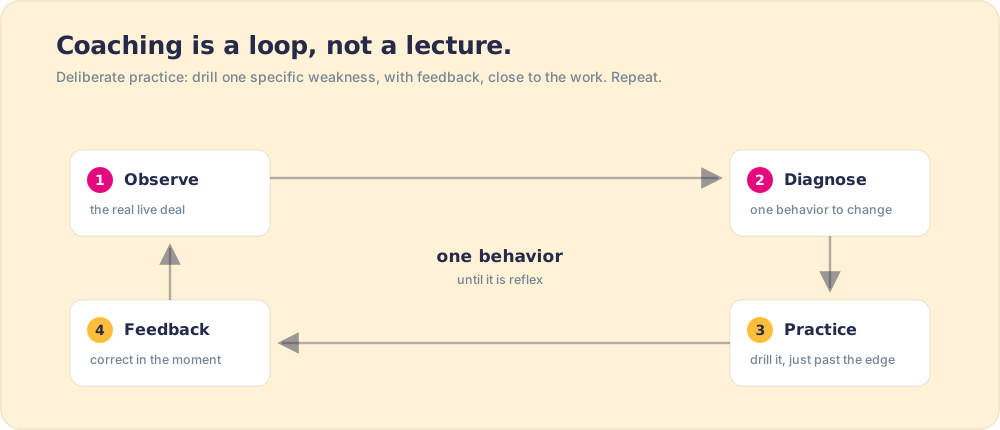
So it is worth slowing down on what the work comes down to, because the vagueness is the problem. Sales coaching is the ongoing work of improving how a rep sells: watching their real deals, picking one specific behavior to change, and guiding focused practice of it until the behavior is theirs. That is a narrow, demanding definition, and it rules out most of what gets called coaching. It is not training, which hands over knowledge. It is not managing, which inspects the number. It is the slow craft of changing what a person does, which in 2026 is the only part of selling that is still hard to copy.
What is sales coaching, exactly?
Hold three activities apart and the fog clears, because managers blur them constantly and only one of them is coaching.
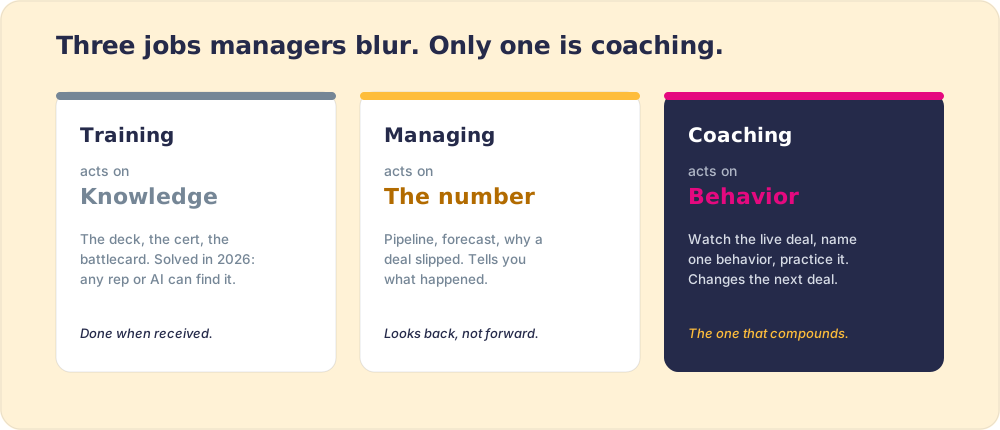
- Training acts on knowledge. It loads the rep with product facts, the pitch, the competitive battlecard. Necessary, and finished the moment the rep has received it. Knowledge is the solved problem of 2026: any rep can find the doc, and an AI can summarize it in seconds.
- Managing acts on the number. It inspects the pipeline, forecasts the quarter, and asks why a deal slipped. Necessary, and it tells you what happened without changing what happens next.
- Coaching acts on behavior. It watches how the rep runs a live deal, names one thing to do differently, and practices it. This is the only one of the three that changes the next deal, and it is the one that gets crowded out, because it is the slowest and the least urgent on any given Tuesday.
A manager can do the first two all week and never touch the third. That is the normal state of affairs on most teams, and it is why so much “coaching investment” produces so little: the team bought more training and called it coaching.
Why does sales coaching work?
Because skill is built by doing with feedback, not by being told, and that is a fact about human beings long before it is a fact about sales. The psychologist Anders Ericsson spent his career studying how experts are made (violinists, surgeons, chess players) and found the common ingredient was not talent or hours logged but deliberate practice: focused repetition of a specific weakness, with immediate feedback, a step past the edge of what you can already do (Ericsson, “The Making of an Expert,” Harvard Business Review). Not playing the whole concerto again. Drilling the four bars you keep fumbling, slowly, while someone who can hear the mistake corrects it in real time.
Coaching is the sales version of that, and almost nothing else is. A rep listening to a webinar is not deliberately practicing. A rep who has read every title on a list of the best sales books has knowledge, not a coached behavior. A rep getting a “nice job, keep it up” is not getting feedback that names the four bars. Coaching is a manager watching a real discovery call, noticing the rep never asks the implication question that turns a mild problem into an urgent one, and drilling exactly that, on the next three calls, until it becomes reflex.
The sales data agrees with the lab. CSO Insights, now part of Korn Ferry, studied coaching across thousands of sellers and found that teams with dynamic coaching, formally aligned to the sales process and delivered consistently, posted win rates of 55.2 percent against 41.8 percent for teams that left coaching to each manager’s instinct (Korn Ferry). When a lab finding about violinists and a field study of sales teams point the same direction, the principle underneath is solid: structured, repeated practice against a specific behavior is what builds skill, and unstructured encouragement is not.
Who should you coach: your stars, your strugglers, or the middle?
The middle, and the answer is more counterintuitive than it sounds. The instinct is to pour coaching into the top reps (they are pleasant to coach and they win) or into the strugglers (they obviously need help). Both instincts waste the hour. CEB, now part of Gartner, analyzed coaching’s effect across performance bands and found the return concentrates on the core performers, the middle 60 percent of the team. The stars will hit their number with or without you. The bottom often have a fit or motivation problem no amount of coaching repairs. The middle is the largest group and the most movable, so a point of improvement there, multiplied across the most reps, is where the revenue is (CEB / Gartner, “Coaching the Middle”).
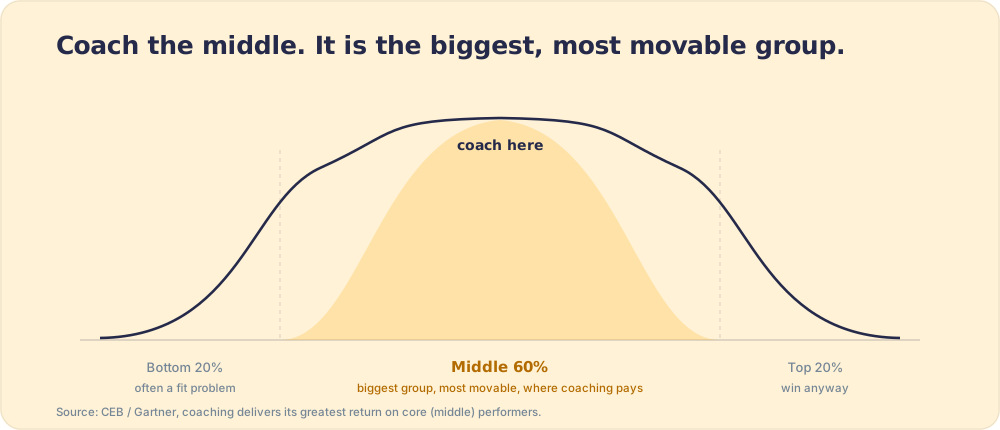
This reframes the whole exercise. Coaching is not triage for the weak or reward for the strong. It is a system for raising the floor of the largest part of the team, which is the same logic that makes a shared, well-run process beat scattered brilliance: a motion that the middle 60 percent runs a little better moves more revenue than a heroics from the few. That is why the highest-return coaching is tied to the process every rep is meant to run, the subject of sales process adoption, not to a grab-bag of personal tips.
Why doesn’t sales coaching happen?
Because the manager’s hour is spent before coaching begins, and it is spent on inspection. To coach a deal you first have to know what is happening on it, and on most teams that knowledge is scattered: half the CRM fields blank, the real story buried in Slack and a half-remembered call. The manager spends the hour assembling the picture, and there is nothing left for the part that changes behavior. This is not a motivation failure. It is a structural one, and it is worth seeing it as a system problem rather than a discipline problem, because when reps or managers do not do the right thing, the cause is almost always friction, not character.
Picture coaching as tending a garden. The work is in walking the rows often, noticing the one plant that is struggling, and acting while there is still time to act. A manager who only ever sees the garden at harvest, when the quarter closes and the numbers are in, is not a gardener. They are an inspector with a clipboard, recording what already grew or failed. Most managers want to walk the rows. They cannot, because the walk itself takes all day when the path is overgrown with manual inspection.
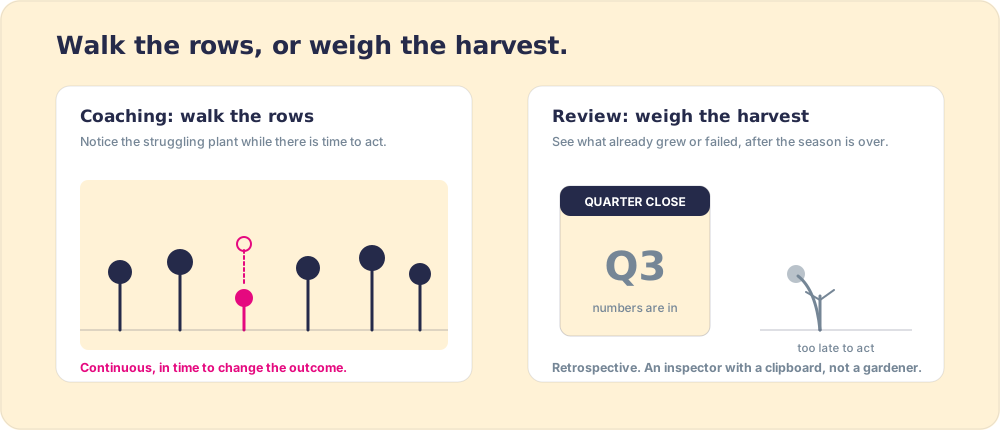
The lever, then, is not telling managers to try harder. It is clearing the path. The State of Sales Enablement 2026 found that inspecting deals against a defined process is the single largest quota lever we measured, with consistent inspectors hitting quota at 6.3 times the rate of teams that rarely do. Inspection is non-negotiable. The trap is that doing it by hand consumes the hour coaching needs, so the win is automating the inspection, letting the picture assemble itself, so the manager’s scarce time moves from reconstructing the deal to coaching the rep. (We make the fuller case for measurement as the engine, not the enemy, of good selling in compliance vs adoption.)
How do you build a sales coaching habit that sticks?
Make it small, specific, frequent, and tied to the process, which is the opposite of the quarterly heroic review. The research on both deliberate practice and habit formation points the same way: short, regular, focused repetitions beat rare, sprawling ones.
- Coach one behavior, not the whole rep. Pick the single highest-value motion the rep is missing (the discovery question skipped, the economic buyer never met) and work only that until it sticks. A coaching session that lists ten things changes none of them, which is why the sharpest one-on-one meeting questions zero in on a single deal rather than touring the whole pipeline.
- Coach against the process, not your taste. The behavior you coach should be a step in the process every rep is meant to run, so the coaching compounds into a consistent team motion instead of ten managers’ personal preferences. This is what makes coaching a system rather than a style.
- Coach close to the work, not at quarter close. A nudge while the deal is live can change the deal; a note three weeks later can only explain it. The closer the feedback sits to the moment of the behavior, the more of it survives.
- Protect the hour by automating the inspection. The single most effective thing most teams can do for coaching is not a new framework; it is removing the manual reconstruction that eats the time. Give the manager the picture, and the hour goes where it pays.
These are the same mechanics that drive sales onboarding for a new rep, and any honest set of sales coaching techniques has to respect them. The specific sales coaching model matters less than the loop: observe the real work, name one behavior, practice it close to the moment, and keep the cadence.
What we recommend
Two ways to run coaching sit in front of every sales leader, and only one of them moves the middle of the team. You can run it the common way: occasional, unstructured, aimed at whoever is most visible or most in trouble, delivered as advice after the deal is decided. Or you can run it as a discipline: frequent, focused on one behavior at a time, tied to the process every rep runs, delivered close to the moment of the work, and aimed at the movable middle.
We recommend the second, and the evidence is not subtle. Ericsson’s work says skill comes from focused practice with immediate feedback, not from being told. Korn Ferry’s data says structured, process-aligned coaching wins materially more deals than coaching left to instinct. CEB’s says the return concentrates on the middle 60 percent. And our own says the reason coaching does not happen is that manual inspection eats the hour, so the highest-return move a leader can make is to clear that hour. Put those together and coaching stops being a soft, nice-to-have ritual and becomes what it is: the highest-return hour in the week, and the one most worth defending.
So define it, make it small and frequent, point it at the middle, and protect the time by killing the manual inspection that steals it. If you want the system underneath, start with sales process adoption; for the tooling decision, see the two kinds of sales coaching app; for how this fits a full sales coaching program, see how Supered runs coaching in the flow of work; and for proof from teams who coach this way, the customer stories are the clearest version we have.
Frequently asked questions
What is sales coaching?+
Why is sales coaching so effective?+
Who should a manager coach first: top reps, low performers, or the middle?+
Why doesn't sales coaching happen even though managers value it?+
What is the difference between sales coaching and sales training?+
Your process, running itself.