The Sandler Sales Methodology: Let the Buyer Do the Convincing
The Sandler sales methodology reverses the usual pressure: an upfront contract and a pain funnel get the buyer to qualify themselves. Here are the seven steps, why they work, and where the method still fits.
The Sandler sales methodology is a buyer-qualifying selling system, created by David Sandler in 1967, built on an upfront contract and a pain funnel that get the prospect to qualify themselves and do the convincing, rather than the rep chasing and pitching.
Most sales methodologies coach the rep to be more persuasive. The Sandler sales methodology does something stranger and smarter: it coaches the rep to stop persuading and let the buyer do it. David Sandler built the system in 1967 on a contrarian premise, that the harder a salesperson pushes, the more the buyer resists, so the move is to reverse the pressure entirely. The rep becomes the calm one, the buyer does the chasing, and a deal closes because the buyer talked themselves into it, not because the rep wore them down.
Picture the difference between a salesman and a doctor. The salesman walks in already selling, eager, leaning forward, certain you need what is in his bag. The doctor sits back, asks where it hurts, and waits. You do most of the talking, and by the time the doctor names the problem you already believe it, because you described it. Sandler trains the rep to be the doctor. That is the whole method in one picture, and the rest is how you hold the posture when every instinct says lean in.
So here are the seven steps of the Sandler selling system, the two tools that carry the whole method, and an honest read on what still works and what has aged. The throughline, and our point of view: Sandler’s instinct, that a buyer persuaded by their own words is worth more than a buyer argued into a corner, is exactly right, and the science agrees. Where Sandler stops, and where most teams who buy the training fail, is the part after the classroom, which is the part we care about most.
What are the steps of the Sandler selling system?
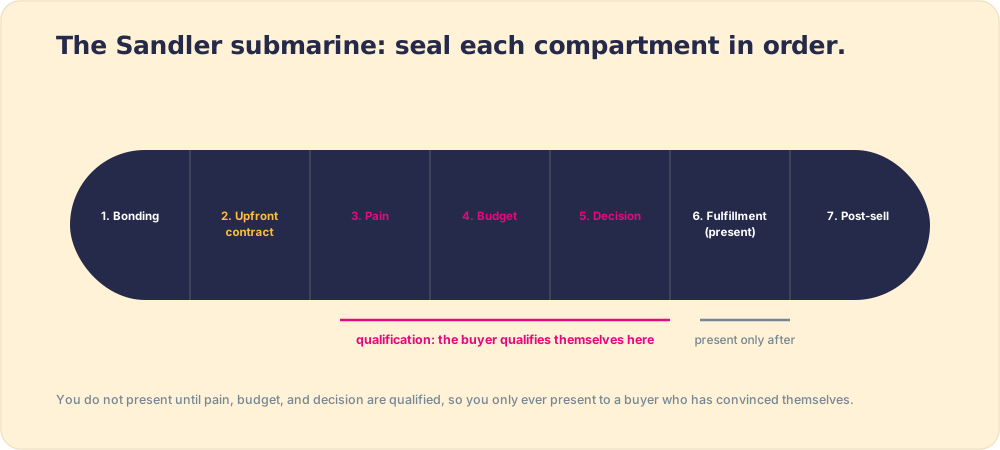
Seven, the Sandler 7 step system, drawn as a submarine because each compartment seals before you move to the next. Sandler took the image from old war films: when a sub is hit, the crew moves forward one chamber at a time and dogs the hatch behind them, so a leak in one room cannot sink the whole boat. A sale runs the same way. Close the door on bonding before you open budget; do not let an unanswered question from compartment two flood compartment five. The order is the discipline: you do not present until the buyer has qualified themselves.
- Bonding and rapport. Establish genuine trust first, not as a warm-up trick but because the rest of the method depends on honesty the buyer will only give someone they trust.
- The upfront contract. Agree at the start what this meeting is, how long it runs, what each side wants, and how it will end, including the buyer’s full right to say no.
- Pain. Use the pain funnel, a sequence of questions that moves from a surface problem to its real personal and business cost, so the buyer feels the weight of it themselves.
- Budget. Establish, openly, whether the money exists, before investing in a presentation. Sandler treats this as a qualification gate, not a closing step.
- Decision. Map who decides, how, and by when, so there are no surprises at the end.
- Fulfillment. Only now do you present, and only to a buyer who has qualified themselves on pain, budget, and decision. The presentation answers a need the buyer has already owned.
- Post-sell. Lock the deal against buyer’s remorse and competitor reversals, and set up the relationship that follows.
The structure rhymes with modern qualification frameworks for a reason: pain, budget, and decision are doing the same job as parts of MEDDIC and BANT, only sequenced so the buyer supplies the answers.
Why does the upfront contract work?
Because it replaces false politeness with a mutual agreement, and false politeness is where deals go to die slowly. Without an upfront contract, a meeting ends with “this was great, let me think about it,” and the rep spends three weeks chasing a ghost. With one, both sides agreed at the start how the meeting would end, so a no is allowed and a maybe is not. The upfront contract is the Sandler tool that most directly turns seller hope into buyer commitment.
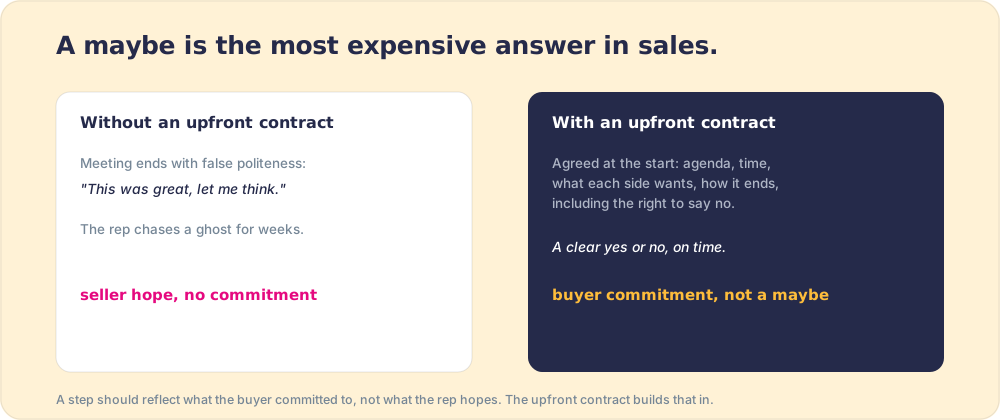
This is the same buyer-commitment principle we argue for in pipeline stages: a step should reflect what the buyer committed to, not what the rep hopes. The upfront contract builds that commitment into every meeting, which is why a Sandler-run deal tends to forecast more honestly. It is qualification disguised as courtesy.
There is a famous Sandler line that explains why a rep can afford to set so firm a contract and offer the buyer the door: “You can’t lose what you don’t have.” It is the first principle in The Sandler Rules: 49 Timeless Selling Principles and How to Apply Them (David Mattson, Pegasus Media World, 2009), the book that codified Sandler’s coaching after his death (Amazon). The fear that makes a rep grovel is the fear of losing the deal. Sandler’s answer is bracing: you do not have the deal, so there is nothing to lose by asking the hard question now. A prospect you have not qualified is not an asset slipping away; it is a stranger you have yet to meet. That single reframe is what lets a rep stay calm in the doctor’s chair.
What is the reversing technique in Sandler?
Reversing is Sandler’s habit of answering a question with a question. The buyer asks “Does it integrate with Salesforce?” and the untrained rep, grateful for a chance to talk, launches into a feature tour. The Sandler rep reverses: “Tell me what would have to be true about that integration for it to matter to you.” Now the buyer is explaining their own need, and the rep is learning what closes the deal instead of guessing.
Sandler called this rhythm the buyer-seller dance, and warned against the rep’s worst tic, hearing what they want to hear. His rule for it is blunt: “No mutual mystification.” Do not nod along to a vague answer because a clear one might hurt. The rep with “happy ears” mistakes politeness for progress and carries a dead deal for a month. Reversing is the cure: every question turned back into a question keeps the buyer doing the work of convincing, and keeps the rep honest about where the deal stands.
There is one more discipline that holds the method together, and it is the one most teams drop first. Sandler’s rule is that no meeting ends without a next step agreed in the room. A calendar invite, a decision, a clean no, but never “I’ll follow up.” A deal with no agreed next action is not a deal; it is a hope with a logo on it. The upfront contract sets that exit at the start, and reversing earns the honesty to name it at the end.
Does the Sandler sales methodology still work in 2026?
Its core works better than ever; its packaging has dated. The central reversal, getting the buyer to convince themselves, is precisely what the behavioral science supports. People resist being pushed (reactance) and believe their own conclusions far more than a seller’s claims (self-persuasion), and The Jolt Effect’s analysis of 2.5 million calls found that pressure makes an indecisive buyer more likely to freeze, not buy (The Jolt Effect). Sandler arrived at all of that by instinct decades before the data confirmed it.
What has aged is the stagecraft: some classic Sandler training leans on scripted “pattern interrupts” and negative-reverse gambits that a modern, informed buyer reads as manipulation. Keep the upfront contract and the pain funnel, which are timeless; drop the theatrics, which now cost trust. As with every methodology, the official David Sandler training has evolved too (Sandler), but the principle to carry is simple: lower the pressure, raise the questions.
Why does a Sandler course wear off, and what makes it stick?
No methodology solves the harder problem on its own. Sandler is taught the way it has always been taught: a multi-day classroom course, an offsite, a certificate. Reps leave fired up. Then they go back to a Tuesday with eleven open deals and a manager asking about the number, and the careful posture from the workshop slips. They lean in. They pitch. They take the polite maybe.
This is not a failure of will, and it is not a failure of the course content. It is the way memory works. In the 1880s the psychologist Hermann Ebbinghaus measured how fast we forget what we learn, and the curve is steep: without reinforcement, people shed the bulk of new material within days (Ebbinghaus forgetting curve). A two-day Sandler class is a bucket of water poured on a fire that the calendar puts out by Thursday. The skill was real. The retention was not built.
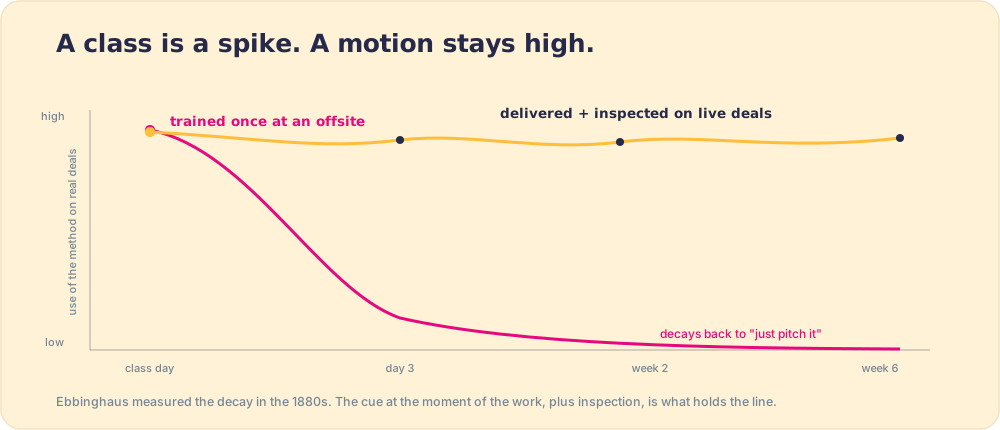
So the deciding question is not whether Sandler works. It works. The deciding question is whether the upfront contract gets set on the next real meeting, by the rep who does not feel like setting it. Knowing the move is not running the move, and a methodology you were trained in is worth nothing until it becomes a motion you perform on a live deal under quota pressure. The fix is the same one behavioral science prescribes for any decaying skill: deliver the cue at the moment of the action, and inspect whether it happened. Not a refresher class next quarter. The pain-funnel questions in front of the rep on this call, and a record of whether the upfront contract was set on this deal.
What we recommend
Two ways to use Sandler. You can run the full classic system, scripts and gambits included, and risk the parts that now read as gimmicks. Or you can take the durable core, the upfront contract and the pain funnel, run it as your qualification discipline, and leave the theatrics in 1967.
We recommend the core, and the evidence is unusually clean: the reversal of pressure that defines Sandler is exactly what reactance research and the Jolt data say works, while the scripted manipulation is exactly what they say backfires. So set the upfront contract on every meeting, run the pain funnel before you ever present, reverse the questions, and let the buyer do the convincing.
Then comes the part that decides whether any of it pays off. Sandler’s instinct is right and the science backs it, but a methodology is not a number until reps run it on the deals in front of them, on the Tuesday they would rather pitch and move on. Pick the durable core, deliver it in the moment the rep is about to act, and inspect whether the upfront contract was set and the pain funnel was run, deal by deal. That is the difference between a team that took a Sandler class and a team that sells like Sandler. The mechanics of getting there are the subject of sales process adoption, and the broader case against one-time, classroom enablement is how to build a sales process reps follow under pressure.
See how it sits among the alternatives in sales methodologies, the qualification it overlaps in MEDDIC, and the discovery discipline it shares with SPIN selling and gap selling.
Frequently asked questions
What is the Sandler sales methodology?+
What are the steps of the Sandler selling system?+
What is an upfront contract in Sandler?+
What is the reversing technique in Sandler?+
Does the Sandler methodology still work?+
Your process, running itself.