Sales Coaching App: How to Choose One That Changes Behavior
Most sales coaching apps record and grade calls after the fact. Why that rarely moves win rates, the two categories on the market, and what to look for instead.
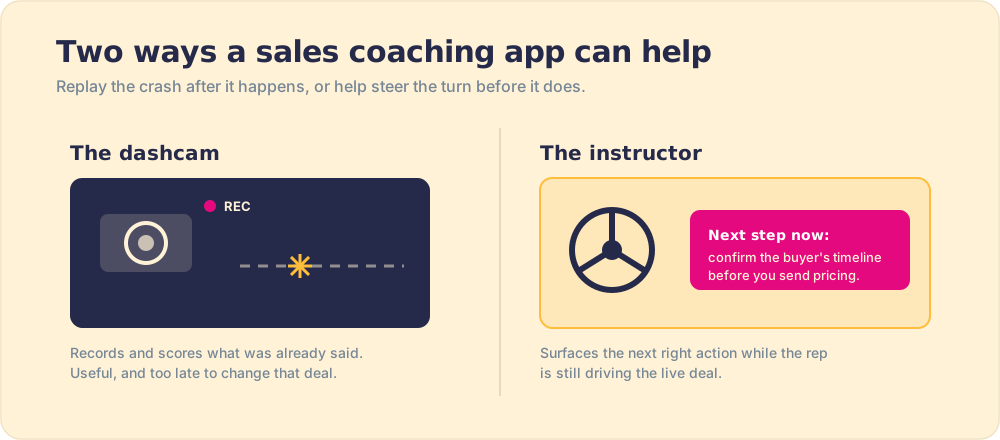
A sales coaching app is software that helps managers improve how reps sell, either by recording and scoring conversations after the fact or by guiding the right action in the moment and measuring whether reps follow the process on live deals.
A manager buys a sales coaching app, and for a while it feels like progress. Calls get recorded. An AI transcribes them, scores the talk-to-listen ratio, flags the monologues, and fills a dashboard with neat charts. The whole team can see how the calls went. Then the quarter closes, win rates sit exactly where they were, and the dashboard becomes one more screen nobody opens. The app did everything it promised. It promised the wrong thing.
The trouble is a confusion about what coaching is for. A sales coaching app that only records and grades conversations, the conversation-intelligence model that Gong made famous and most buyers now picture when they hear the words, coaches the rep after the deal, on what they said, while saying nothing about whether they ran the process that wins. It is a dashcam: it shows you the crash, in high resolution, after it has already happened. Useful for the review. Powerless to change the drive.
So it is worth being clear about the category before you buy in it. A sales coaching app is software that helps managers improve how reps sell, either by recording and scoring conversations after the fact, or by guiding the right action in the moment and measuring whether reps follow the process on live deals. Both exist. They do different jobs, and the second is the one that moves the number.
What is a sales coaching app?
Strip the marketing off and the tools in this market fall into two buckets. Most “sales coaching software” today is conversation intelligence: it captures calls, transcribes them, runs AI over the transcript, and hands the manager a scorecard. Gong and Chorus, the two names that built this category, do it better than anyone, and a head-to-head of the best conversation intelligence software shows how narrow the gaps between them are. The other bucket is smaller and newer: software that surfaces the next right step while the rep is in the deal, and measures whether the process is being followed, so coaching happens against a standard instead of a vibe.
The distinction is not academic. It decides when the help arrives, and timing is the difference between a tip and a save.
- The recorder. Conversation intelligence and call-scoring tools, Gong chief among them, with Chorus (now part of ZoomInfo since the 2021 acquisition) close behind. They see the words said on a call, act after the call is over, and coach the rep’s talk track. Genuinely useful for skill feedback.
- The guide. Behavior tools that surface the next action in the flow of the work and track adherence on live deals. They see whether the process ran, act in the moment, and coach the motion before it goes wrong.
- The label is shared. Both get sold as a “sales coaching app,” which is why buyers end up comparing a dashcam to a driving instructor and wondering why the demos feel so different.
Does Gong’s revenue intelligence count as coaching?
It counts, and it earns the credit. Gong did not stumble into this market; it named the category. The thesis is called Revenue Intelligence, and Gong states it plainly: it “automatically captures customer interactions, analyzes them to provide insights, and applies those learnings to determine the next best action for winning outcomes” (Gong, April 15, 2022). The argument underneath it is real and worth granting in full: a CRM, Gong’s founder Amit Bendov noticed, “was great at recording what happened but not why it happened.” Conversation data closes that gap. It surfaces signal a manager standing outside the call never had, the actual words, the objection that landed, the moment the buyer went cold. Before Gong, most of that was lost the second the call ended. That is a genuine contribution, and any honest account of sales coaching has to start by saying so.
Here is where we part company, and it is a question of time, not quality. Recording is retrospective. The richest scorecard in the world describes a call that is already over, a deal that has already moved, a buyer who has already formed an impression. It tells you, in high resolution, what happened. It cannot tell the rep what to do next on the live deal still open in front of them. The signal is real; it arrives after the moment it could have changed.
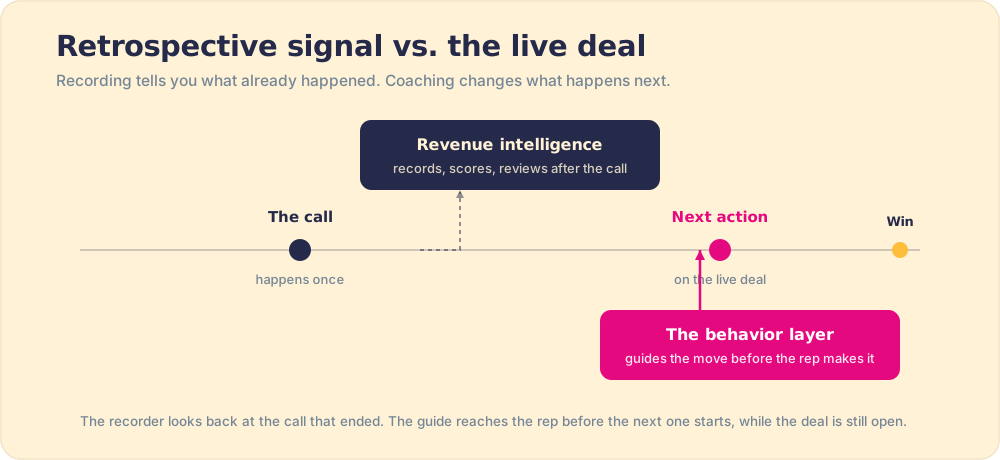
And the research on what changes a seller’s behavior points at timing, not volume of feedback. The win-rate lift, as we will see, comes from coaching that is structured and process-aligned, not from more recordings to review. Gong’s own data agrees with the part that matters most here: managers who coach an hour a week win more deals. The question every buyer should hold onto is whether their app spends that scarce hour helping the rep make the next move, or narrating the last one.
Do sales coaching apps improve win rates?
Coaching improves win rates. This is one of the most replicated findings in sales research, and it comes with an important condition: the coaching has to be structured. CSO Insights, now part of Korn Ferry, studied coaching styles across thousands of sellers and found that teams with dynamic coaching, the kind formally aligned to the sales process and delivered consistently, posted win rates of 55.2%, against 41.8% for teams that left coaching to each manager’s discretion (Korn Ferry). That is a 32% relative lift from structure alone.
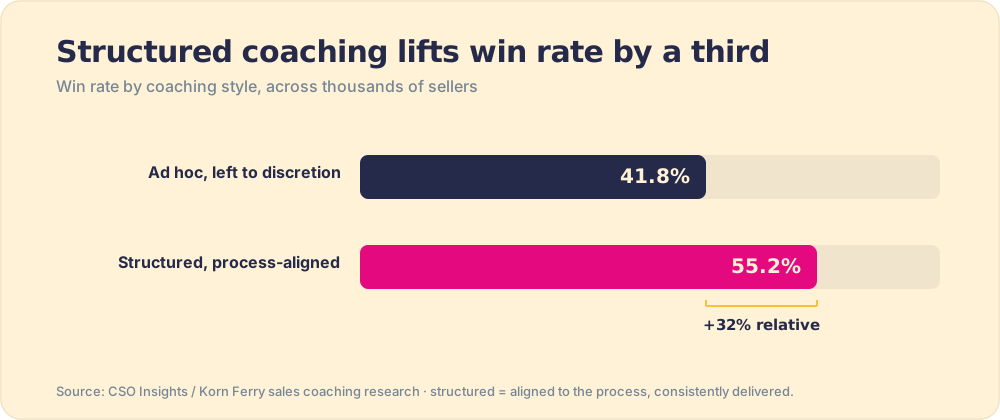
Read that finding against the two categories and the verdict writes itself. The thing that produces the win-rate lift is coaching tied to the process and delivered consistently. A recorder gives you more raw material to coach from; it does nothing on its own to make the coaching structured or to anchor it to the process. The structure has to come from somewhere, and a pile of scored transcripts is not structure. So the question to ask of any sales coaching app is not “how good is its AI scoring?” but “does it make coaching consistent and process-aligned, or does it only generate more to watch?”
Why does most sales coaching never happen?
Because the manager’s time is the bottleneck, and most of it is gone before any coaching starts. Managers who coach reps at least an hour a week win 19% more deals, in Gong’s analysis of revenue teams (Gong), yet most managers do not get near that hour, and the reason is not laziness. It is that inspection, the work of figuring out what is happening on each deal, eats the time that coaching needs. A manager opens the CRM, finds half the fields blank, pieces together the real story from Slack and memory, and the hour is gone before a single coaching word is spoken.
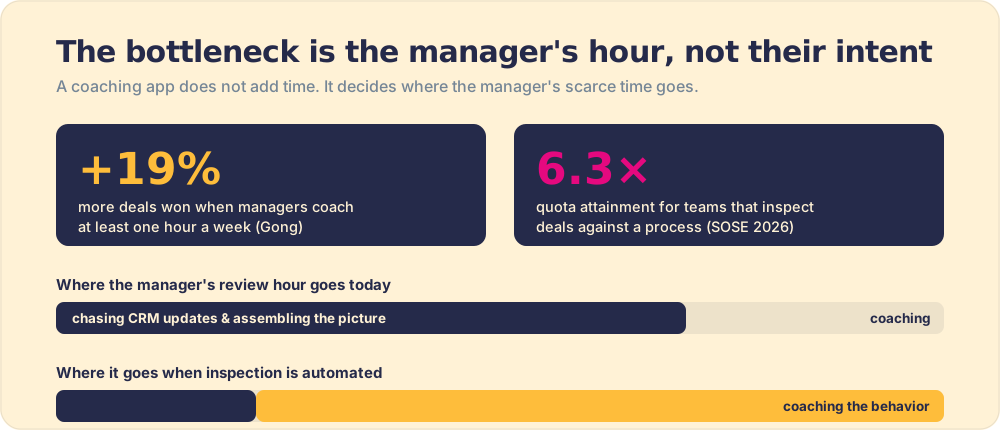
This is where a sales coaching app earns or wastes its price, and it is the part the recorder model gets backwards. Inspection is non-negotiable: you can only improve what you can see, and The State of Sales Enablement 2026 found that inspecting deals against a defined process is the single largest quota lever there is, with consistent inspectors hitting quota at 6.3 times the rate of teams that rarely do. The problem was never that managers should inspect less. It is that manual inspection is so heavy it crowds out the coaching. The win is automating the inspection so the manager’s hour moves from assembling the picture to acting on it. Lift the burden, and the coaching that the research rewards finally has room to happen, in the weekly conversation where the right one-on-one meeting questions turn an open deal into a teachable moment. (We make the fuller case for measurement as the engine, not the enemy, of good selling in compliance vs adoption.)
It is worth saying plainly, because the recorder model implies otherwise: when reps go off-process, that is rarely a discipline problem. It is a system that made the right move harder than the wrong one. A coaching app should fix the system, by making the next right action easy and visible, before anyone reaches for a scorecard to grade the rep.
Two kinds of sales coaching app: the recorder and the guide
Here is the comparison laid out, because it is the decision underneath the purchase. The two models answer four questions differently, and the differences compound.
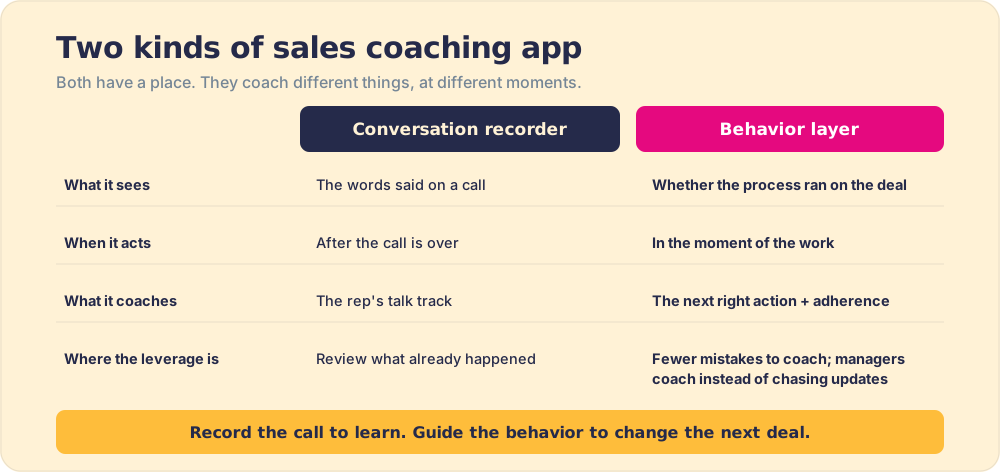
The honest version is that you want some of both, and they are not in conflict. Recording a call and reviewing it is a real way to build a skill, the same way an athlete watches game film. The error is thinking the film is the coaching. A team that only ever watches film and never runs a structured practice does not improve, and a sales coaching app that only records and scores has handed you film with no practice attached. The guide is the practice: it puts the right move in front of the rep on the live deal, again and again, until the motion is theirs.
This is not a hunch; it is the most studied finding in the science of expertise. Anders Ericsson, whose 1993 research defined deliberate practice and seeded the whole “10,000 hours” idea, was specific about what separates practice that builds a skill from practice that merely fills time. The learner, he wrote, “should receive immediate informative feedback and knowledge of results of their performance,” then “repeatedly perform the same or similar tasks” (Ericsson, Krampe, and Tesch-Römer, 1993, as quoted in Frontiers in Psychology, 2019). Two words carry the weight: immediate, and repeatedly. A call reviewed next Thursday is neither. By then the rep has run four more calls the old way, and the groove is cut deeper. Mere repetition without timely feedback, Ericsson found, does not produce experts; it produces people who have done the wrong thing for a long time. The coaching has to reach the rep close enough to the next attempt that they can change it.
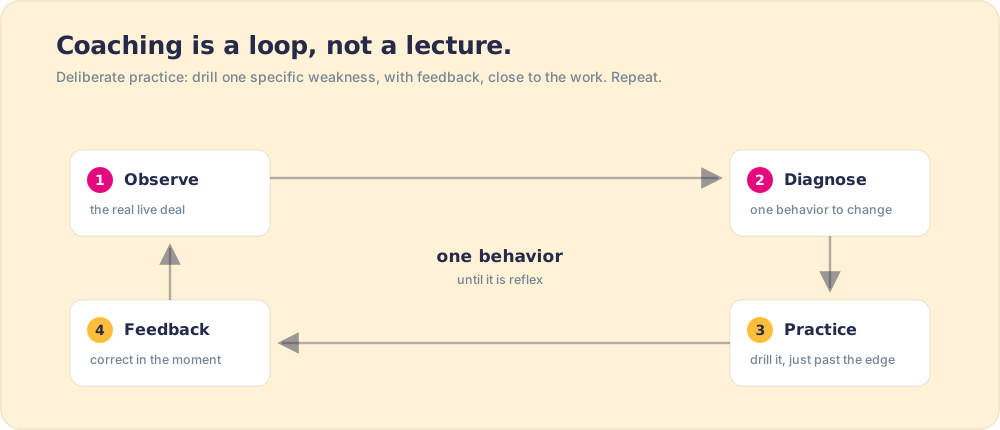
Teams whose guidance reaches reps in the flow of work hit quota at 49 percent. Teams whose guidance lives in docs, wikis, and dashboards hit quota at 15 percent. The moment of delivery, not the quality of the content, is the lever.
What should you look for in a sales coaching app?
Buy for behavior change, and the criteria sort themselves quickly. Four questions separate an app that moves the number from one that decorates it.
- Timing. Does it reach the rep in the moment of the work, or only after the call? Guidance that arrives while the rep is deciding prevents the mistake; guidance that arrives after explains it. Both have value, only one changes the deal in front of you.
- What it measures. Does it track process adherence on live deals, or only call sentiment and talk ratios? Adherence is the metric tied to quota; talk ratio is a proxy for a proxy.
- The manager’s time. Does it lift the inspection burden so the coaching hour survives, or does it add a fifth dashboard to check? An app that creates more to review has made the bottleneck worse, not better.
- Where it lives. Does it work inside HubSpot, Salesforce, and the rep’s inbox, or is it one more tab and login? Anything that asks the rep to go somewhere new has already lost the moment it was meant to catch. The best sales coaching tools meet reps where they already work.
A note on AI, since every sales coaching app now claims it. AI sales coaching is at its best on the inspection problem: watching every deal against the process and surfacing where it drifts, which is exactly the manual labor that has always crowded out coaching. Pointed there, AI gives the manager their hour back. Pointed only at generating more call scores, it adds more to read. AI amplifies the process you already have, so it pays off behind a process reps run, and adds noise in front of one they do not. (That sequence, behavior first, then AI, is the same one we walk through for sales onboarding and sales process adoption.)
What we recommend
Two roads run out of this decision. You can buy the recorder, a conversation-intelligence app that captures and scores every call, and use it for what it is genuinely good at: retrospective skill feedback, a library of real examples, a way to hear how the team sounds. Or you can buy the guide, an app that puts the next right action in the flow of the work and measures whether the process is being run, so the mistakes shrink and the manager’s hour goes to coaching instead of reconstruction.
We recommend leading with the guide, and the evidence is why. Korn Ferry’s data says the lift comes from structured, process-aligned coaching, which a recorder does not supply on its own. Gong’s own thesis grants the rest of it: Revenue Intelligence exists because the CRM recorded what happened and never the why, and its data says the manager’s coaching hour is the constraint. Ericsson’s century of research on expertise says the feedback has to be immediate and the practice repeated, or the skill never forms. Our own data says automating inspection is the largest lever for protecting that hour. Four independent sources, one direction: the highest-value sales coaching app is the one that changes behavior in the moment and lifts the inspection burden, not the one that grades the call after the deal is already won or lost. Keep the recorder for the film; Gong is excellent film. Build the program on the guide.
If you want the ground underneath this, start with why a documented process goes unrun in the sales execution gap, see where a coaching tool sits in the wider stack in our guide to sales enablement software, and if you want the proof from teams who run coaching this way, the customer stories are the clearest version we have.
Frequently asked questions
What is a sales coaching app?+
Do sales coaching apps actually improve win rates?+
What is the difference between a sales coaching app and conversation intelligence?+
What should I look for in a sales coaching app?+
Does AI sales coaching replace managers?+
Your process, running itself.