Sales Playbook Software That Gets Run
Most sales playbook software is a nicer binder: a place to store plays reps are supposed to remember. A playbook only works when the play gets called on the live deal. Here is what that takes, and what to look for.
Sales playbook software is the tool that delivers your sales plays (the defined moves a rep should make at each deal stage) to reps while they work and measures whether they run them, rather than storing the plays in a document reps are expected to remember.
A football playbook is not a binder. It lives in the players’ hands during the week, drilled until the moves are automatic, and on Sunday the right play gets called in the three seconds before the snap, in the moment, against what the defense is doing. No coach in the league believes the playbook’s job is to sit on a shelf, beautifully tabbed, for players to consult between downs. The job is the play, called and run, on the field.
Sales playbook software mostly forgets this. The category is full of tidy places to store plays, talk tracks, and stage-by-stage steps that reps are then expected to remember and retrieve on their own. The storage is excellent. The calling of the play, in the moment, against the deal in front of the rep, is the part that decides outcomes, and it is the part most tools leave to memory and good intentions. The leaders of the category say they have already fixed this, and it is worth taking them at their word before we disagree.

What is sales playbook software?
Sales playbook software delivers your sales plays to reps while they work and measures whether they run them. A play is a defined move for a moment in the deal: the questions to ask in discovery, the way to handle a pricing objection, the steps to multithread a stalled opportunity. The software’s job is to get the right play to the rep at the right time and confirm it happened.
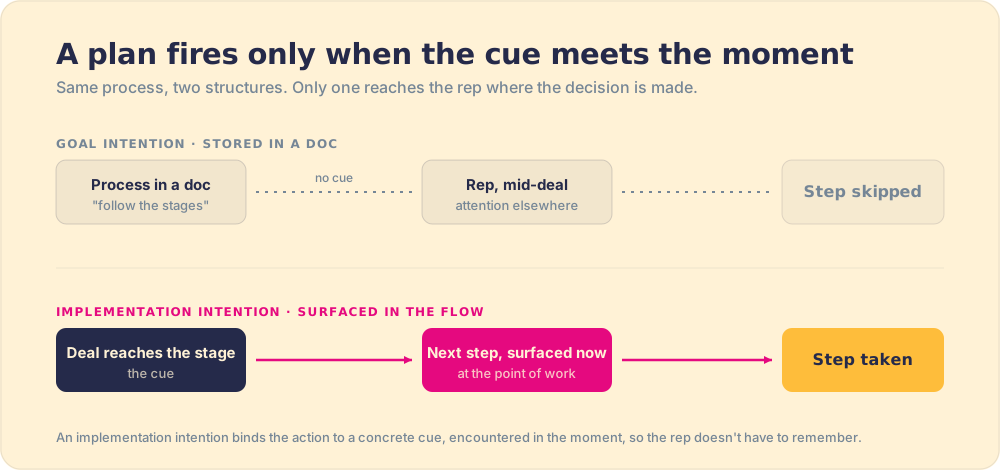
That job splits into a weak version and a strong one, and the category sells both under the same name. The weak version stores plays in a document, wiki, or content library and lets reps search for them. The strong version surfaces the relevant play on the live deal, in the CRM, triggered by stage or context, and reports adherence back to the manager. The difference is not features. It is whether the play reaches the rep in the moment or waits for the rep to come find it.
What does sales playbook software do for a rep?
At its best, it removes the remembering. A rep working a deal that has reached the proposal stage sees the proposal play right there, the checklist, the talk track, the next step, without leaving the record or recalling that a playbook exists. The right move becomes the easy move. At its weakest, it adds a tab: one more place to go, one more thing to remember, which under real quota pressure the rep skips.
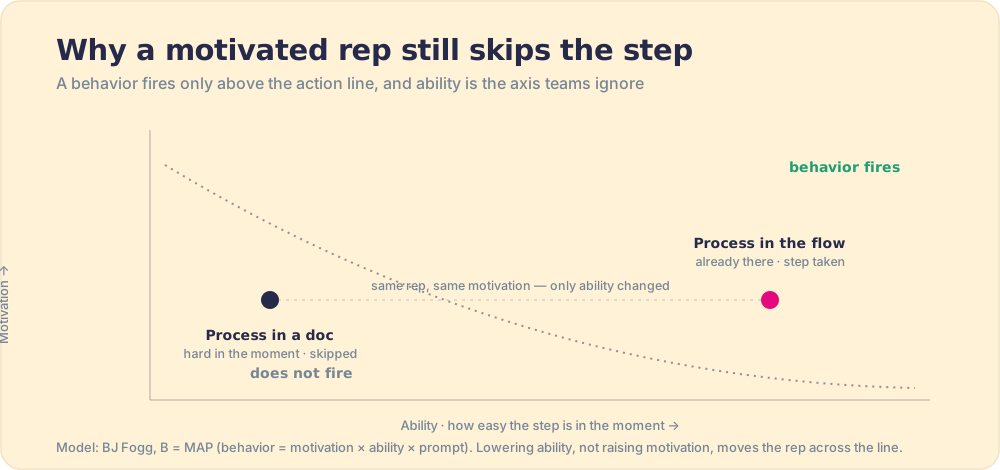
The reason this matters is mechanical, not motivational. A behavior fires when motivation, ability, and a prompt meet in the same moment (BJ Fogg’s behavior model). A rep deep in a live deal has the motivation; a play buried in a document gives them low ability (several steps away) and no prompt (nothing tells them now is the time). So the behavior does not fire. Deliver the play in the flow of work and you raise ability and supply the prompt at once, which is why delivery, not library quality, is the lever. And the rep’s moments are scarce: Gartner finds B2B buyers spend only about 17 percent of the journey with all suppliers combined (Gartner), so a play that waits in a binder tends to miss its window.
Why do sales playbooks go unused?
Because they live where the selling does not. This is the same pattern behind every shelved enablement tool, and the numbers are blunt. We surveyed 198 sales leaders for The State of Sales Enablement: 89 percent had a defined process and only 36 percent saw reps follow it. The plays were written. They were not run. And the three reasons enablement tools become shelfware, reps do not see value (55 percent), managers do not reinforce (51 percent), the tool is not embedded in the workflow (48 percent), all describe a playbook sitting somewhere other than the deal.
There is a deeper reason worth naming, because it predicts which tools will work. Knowing a play is not running it. Stanford’s Jeffrey Pfeffer and Robert Sutton called this the knowing-doing gap: organizations full of people who know the right move and do not make it, and knowledge alone rarely closes the distance (Pfeffer and Sutton, The Knowing-Doing Gap, 2000). A playbook tool that only makes plays findable is investing entirely in knowing. The doing is where deals turn, and doing is a function of what reaches the rep at the moment of action.
Haven’t the big enablement platforms already solved this?
It would be unfair to argue against a binder nobody is selling. The two largest names in the category, Highspot and Seismic, do not pitch a binder. They pitch the opposite, and they pitch it well. Highspot’s own sales playbook page promises to “build prescriptive, data-driven, AI-powered sales plays that tell your reps what to know, say, show, and do, right in the flow of their work” (Highspot, “Guide Reps,” page updated April 27, 2026). Their broader frame is the move to situational guidance delivered in the seller’s moment of need rather than in a calendared training nobody remembers. Seismic has built the largest content and learning engine in the field around the same idea, content surfaced where the work is. On the question this post raises, whether a play should reach the rep in the moment, they agree with us. We should say so plainly. The premise is correct, and they have spent a decade and a great deal of engineering making it real.
And the category is consolidating around that premise. On February 12, 2026, Highspot and Seismic announced a definitive agreement to merge; as of mid-2026 the deal is still pending regulatory approval, both companies operate independently, and the combined entity is set to run under the Seismic brand (Highspot, February 12, 2026). The two biggest proponents of “enablement in the flow of work” are becoming one. So the framing matters more, not less.
Here is where we part company, and it is one honest step, not a cheap shot. “In the flow of work” is a claim about where the content appears. It is a delivery promise. It is not a claim about whether the rep ran the play, or whether a manager can inspect, deal by deal, that it happened. Surfacing the right card to a seller and recording that they opened it is findability, done extremely well. Findability is a real good, and these platforms are genuinely excellent at it. But a play is not a document to be served. It is a behavior to be run and measured. The test is not “did the rep see it.” The test is “did the rep do it, on this deal, and can I prove it.” Optimize for the first and you get a beautifully delivered library with views you can count. Optimize for the second and you get adherence you can coach against. They are not the same scoreboard.
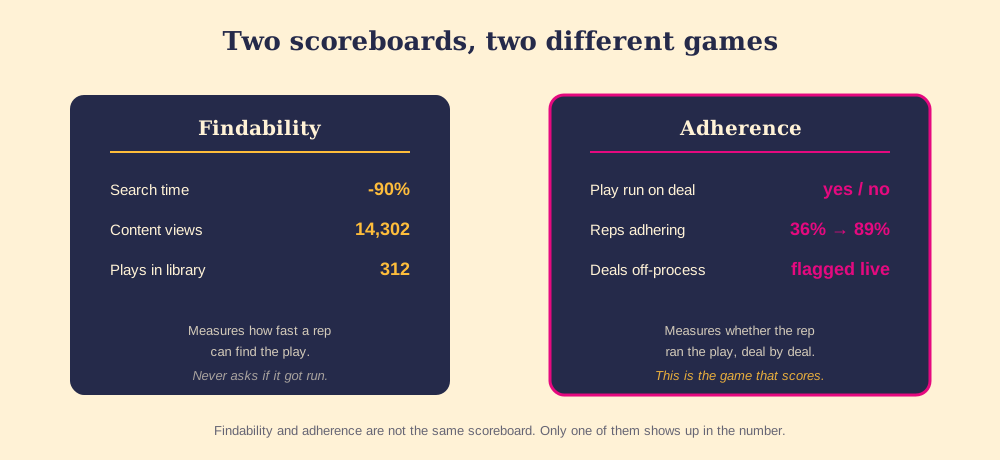
This is the same distinction Pfeffer and Sutton drew between knowing and doing, moved one level up: a platform that delivers the play perfectly has solved the knowing for good, and left the doing exactly where it was. The merger does not change the gap. It makes the best delivery engine in the world even better at delivery, which was never the constraint. The constraint is run-and-inspect, and that is a different thing to build for.
What should you look for in sales playbook software?
If running the play is the test, the criteria for a sales playbook tool reorder around delivery and measurement, and library features drop to table stakes.
- In-deal delivery. The play surfaces on the record in the CRM, triggered by stage or context, so the rep meets it without leaving the work.
- Adherence measurement. The tool reports whether the play was run, deal by deal and rep by rep, rather than whether the document was opened.
- Governance. The current, approved play is the one that surfaces, so reps are never running last quarter’s motion.
- No new destination. It lives inside HubSpot or Salesforce, the sales engagement platform where reps run their cadences, and the other tools they already use, adding no login and no tab.
- Fast setup. Plays live in weeks, because a playbook tool that takes a quarter to populate is abandoned before it proves itself.
Notice what is absent: template count, library depth, how pretty the authoring view is. Those sell demos. None of them touch whether a rep runs the play on a Tuesday.
Sales playbook software vs a sales playbook vs CRM playbooks
Three things share the word, and separating them clarifies the purchase.
- A sales playbook is the content: the plays themselves. You can have an excellent one in a document, and most teams do. Building it is its own craft, covered in the sales playbook guide.
- CRM-native playbooks (HubSpot, Salesforce) attach guidance to records and are a real step up from a document, because they live closer to the deal. Their depth of triggering and measurement varies.
- Dedicated sales playbook software delivers and measures plays across the workflow. The good ones run inside the CRM rather than beside it.
The guidance: write the playbook well first, then choose software on whether it gets the play run and measured, not on whether it can store one. A great playbook delivered badly is the 36 percent. A good-enough playbook run on every deal is the 49 percent.
What to buy
There are two ways to choose sales playbook software, and they sort by what you believe the problem is.
If you believe the problem is that plays are scattered and hard to find, and that your reps need a deep, well-governed library surfaced in their workflow, buy for findability. Highspot and Seismic are the best in the category at exactly that, with the analyst placement and the engineering to prove it, and if that is your problem they are the strong pick. You will get a content engine that delivers the right card beautifully and counts every view.
If you believe the problem is that plays do not get run, buy for run-and-inspect: the play surfaces on the live deal, in the CRM, at the right stage, and you can see, deal by deal, whether the rep ran it and coach the ones who did not. This is the harder thing to demo, the thing “in the flow of work” gestures at without measuring, and the thing the evidence says decides the number.
We would buy on the run, every time, and it is the slot we build for: Supered is the Behavior Layer, surfacing the right play in the moment of work inside HubSpot and Salesforce and measuring whether reps run it, so the playbook stops being a library and becomes the behavior. Whoever you choose, judge them on the field, not the shelf: not whether the play can be found, but whether it gets called, on the live deal, in the moment, and whether you can prove it did.
From here: build the plays themselves in the sales playbook guide, see the wider category in sales enablement software, and go to the metric under all of it in sales process adoption and where your sales process should live.
Frequently asked questions
What is sales playbook software?+
What is the difference between a sales playbook and sales playbook software?+
Why do sales playbooks go unused?+
What should you look for in sales playbook software?+
Your process, running itself.