Highspot Alternatives, Chosen by the Job
Highspot is a strong enterprise content platform. Most teams looking for an alternative do not have a content problem, they have an adoption problem. Here are the alternatives, grouped by the job you are actually solving, with an honest verdict.
Highspot alternatives are the sales enablement tools teams weigh when a content library alone is not moving rep behavior, and the right pick depends on the job (content, coaching, or getting reps to run the process in the CRM) rather than on which platform has the most features.
Start with a fair word about Highspot, because most comparison posts skip it and the skipping tells you they are selling, not helping. Highspot is a capable, mature sales enablement platform. It does content management at enterprise scale, with governance, search, and analytics that large, content-heavy go-to-market teams genuinely rely on. If your problem is that a thousand assets live in seven places and no one can find or govern them, Highspot solves that problem well, and an honest alternatives list should say so before it says anything else.
Highspot alternatives are the sales enablement tools teams weigh when a content library alone stops moving rep behavior, and the right pick depends on the job (content, coaching, or getting reps to run the process in the CRM) rather than on which platform has the most features. The trap is buying a second content library to fix a problem the first one was never built to fix. Most teams searching for a Highspot alternative are not unhappy with Highspot’s content management. They are unhappy that a better content library did not change what reps do on live deals, and that is a different problem, in a different place, that needs a different category of tool.
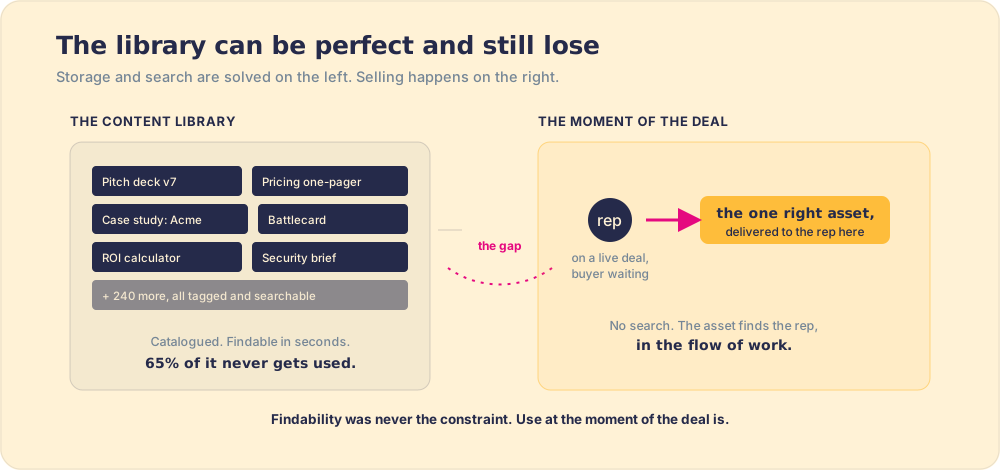
Here is the harder thing to say, because the most respected analysts in this field would push back on it, and they have earned the right to. Forrester, through its SiriusDecisions research, and Tamara Schenk, the analyst who built the CSO Insights sales enablement maturity model, both treat content as foundational to enablement. We think they are right that content is necessary and wrong that content maturity is the lever closest to the number. The lever closest to quota is whether the rep runs the play in the moment of the work, and even the orthodoxy’s own data, read carefully, says so.
Is content the real foundation of enablement?
Grant the orthodoxy its full case first, because it is a good one and it is backed by real numbers, not vibes. The dominant view of sales enablement was built by two sources worth taking seriously. Forrester, through the SiriusDecisions research it acquired, frames content operations as foundational: organizations waste enormous effort when good content made by one group never reaches the rep who needed it, so a coordinating function for content is the floor everything else stands on (Forrester / SiriusDecisions). Tamara Schenk, who ran the research at CSO Insights and co-wrote the field’s standard maturity model, sorts enablement into four stages, Random, Organized, Scalable, and Adaptive, with aligned content, training, and coaching services as the load-bearing pillars a program matures through (CSO Insights, via Highspot).
And the data is real. CSO Insights found that organizations with mature, formal enablement came in 11.8 points above the study average on quota attainment and 17.9 points above on win rates, while teams running enablement as a string of one-off projects landed below average (CSO Insights 2018, via Highspot). If you read that and concluded “get the content house in order,” you read it correctly. A team with no governed content, no current decks, no shared playbook is not ready for anything else. Content is the foundation. We do not dispute the foundation.
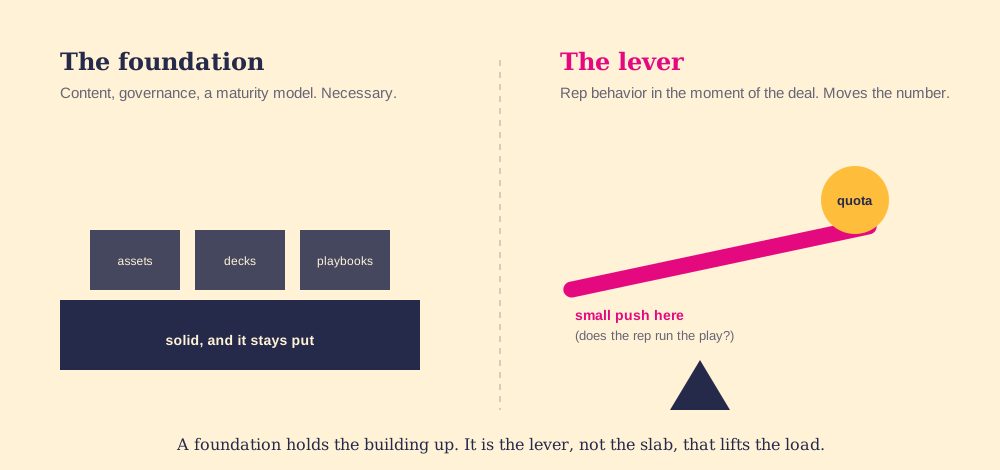
We dispute that the foundation is the lever. A foundation holds a building up, and you would be a fool to skip it, but no one ever lifted a heavy load by pouring more concrete. Look closer at the same CSO Insights research and the bigger number is not sitting next to the content pillar at all. It is sitting next to the manager: investing in sales managers, the people who inspect and coach what reps do, drove 18.4 points of better revenue plan attainment (CSO Insights, via Membrain). The orthodoxy’s own data points past the library toward behavior. The content was the floor. The coaching of what reps do on real deals was the lever.
There is a mechanism under this, and it is why a better library keeps disappointing the people who buy one. The thing a content platform delivers is information, and information decays in the human head on a schedule we have measured since 1885. Hermann Ebbinghaus mapped the forgetting curve, and the modern replications hold: people forget roughly 70 percent of new material within 24 hours and up to 90 percent within a month unless it is reinforced (on the Ebbinghaus forgetting curve). A perfectly governed, beautifully findable library still hands the rep a fact they will mostly have lost by the time the deal needs it. Knowing the play in onboarding is not running the play on a Tuesday. The library solves findability. It does not solve the gap between knowing and doing, and that gap is where deals are won or lost.
Why do teams look for a Highspot alternative?
Three reasons come up repeatedly, and only one of them is about Highspot at all.
- Fit and weight. Highspot is built and priced for enterprise. Mid-market teams sometimes find the platform heavier and more than they need, and go looking for something lighter to deploy and run.
- The content gets stored, not used. This is the common one, and it is not unique to Highspot. Forrester’s SiriusDecisions research found roughly 65 percent of sales content goes unused (Forrester / SiriusDecisions). A better-organized library does not move that number much, because findability was never the constraint.
- The real problem is adoption. The team eventually realizes reps are not following the process on live deals, and no content tool, Highspot or otherwise, was built to fix that. This is the moment a content-first alternative is the wrong answer and an adoption-first tool is the right one.
The first reason is a fit question. The second and third are job questions, and they are the ones worth getting right before you switch.
What does Highspot do well, honestly?
Worth stating plainly so the comparison is fair, and the reviews back it up: Highspot holds about 4.7 out of 5 on G2 across roughly 1,197 reviews (Highspot on G2), which is a strong score on a large, mature base. It is strong on content governance (the approved, current version is the one reps get), on a broad and mature feature set, on analytics across a large content library, and on serving big enterprise go-to-market orgs with many teams and a lot of material to manage. If those are your constraints, the honest recommendation may be to stay. Switching tools to solve a problem your current tool already solves well is motion, not progress.
The case for an alternative gets strong only when your binding constraint is something a content platform is not built for: getting reps to run the right play, on the right deal, at the right moment, and being able to see whether they did.
What are the best Highspot alternatives?
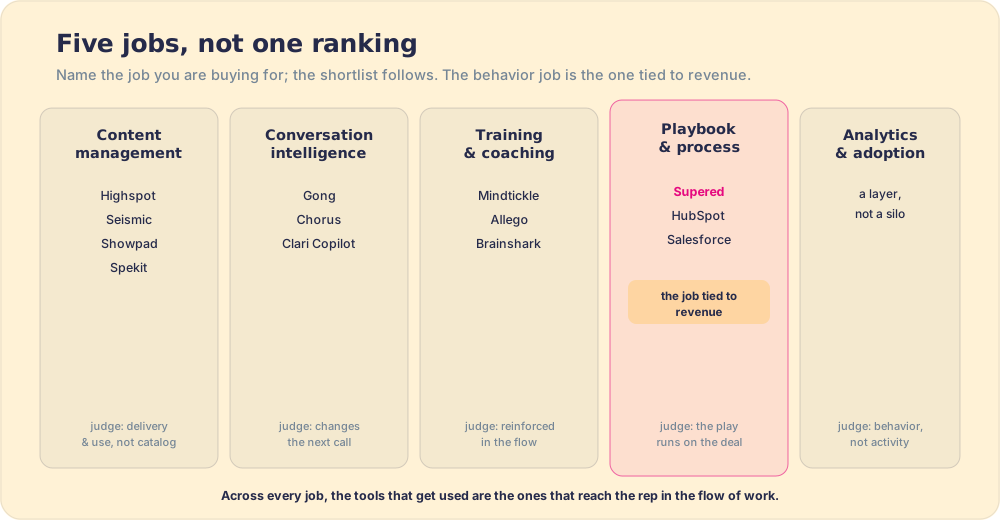
Grouped by the job, because that is how you should choose. The Highspot competitors worth weighing sort into three jobs, and the names shift as vendors acquire each other while the jobs stay stable.
| Alternative | Job it does | Where it fits vs Highspot |
|---|---|---|
| Seismic | Enterprise content management | Closest like-for-like; another large content platform |
| Showpad | Content + light training | Mid-to-enterprise content, training lean |
| Spekit | In-app content and in-the-moment enablement | Lighter, delivery-in-workflow leaning |
| Gong / Chorus | Conversation intelligence | A different job: call analysis and coaching input |
| Mindtickle | Training and coaching | Skill-building and onboarding, not content delivery |
| Supered | Process adoption in the CRM | Behavior-first: runs the play in the moment, measures adherence |
If the job is content management and you want a peer to Highspot, Seismic and Showpad are the like-for-like alternatives, and Spekit is the lighter, more delivery-focused option. One large caveat on Seismic: on February 12, 2026, Highspot and Seismic signed a definitive agreement to merge (Seismic). As of this writing the deal has not closed, the two companies still operate independently and both platforms are still supported, and the combined company will eventually run as Seismic under CEO Rob Tarkoff once it clears regulatory review (CX Today). So the two largest content platforms are on track to become one company, which matters a great deal if you are weighing Highspot against Seismic or counting on a competitive market between them. Picking one to escape the other is a bet on a market that is consolidating. If the job is coaching, Gong and Mindtickle are not alternatives to Highspot at all; they do a neighboring job, and many teams run them alongside. If the job is adoption, getting reps to run the process and measuring it in the moment inside the CRM, that is a different category, and it is the one we build in.
How do you choose a Highspot alternative?
Judge candidates on the job and on adoption, not on feature count, because feature count is where Highspot already wins and chasing it leads you to a similar tool with a similar unused-content rate.
- Name the job first. Content, coaching, or adoption. Most switching regret comes from buying a content alternative when the real problem was adoption.
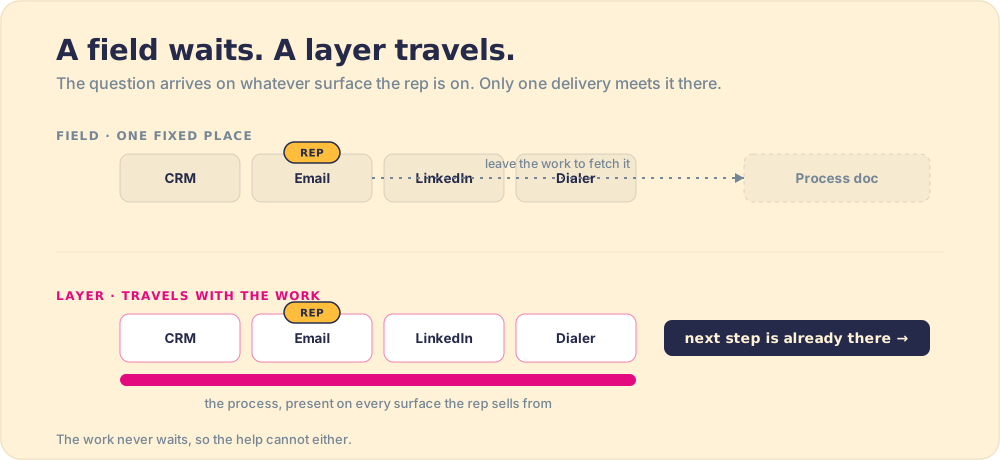
- Weight delivery over storage. Does the tool put the right asset or play in front of the rep in the flow of work, or is it another place to go? Our research found teams whose guidance lived in the CRM hit quota at 49 percent versus 15 percent for those whose tools sat in separate destinations (The State of Sales Enablement). The hop is not free: knowledge workers lose roughly nine hours a week to hunting for information (McKinsey), and B2B buyers give all suppliers combined only about 17 percent of the journey (Gartner), so time a rep spends leaving the deal to find an asset is time the deal cannot spare.
- Insist on behavior measurement. Can you see whether reps ran the process on real deals, rather than whether they logged in or opened a doc?
- Check time to value and fit. A lighter tool that is live and used in weeks wins over a heavier one that takes months to populate.
The verdict: which Highspot alternative, and when to stay
A comparison is worthless without a recommendation, so here is the honest one, in three branches.
- Highspot (or staying put). The right call when your binding constraint is enterprise content management: many teams, a large library, real governance needs, and the budget for a mature platform. It is good at that job, and switching to solve a problem you do not have is a waste.
- A content alternative (Seismic, Showpad, Spekit). The pick when you need content management but want a different fit: Seismic or Showpad for an enterprise peer, Spekit for something lighter and more delivery-focused.
- An adoption-first tool like Supered. The answer when your real problem is that reps do not follow the process on live deals. We run inside HubSpot and Salesforce, surface the next right step and the right play in the moment of work, and measure whether reps do it, the adoption job a content library is not built for. Supered holds a 4.9 on G2 across 73 reviews (Supered on G2), a higher score on a smaller, newer base than the incumbents, which is the signature of a younger, more focused product. We would point you here only when the job is behavior, not content, because that is the case where a library, however good, keeps producing the same 65 percent unused.
The throughline: the best Highspot alternative is not a cheaper Highspot. It is the tool matched to the job you are trying to do. Forrester and Tamara Schenk are right that content is the foundation, and you build it or you build on sand. But the lever closest to the number is whether the rep runs the play while the deal is live, and for a growing number of teams that job, adoption, not storage, is the one still unsolved.
From here: see the whole category in sales enablement software, the field mapped by job in the best sales enablement tools, the content-specific view in sales content management software, and the adoption problem underneath it all in sales process adoption.
Frequently asked questions
What are the best Highspot alternatives?+
Why do teams look for a Highspot alternative?+
Is Highspot worth it?+
What is the difference between Highspot and Supered?+
Your process, running itself.